How to Feed Baby Rabbits Without a Mother
If you’re feeding baby rabbits without their mother, it’s important to start by checking if they’re cold, dehydrated, or crying out for warmth or food.
Baby bunnies are very fragile, so never feed them when they’re cold. Warm them gently first.
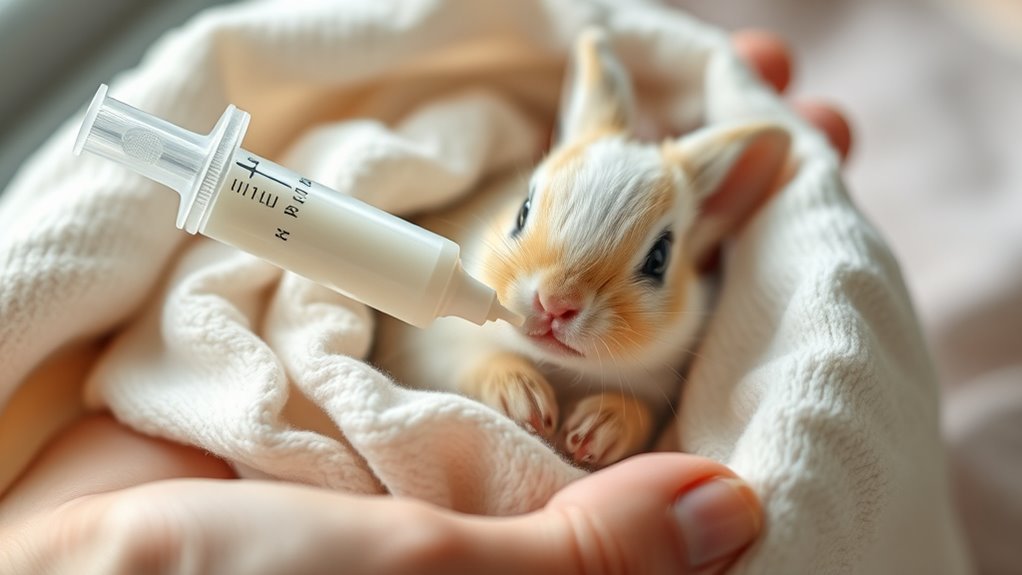
Then, use a syringe or eyedropper to feed them while keeping them upright to avoid choking. This helps keep feeding safe and comfortable for the little ones.
For the formula, mix half goat milk and half KMR (Kitten Milk Replacer). You can also add colostrum and cream to boost their nutrition.
Start with small amounts at first and keep a close eye on their belly and weight.
This way, you’ll make sure they’re healthy and growing well.
Keep reading to find out more essential tips to care for and help your baby rabbits thrive!
Key Takeaways
- Warm baby rabbits before feeding to ensure proper digestion and prevent complications. This helps them stay comfortable and safe.
- Use a 3 cc syringe or eyedropper to feed formula slowly while keeping rabbits upright. Go slow to avoid choking or discomfort.
- Prepare formula with 1/2 cup goat milk, 1/2 cup KMR, freeze-dried colostrum, and heavy cream. This mix gives them the nutrients they need to grow strong.
- Feed newborn rabbits about 2 mL twice daily, gradually increasing volume as they grow. Keep an eye on their size and adjust the amount accordingly.
- Stimulate urination and defecation with a warm cotton ball after each feeding. It’s important to help them go since they can’t do it on their own yet.
How to Know When Baby Rabbits Need Feeding
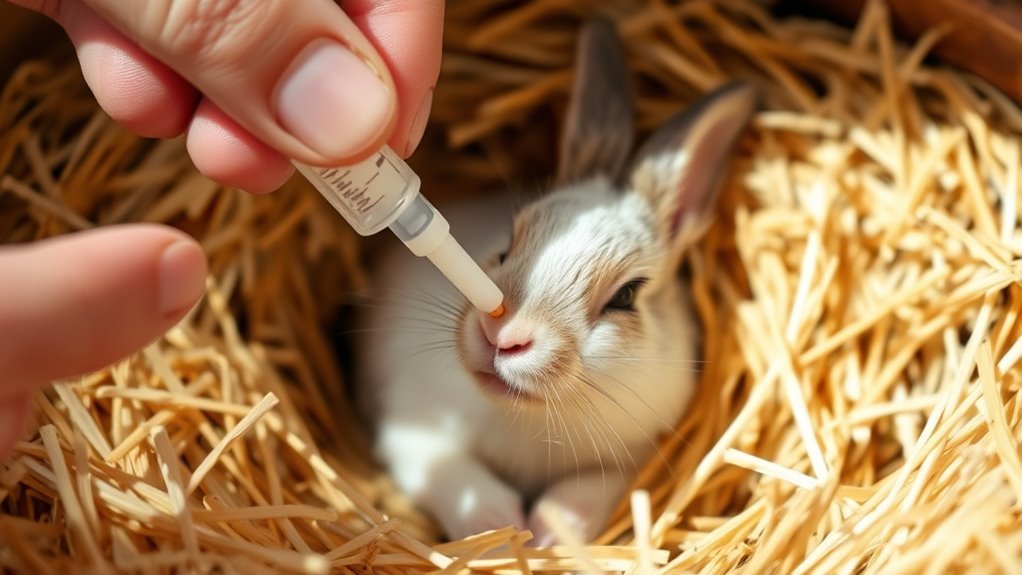
How can you tell when baby rabbits need feeding? First, check for signs of dehydration like wrinkled skin or a lack of roundness in their bellies.
Watch for dehydration signs like wrinkled skin or flat bellies to know when baby rabbits need feeding.
If a baby rabbit feels cold to the touch or has been separated from its nest for a long time, it likely needs feeding assistance immediately.
Observe the behavior of the mother; if you notice no well-structured nest or the babies are scattered, those orphaned kits probably need feeding.
Also, watch the babies themselves—if they’re vocalizing, licking, or seeking warmth, they’re signaling hunger.
A warm body temperature is essential since cold rabbits require warming before feeding to guarantee proper digestion.
Staying alert to these signs will help you know when your baby rabbits need feeding.
Feeding Baby Rabbits: Safe Techniques and Formula Choices
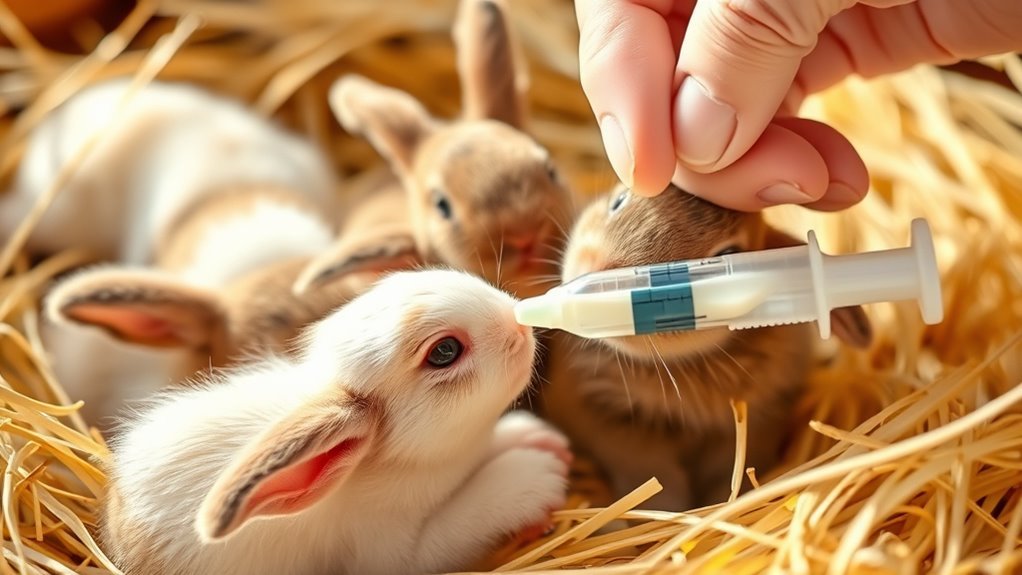
When feeding baby rabbits, you’ll want to use a 3 cc syringe or an eyedropper while keeping them upright to prevent choking. A wildlife rehabilitator recommends a formula made from 1/2 cup goat milk, 1/2 cup KMR, 1 tablespoon freeze-dried colostrum, and 1/2 teaspoon heavy cream to provide balanced, nutritious food.
Newborns usually need about 2 mL per feed twice daily, increasing gradually to 30 mL by 2-3 weeks as they start solid food. After feeding, always stimulate urination and defecation by gently rubbing the anal area with a warm cotton ball.
Make sure to monitor your baby rabbits’ health by checking for round bellies and steady weight gain. Feeding the right formula in safe ways guarantees their growth and survival.
Frequently Asked Questions
How Long Will Baby Rabbits Survive Without Their Mother?
Baby rabbits can survive about 3 to 7 days without their mother, depending on their age and health.
You’ll need to act quickly to keep them warm and fed. Otherwise, their chances of survival drop fast.
How Do I Keep a Wild Baby Bunny Alive?
You keep a wild baby bunny alive by keeping it warm and feeding it specialized formula with a syringe. Make sure to handle it gently so it doesn’t get stressed.
After feeding, stimulate elimination by gently rubbing its belly or rear. This helps the bunny go to the bathroom, which is really important for its health.
And don’t wait too long—contact a licensed wildlife rehabilitator quickly. They can give the proper care and guidance the little bunny needs to survive.
What Kind of Milk Can Baby Bunnies Drink?
Don’t use cow’s milk—it can harm baby bunnies. Instead, you’ll want to feed them Kitten Milk Replacer or goat’s milk.
These are easier on their digestion and provide the nutrients they need to grow strong.
Trust me, it’s way better for their little tummies!
How Often Do Newborn Baby Bunnies Need to Be Fed?
You need to feed newborn baby bunnies twice a day, offering about 2 mL of formula each time. Keep their environment warm to help digestion.
As they grow older, gradually increase the feeding amounts. This helps them get the nutrition they need without overwhelming their little tummies.
Conclusion
You might think feeding baby rabbits without their mother is overwhelming, but it’s surprisingly doable. Just like you’ve learned when they need feeding and which formulas work best, your care can be the very thing that saves them.
It’s a coincidence that your gentle hands and their tiny lives have crossed paths—yet here you are, making all the difference. Trust yourself; these little ones depend on you and will thrive because of your love and effort.
Feeding baby rabbits without a mother requires patience and attention, but it’s not impossible. With the right formula, proper feeding schedule, and gentle handling, you can help these fragile babies grow strong and healthy. Remember, your commitment to feeding baby rabbits without a mother plays a vital role in their survival and development. So keep going—you’re giving these little bunnies a fighting chance through your care and dedication.