What Should You Feed a Baby Squirrel?
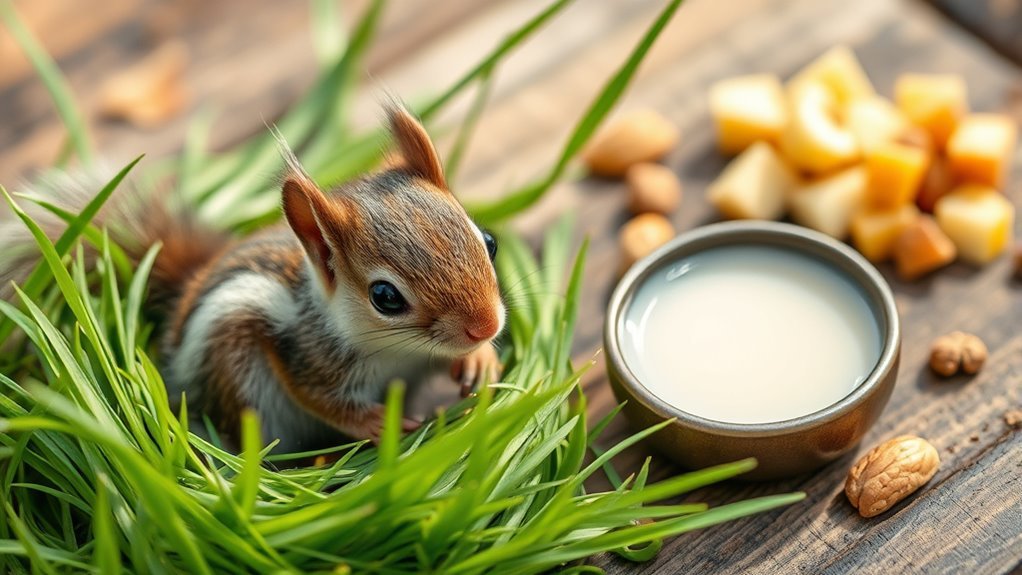
You should feed a baby squirrel warm formula made from homemade goat milk mix or a commercial replacer like Wombaroo during its first few weeks. This special formula provides the nutrients a tiny squirrel needs to grow strong and healthy.
Feeding the right baby squirrel formula is super important because their little bodies are delicate and need proper care.
As the baby squirrel grows, around six weeks old, you can gently introduce soft solids like sweet potato and rodent blocks. These foods help support its digestion as it transitions from milk to solid food.
Remember to keep portions appropriate and monitor weight to avoid overfeeding.
Taking these steps ensures the baby squirrel gets the best care possible. There’s plenty more helpful guidance ahead to help you make this transition smooth and successful.
Key Takeaways
- Feed newborn squirrels homemade goat milk formula or Wombaroo Squirrel milk replacer warmed to body temperature.
- From four weeks, transition to Fox Valley 20/50 Formula or continue with Wombaroo milk replacer.
- Feed up to 5% of the squirrel’s body weight per feeding, adjusting amounts as they grow.
- Begin introducing soft solid foods like sweet potato and broccoli around 6 to 7 weeks old.
- Provide fresh water constantly and monitor health, weight, and digestion throughout feeding stages.
How to Choose and Prepare Feeding Formulas for Different Baby Squirrel Ages
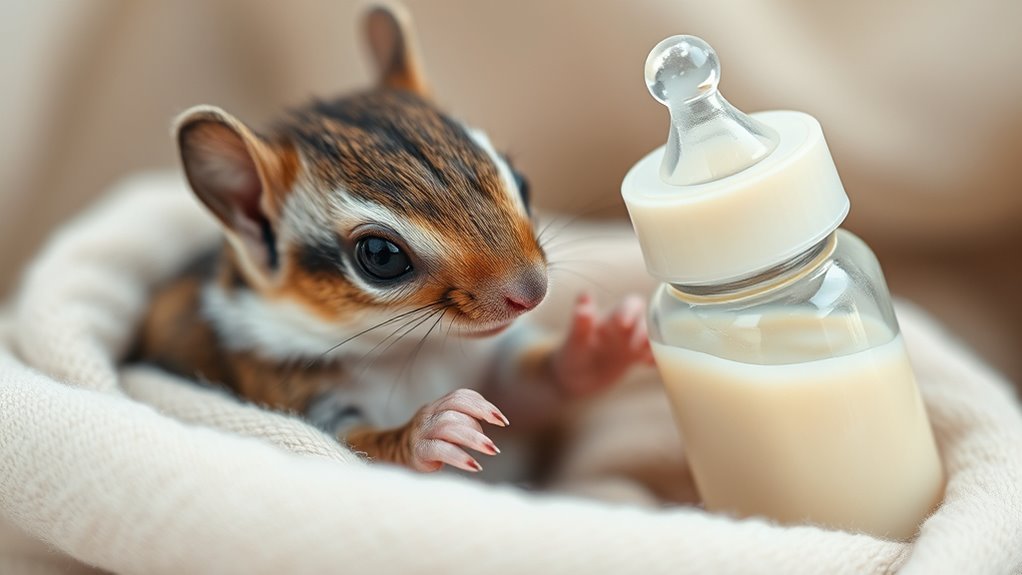
When caring for baby squirrels, choosing the right formula based on their age is vital for their growth and health. For newborns, you can use a homemade goat milk formula made with goat milk, heavy cream, yogurt, and egg yolk. Or, you can temporarily opt for Wombaroo Squirrel milk replacer.
From four weeks onward, switch to Fox Valley 20/50 Formula or continue with Wombaroo to meet their changing nutritional needs. Always warm the formula to body temperature before feeding, as baby squirrels may reject cooler mixtures.
Feed them up to 5% of their body weight per feeding, adjusting as they grow to avoid overfeeding. And remember to discard any pre-made formula after 24 hours to guarantee safety. If you’re unsure about feeding amounts or formula choices, it’s a good idea to consult a wildlife rehabilitator.
When and How to Introduce Solid Foods Without Upsetting Baby Squirrel Stomachs
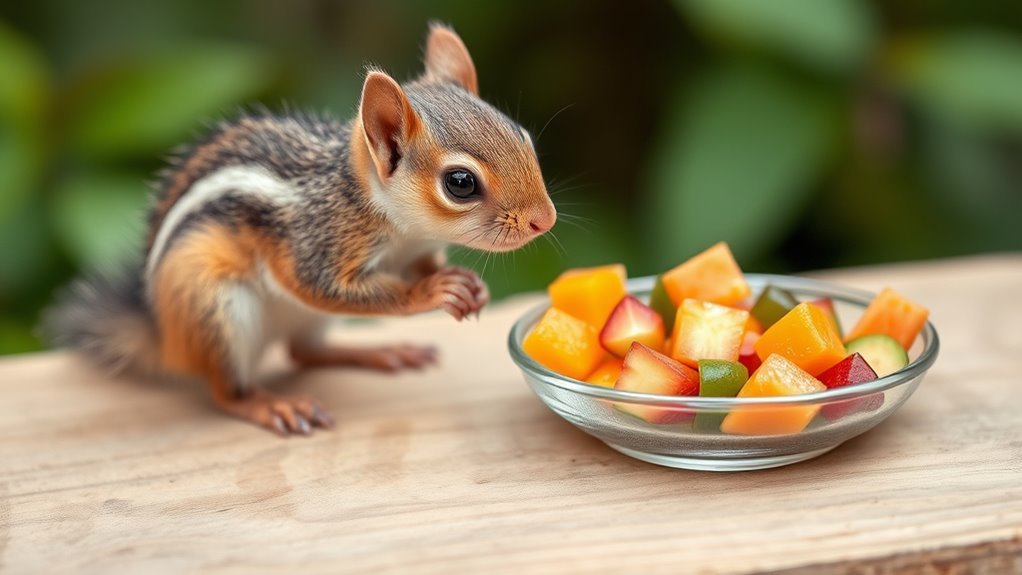
Although baby squirrels rely primarily on formula during their early weeks, you’ll want to start introducing solid foods gradually around 6 to 7 weeks of age to support their developing digestive systems.
Begin introducing solid foods to baby squirrels at 6 to 7 weeks to aid digestion development.
Keep a close eye on their reactions as you introduce solids to avoid digestive upset. Start with soft, species-appropriate foods alongside formula, ensuring hydration stays consistent.
- Introduce soft solids like sweet potato, broccoli, and cauliflower in small amounts.
- Monitor for diarrhea or discomfort as their digestive system adjusts.
- Use high-quality options such as rodent blocks or Primate Dry monkey biscuits.
- And don’t forget to keep fresh water available throughout these feeding changes.
Frequently Asked Questions
What Should I Feed My Newborn Baby Squirrel?
You should feed your newborn baby squirrel a homemade goat milk formula or a specialized milk replacer like Wombaroo. Warm it gently before feeding.
Try to feed every 2-3 hours, and offer small, gradual amounts using a syringe or nursing bottle. It might take a little patience, but your baby squirrel will get used to it!
How Long Can a Baby Squirrel Go Without Feeding?
You’d think a baby squirrel could skip meals like a grown-up, but no. They really can’t go more than 4 to 6 hours without feeding, or risk serious health problems.
What Do You Feed a Baby Squirrel That Fell Out of the Nest?
You should feed a baby squirrel a warmed formula like goat milk mixed with heavy cream and yogurt, using a syringe or dropper. Feed slowly, keep it hydrated, and stimulate urination until it’s ready for solid foods.
It’s really important to be gentle with them. They’re tiny and fragile, so take your time and make sure they’re comfortable. Once they start growing, you can slowly introduce solid foods.
How Do I Take Care of a Baby Squirrel I Found?
You should keep the baby squirrel warm, rehydrate it carefully, and feed it small amounts using a syringe. Make sure to go slow and steady with the feeding.
Keep a close eye on its health and avoid overfeeding at all costs. If you notice any serious issues, don’t hesitate to contact a wildlife rehabilitator or vet. They’ll know exactly what to do!
Conclusion
You should choose the right formula, prepare it carefully, and feed your baby squirrel gently. It’s important to be patient and take your time during feeding.
You should watch for signs of hunger, monitor their digestion, and adjust feeding amounts as needed. Keeping an eye on how they’re doing helps you make sure they’re getting enough.
You should introduce solid foods slowly, observe how they respond, and avoid upsetting their delicate stomachs. This step-by-step approach helps their little tummies adjust without any trouble.
By following these steps, you’ll give your baby squirrel the best start possible. Feeding a baby squirrel properly ensures healthy growth and supports their overall well-being. With the right care and nutrition, your baby squirrel will thrive and lead a happy, healthy life.