What Does a Baby Squirrel Look Like at Birth?
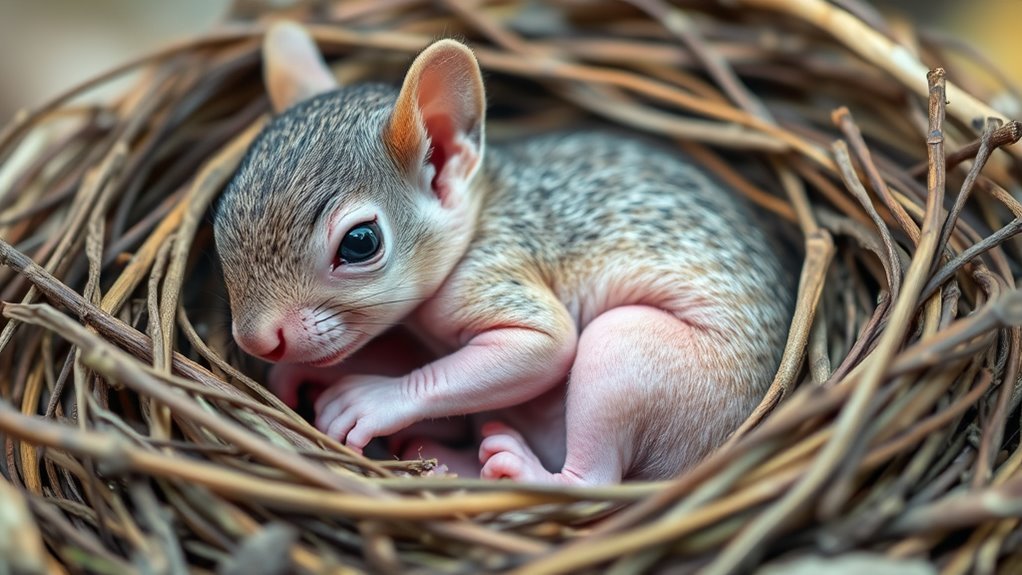
When you see a newborn baby squirrel, you’ll notice it’s hairless, pink, and incredibly fragile. Its tiny body looks vulnerable, with long tails and small, flat ears that aren’t fully developed yet. These little creatures are truly delicate at birth.
You’ll also spot tiny black toenails on their delicate feet. Because they lack fur and strength, baby squirrels depend heavily on their mother’s care for warmth and nourishment. They can’t survive on their own right away.
As they grow quickly, you’ll find their changes fascinating and important to understand. Watching a baby squirrel develop is like seeing a tiny miracle unfold before your eyes.
Their journey from helpless newborns to agile climbers is pretty amazing!
Key Takeaways
- Baby squirrels are born hairless, pink, and with fragile, vulnerable bodies. They look really tiny and delicate at first.
- They have long tails that appear large compared to their tiny size. It’s kind of surprising how big those tails look!
- Their small ears lie flat against their heads and aren’t fully developed yet. You can tell they’re still growing.
- Tiny black toenails are present on their delicate feet right from birth. It’s amazing how even those little details are there.
- They are blind and completely dependent on their mother for warmth and nutrition. Without her, they wouldn’t survive.
What Does a Newborn Baby Squirrel Look Like?
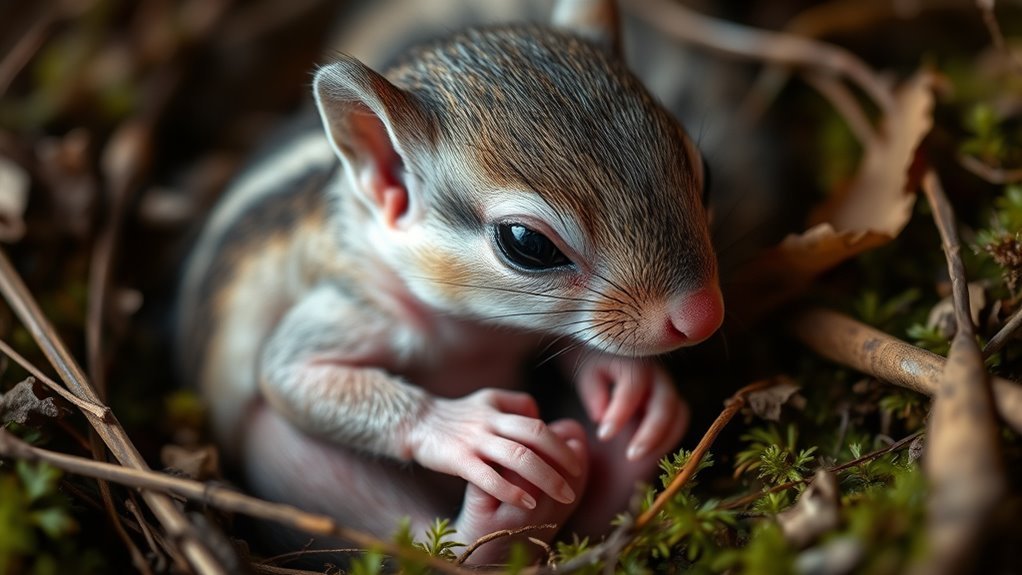
When you first see a newborn baby squirrel, you’ll notice it’s born hairless and pink, looking fragile and vulnerable. These newborn baby squirrels have long tails that seem large compared to their tiny bodies, though they aren’t yet bushy.
Their small ears lie flat against their heads, not fully developed, and you can spot tiny black toenails on their delicate feet. At this stage, they rely entirely on their mother squirrel for milk and warmth, which are vital to keeping them alive and helping them grow into a healthy baby.
Without fur or strength, they depend on her care to maintain body heat and receive essential nutrients. It’s clear that these little guys need their mom a lot in the beginning.
Observing these early features helps you understand just how much they need their mother in the beginning.
How Do Baby Squirrels Develop in Their First Weeks?
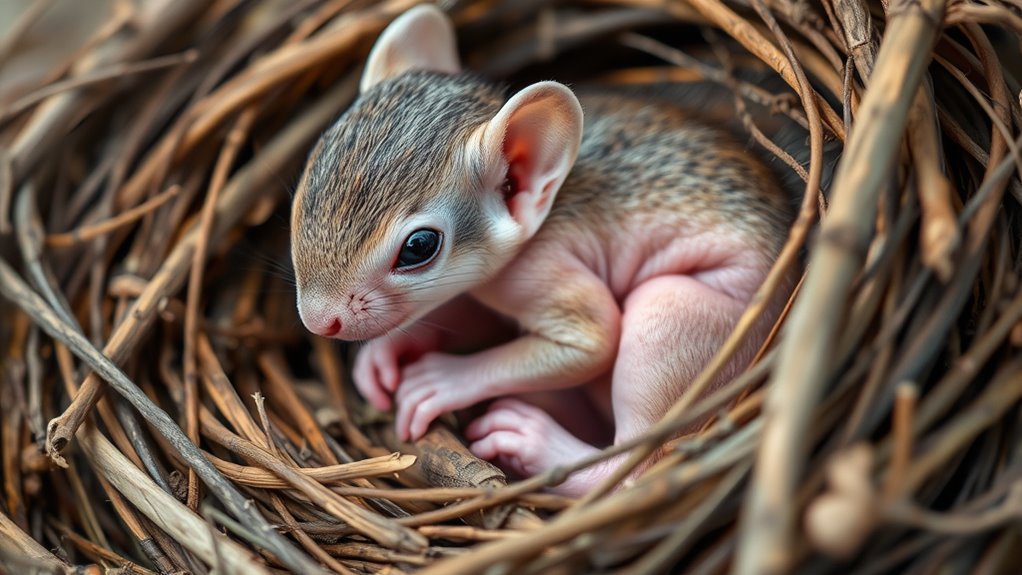
Though newborn baby squirrels start off fragile and helpless, they quickly undergo remarkable changes in their first weeks. As pinkies, they’re hairless and blind, but within the first week, you’ll notice fine fur beginning to grow, marking early physical growth.
By two weeks, their eyes open, and you’ll see their developing motor skills improve as they become more aware of their surroundings. Around four weeks, baby squirrels gain increased fur coverage and start exploring their nests actively.
Frequently Asked Questions
Can a 5 Week Old Baby Squirrel Survive on Its Own?
No, a 5-week-old baby squirrel can’t survive on its own yet. You’ll need to keep providing warmth, nutrition, and care.
It’s still learning to eat solid food and lacks survival skills. So, it definitely needs your help for now.
What Month Do Squirrels Usually Give Birth?
You might think squirrels throw a spring party—because they usually give birth in March and April.
Sometimes, they host a second round in August or September, making sure their little ones arrive when food’s plenty and life’s kind.
How Long Do Baby Squirrels Stay With Their Mother?
You’ll find baby squirrels stay with their mother for about 10 to 12 weeks. During this time, she’ll nurture them and teach survival skills.
She also helps them shift from nursing to solid foods before they go off on their own. It’s quite a critical period for their growth and learning.
Why Is It so Rare to See a Baby Squirrel?
You rarely glimpse baby squirrels because they’re tucked away in cozy, secret hideaways. They grow quickly, stay close to their moms, and avoid the spotlight.
This makes their early lives a quiet, tender mystery you seldom witness. It’s like they have their own little world you don’t get to see often.
Conclusion
So, you’re expecting a fluffy ball of fur the moment a baby squirrel’s born? Think again! Newborn squirrels look like tiny, pink, wrinkly little aliens—definitely not ready for their forest modeling debut. They’re blind, hairless, and helpless, which is nature’s way of saying, “Good luck, Mom!”
But don’t worry, with a little time and a lot of squirrel magic, those awkward babies transform into the acrobatic cuties you actually want to see. Baby squirrels grow quickly, sprouting fur and opening their eyes within just a few weeks. Before you know it, they’re scampering around, showing off their natural agility.
So, what does a baby squirrel look like at birth? It’s a far cry from the fluffy creatures we admire. Instead, they start out fragile and vulnerable but quickly develop into the lively little animals that charm us all. Understanding this transformation helps us appreciate just how amazing these tiny creatures really are!




2 Comments