What Do You Call a Baby Goat
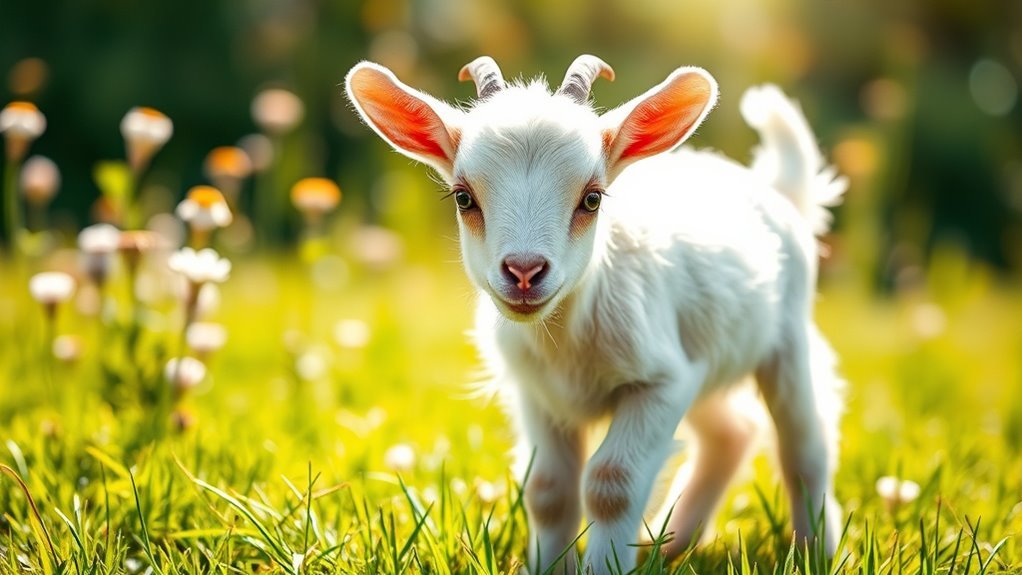
You call a baby goat a “kid,” a key term that helps you communicate clearly in goat farming or care. Knowing this word prepares you for moments like kidding, when a goat gives birth to one or more kids.
It’s a simple term, but super important if you’re around goats.
Kids are playful and curious little animals. Understanding their behavior helps you create a safe space for them with proper nutrition and social interaction.
They need attention and care to grow healthy and strong.
Keep exploring to find out how to best care for these lively newborns. There’s a lot to learn, and every bit of knowledge makes a difference in raising happy, healthy kids!
Key Takeaways
- A baby goat is called a “kid” in goat farming terminology. The term “kidding” refers to the process of a goat giving birth to kids.
- Young female baby goats are specifically called “doelings.” On the other hand, young male baby goats are known as “bucklings.”
- Using the correct terms like “kid” really helps improve communication among goat farmers and enthusiasts. It just makes things clearer and easier to understand.
What a Baby Goat Is Called: And Why It Matters
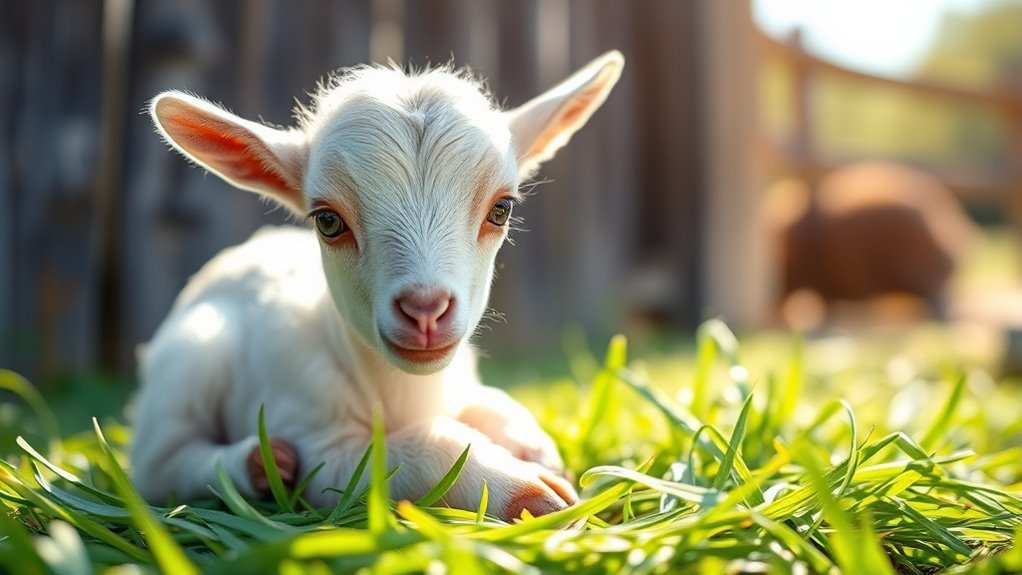
When you hear the term “kid” in goat farming, it refers to a baby goat. It highlights their playful and curious nature.
This newborn baby goat is central to goat farming, and knowing the proper terms helps you communicate clearly with other goat enthusiasts.
The birthing process, called “kidding,” might confuse you at first, but it specifically means a goat giving birth to one or more kids.
Kidding is the term for a goat giving birth to one or more kids, a key moment in goat farming.
You’ll also hear “doelings” for young females and “bucklings” for young males. Recognizing these terms isn’t just about names—it’s about preparing for the arrival and care of newborn babies.
Using the right language guarantees you understand what’s happening and respond appropriately. This is essential for successful goat farming.
Understanding Baby Goat Behavior and Care
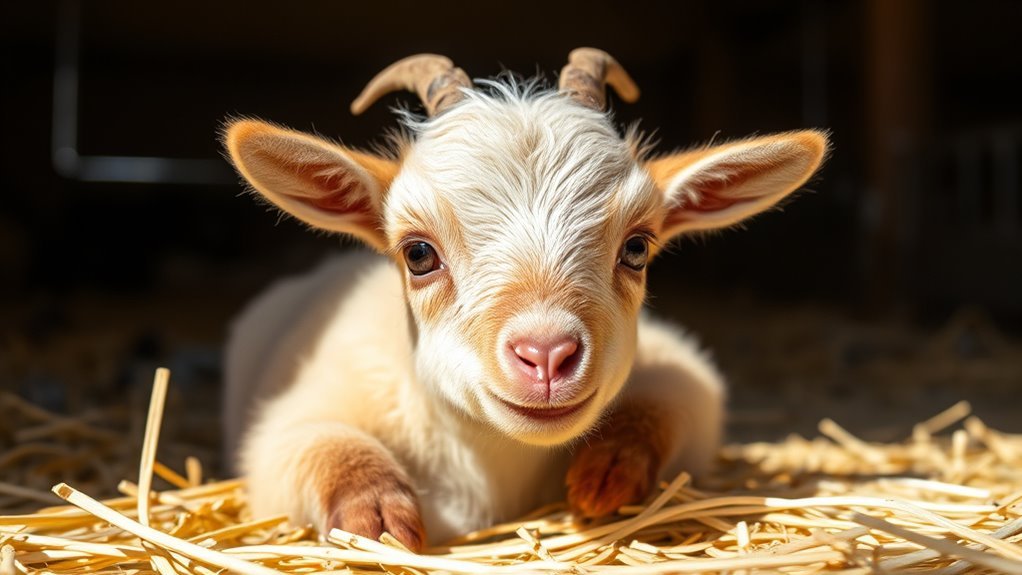
Knowing what to expect from baby goats, or kids, helps you provide the care they need as they grow. Kids are playful and curious, often exploring areas they shouldn’t, so creating a safe environment is vital.
They have a strong instinct to climb and jump, so adding climbing structures to their play area supports their physical development. You should also guarantee they have access to clean water and age-appropriate nutrition.
Social interaction with other goats is essential to help them develop healthy behaviors and prevent loneliness. Additionally, understanding signs of impending kidding, like udder development and restlessness in mother goats, prepares you for new arrivals.
Frequently Asked Questions
What Are Goats Called as Babies?
You call baby goats “kids.” If you want to be specific, young females are “doelings” and young males are “bucklings.”
They’re playful and curious, always getting into trouble, so watch them closely when they’re exploring.
Is a Goat a Kid or Kidd?
You call a baby goat a kid, not kidd. The correct term is “kid,” and “kidd” is a common mistake.
When goats give birth, it’s called kidding, linking the term firmly to baby goats. So yeah, “kid” is the way to go!
Is Baby Goat Lamb?
No, a baby goat isn’t called a lamb. You call a baby goat a kid.
Lambs are baby sheep, so it’s important to use the right term. That way, you avoid confusion when talking about these animals.
What Are Small Goats Called?
Small goats are called kids, and trust me, they’re like tiny, furry tornadoes of energy!
You’ll find them bouncing, climbing, and causing adorable chaos wherever they go, making every moment with them unforgettable and wild.
Conclusion
Now that you know a baby goat is called a kid, you can better appreciate these lively animals. Caring for them isn’t just about feeding and shelter—it’s about understanding their playful nature and curious spirit.
Like a telegram delivering urgent news in the digital age, this knowledge connects you to a timeless tradition of animal care. So, whether you’re a farmer or just curious, embracing this info will help you nurture these adorable creatures with confidence.
Knowing what to call a baby goat is just the start. When you understand their behavior and needs, taking care of kids becomes more rewarding. It’s all about patience, attention, and a bit of fun.
So, next time you see a kid, remember it’s not just a name—it’s a key to connecting with these charming animals and becoming a better caregiver.