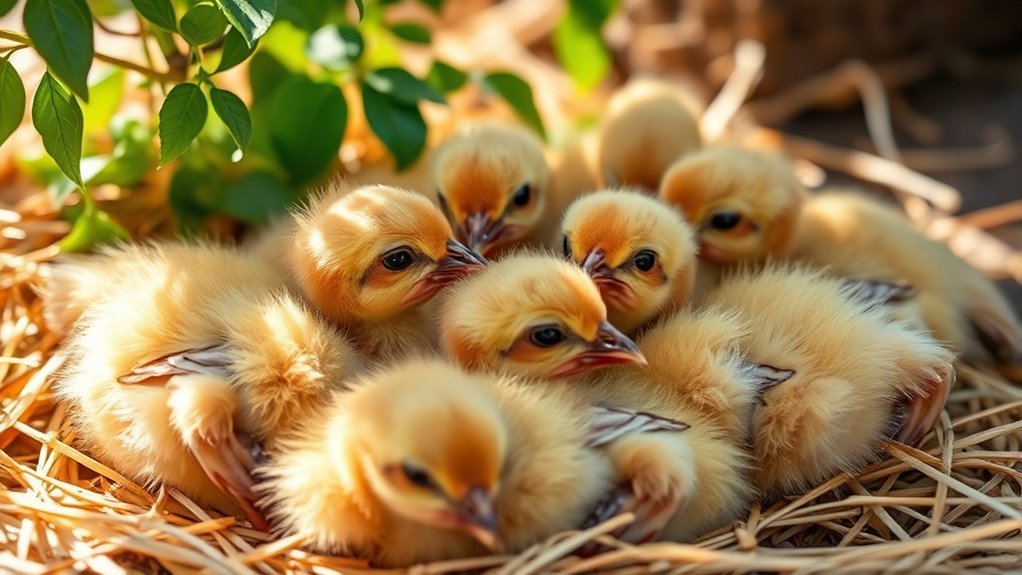
What Are Baby Turkeys Called?
If you’re wondering what baby turkeys are called, it actually depends on whether they’re wild or domestic.
Wild baby turkeys are called chicks. On the other hand, domestic baby turkeys under four weeks old go by poults.
After that, juvenile males are known as jakes, and juvenile females are called jennys.
These names help you track their growth stages and understand their behavior better.
Keep exploring, and you’ll also learn what groups of turkeys are called and how their development unfolds.
It’s pretty interesting once you start diving into the world of turkeys!
Key Takeaways
- Wild baby turkeys are called “chicks” during their early life stage.
- Domestic baby turkeys are known as “poults” for the first four weeks.
- After four weeks, juvenile male turkeys are called “jakes.”
- Juvenile female turkeys after four weeks are referred to as “jennys.”
- The term “chick” can be confusing, so specific names clarify turkey growth stages.
What Are Baby Turkeys Called?
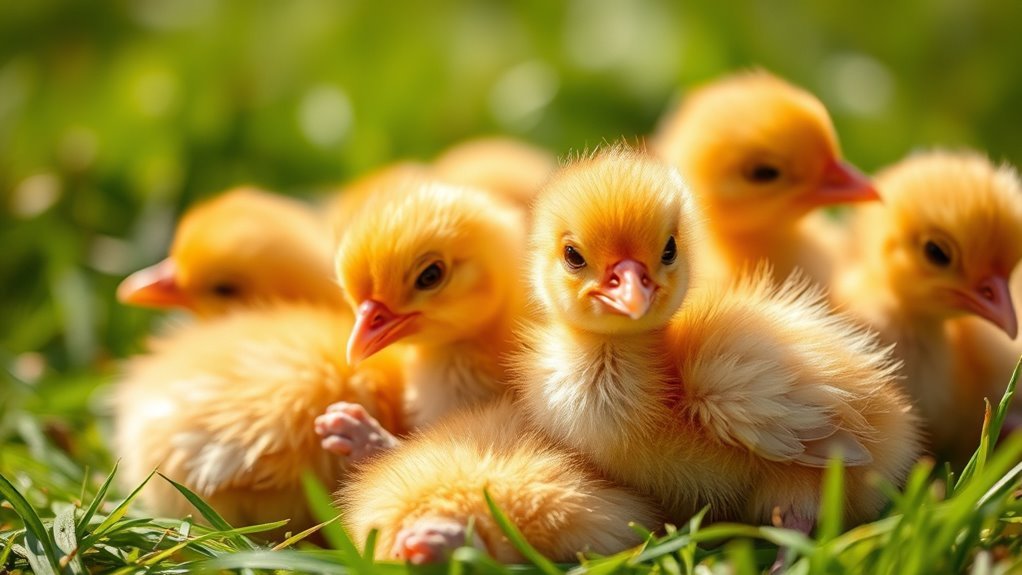
Baby turkeys go by different names depending on their type and age. When you see baby turkeys called chicks, they’re usually wild, like the Wild Turkey’s young.
Domestic baby turkeys, however, are more often called poults during their first four weeks. After this period, these poults start showing juvenile characteristics.
At this stage, juvenile males are called jakes, while juvenile females go by jennys. The term chick can be confusing since it’s used for both wild and domestic babies.
Knowing these distinctions helps you understand turkey growth better. Remember, baby turkeys rely heavily on their mothers for care and protection, especially before they learn to fly.
This early period is essential for poults and chicks alike. It’s when they get the care and guidance they need to grow strong.
What Is a Group of Turkeys Called?
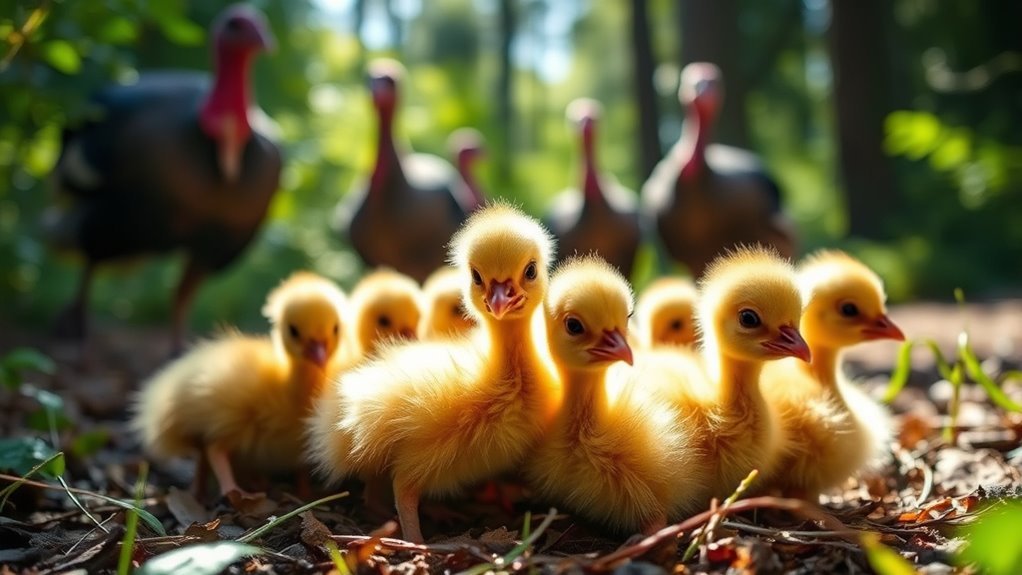
Understanding the names for individual turkeys helps when you learn how they gather. A group of turkeys is most commonly called a “flock,” which you’ll hear often when talking about both domestic turkeys and Wild Turkeys.
Sometimes, you might come across the term “rafter,” a less common and more obscure name for a group of turkeys. Remember, adult males are “toms,” and adult females are “hens,” which helps you picture who’s in the flock.
Here’s a quick guide to turkey group terms:
| Term | Description |
|---|---|
| Flock | Common group of turkeys |
| Rafter | Less common group name |
| Clutch | Not used for turkeys |
Frequently Asked Questions
Are Baby Turkeys Called Goblets?
No, baby turkeys aren’t called goblets. You’ll hear them called poults, especially on farms, or chicks in the wild.
Goblets is just a playful made-up term, not a real name for young turkeys. So, don’t worry if you haven’t heard it before—it’s not official!
What Are Juvenile Wild Turkeys Called?
Juvenile wild turkeys are called poults until about four weeks old. After that, males become jakes and females turn into jennies.
You’ll notice they start flying by five weeks and change their diet as they grow. It’s pretty interesting to watch them develop!
What Is a Group of Baby Turkeys Called?
You’ll find a group of baby turkeys called a flock, sometimes a rafter. These poults stay close to their mother, foraging together during their early weeks.
That makes the flock a lively, close-knit group. It’s pretty neat how they stick together like that!
Are Baby Turkeys Called Jakes?
No, baby turkeys aren’t called jakes. You call the very young ones poults for their first few weeks.
Jakes are juvenile male turkeys. They’re older than poults but not yet fully grown toms. So, it’s a bit different from what some might think!
Conclusion
Now that you know baby turkeys are called poults, you can picture these fluffy little bundles as tiny explorers venturing into the big, wild world. Just like a family huddled together, a group of turkeys is called a rafter, soaring through life side by side.
So next time you spot these feathered friends, you’ll see more than just birds—you’ll see a lively story unfolding, one poult at a time. Baby turkeys, or poults, are full of curiosity and energy, making every moment with them a joyful discovery.
Understanding what baby turkeys are called helps you appreciate these fascinating creatures even more. Whether you’re watching a single poult or a whole rafter, you’re witnessing nature’s wonderful way of growing life. So keep an eye out for poults—they’re the adorable start of the turkey’s journey!





2 Comments