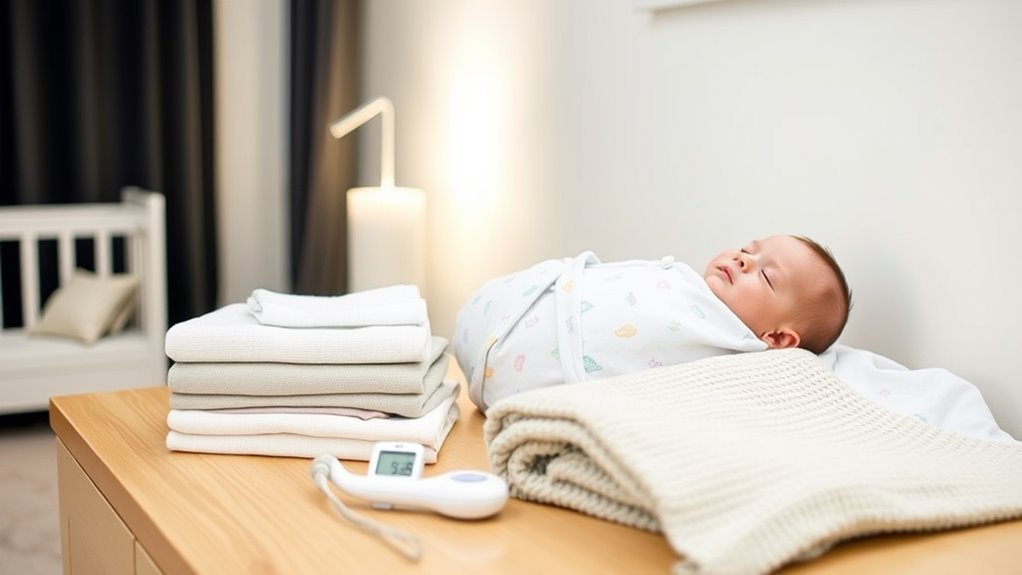
How to Dress Baby for Sleep With 3 Essential Tips
To dress your baby for sleep, start by picking sleepwear with a TOG rating that matches the room temperature. Lighter fabrics work best for warmer rooms, while thicker layers are great for cooler ones. This helps keep your baby comfortable throughout the night without getting too hot or too cold.
Next, layer your baby’s clothing safely. A good rule of thumb is to dress your little one in one extra layer than you’d wear yourself. This simple tip can prevent overheating or chilling, which is super important for a restful sleep.
Finally, instead of using loose blankets, try swaddling or wearable blankets. These options keep your baby secure and cozy without the risk of loose bedding.
Keep these three essential tips in mind, and you’ll help your baby sleep safely and soundly every night.
Key Takeaways
- Dress your baby in one more layer than an adult would wear to maintain warmth without overheating. It helps keep them cozy through the night.
- Use breathable fabrics like cotton and pick sleepwear with the right TOG rating based on the room temperature. This way, your baby stays comfortable without getting too hot.
- Keep an eye on your baby’s chest or back temperature regularly. This helps make sure they’re neither too hot nor too cold.
- Avoid loose blankets altogether. Instead, use wearable blankets or swaddles — they’re safer and reduce the risk of suffocation.
- Try to keep the room temperature between 68-72°F. That’s the sweet spot for your baby to sleep comfortably and safely.
Choose the Right Baby Sleepwear for Room Temperature
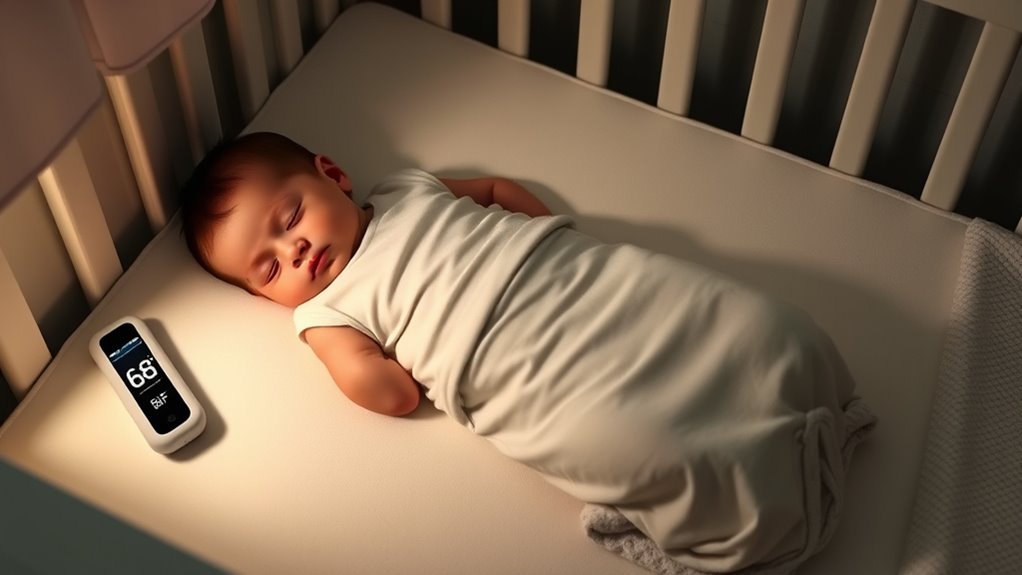
When choosing sleepwear for your baby, consider the room temperature to keep them comfortable and safe. Dress your baby in breathable fabrics like cotton to help regulate their body heat and create a comfortable sleep environment.
For room temperatures above 75°F, select baby sleepwear with TOG ratings between 0.5 and 2.0, such as short-sleeve bodysuits or sleep sacks. In moderate temperatures (68°F to 74°F), use TOG ratings from 0 to 1.0, pairing a onesie with a sleep sack for added warmth.
Cooler rooms (61°F to 67°F) call for sleepwear with a TOG rating of about 2.5. Always monitor temperature by checking your baby’s chest or back, watch for signs of overheating like flushed skin or sweating, and dress appropriately to avoid overheating.
Layer Baby Sleepwear Safely to Prevent Overheating and Chilling

Although layering can keep your baby comfortable, you need to dress them in one more layer than you would wear to sleep yourself. Choose sleepwear with the right TOG rating based on room temperature—lighter fabrics for warmer nights and thicker (up to 2.5 TOG) for cooler temperatures between 61–67°F.
Regularly check your baby’s chest or neck to verify their core temperature feels just right; fingers and toes aren’t reliable indicators. Avoid overheating by maintaining room temperature between 68-72°F, which helps reduce the risk of infant death syndrome.
Instead of loose blankets, use wearable blankets designed for safe sleep to keep your baby warm without suffocation hazards. Layer baby sleepwear safely to keep your little one cozy while preventing both overheating and chilling throughout the night.
Swaddling and Wearable Blankets: Safe Sleepwear Alternatives
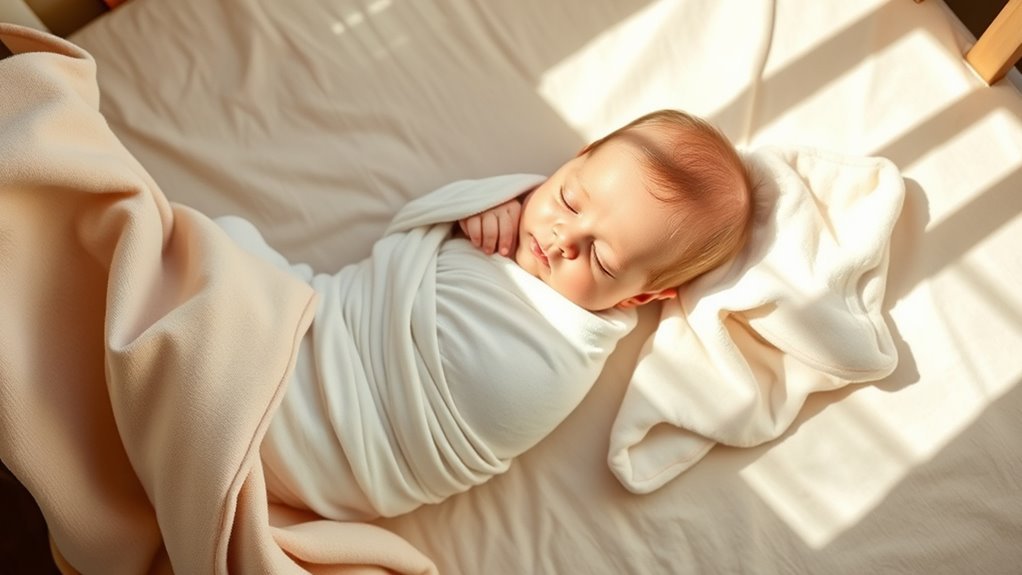
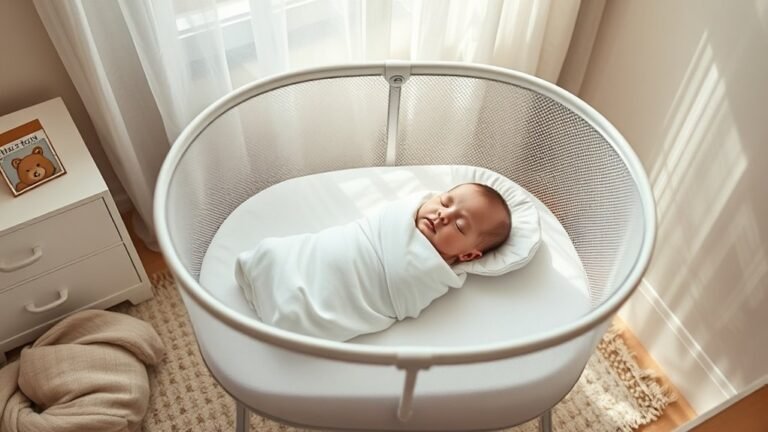
To keep your baby comfortable and safe throughout the night, consider swaddling or using wearable blankets as alternatives to loose bedding. Swaddling with lightweight blankets and making sure your baby’s head stays uncovered helps reduce the risk of suffocation.
Once your baby starts rolling, it’s time to switch to wearable blankets like sleep sacks. Swaddling at that stage can actually increase sleep risks.
Choose sleepwear with the right TOG ratings to match the room temperature. This way, you ensure a secure fit without any loose elements.
| Sleepwear Type | Key Safety Feature | Best Use |
|---|---|---|
| Swaddling | Lightweight, head free | Newborns, before rolling |
| Wearable Blankets | Secure fit, no strings | Older babies, reducing risk |
| TOG Rating | Temperature appropriate | Room temperature adjustment |
Using these safe sleepwear options helps protect your baby by lowering the risk of suffocation and overheating. It’s all about keeping your little one safe and cozy!
Frequently Asked Questions
What Is the 3-3-3 Rule for Newborns?
The 3-3-3 rule means you dress your newborn in three layers: a base layer, an insulating layer, and a breathable outer layer if needed.
You’ll keep them cozy without overheating, matching layers to room temperature. That way, your baby stays comfortable no matter where you are.
How to Dress a Baby for Sleep at 3 Months?
Like wrapping a gentle breeze, dress your 3-month-old baby in a lightweight cotton onesie and a sleep sack with a 1.0 TOG rating.
Always watch for overheating and place them on their back to sleep safely.
It’s all about keeping them comfy and secure while they rest. Just keep an eye on how warm they feel throughout the night.
What Month Is the Hardest With a Baby?
The fourth month is often the hardest for you because your baby’s sleep patterns change. They become more alert, and may experience sleep regression.
It’s totally normal to feel challenged, but hang in there. Stay patient—it really does improve with time.
Can a Baby Sleep in Just Footie Pajamas?
You can absolutely let your baby sleep in just footie pajamas—they’re like a cozy hug that keeps them comfortable and safe.
Just keep the room temperature steady and choose breathable fabrics to avoid overheating.
It’s a simple way to keep your little one snug without worrying too much. Just make sure they’re not too hot or cold, and you’re good to go!
Conclusion
Now that you know how to choose the right sleepwear, layer safely, and consider swaddling or wearable blankets, you’re ready to create a cozy, safe sleep environment for your baby.
Isn’t it comforting to imagine your little one sleeping soundly, snug but not overheated? By following these simple tips, you’ll help your baby rest peacefully through the night while keeping safety top of mind.
Sweet dreams really do start with smart sleepwear choices. Dressing your baby for sleep isn’t just about comfort—it’s about safety too. Using the right sleepwear, layering correctly, and choosing safe options like wearable blankets can make all the difference. When you focus on these essentials, you create a calm and secure space where your baby can sleep soundly and wake up happy. So remember, smart sleepwear choices help ensure your baby’s comfort and safety all night long!



2 Comments