How Many Bottles Do You Need for Baby Feeding?
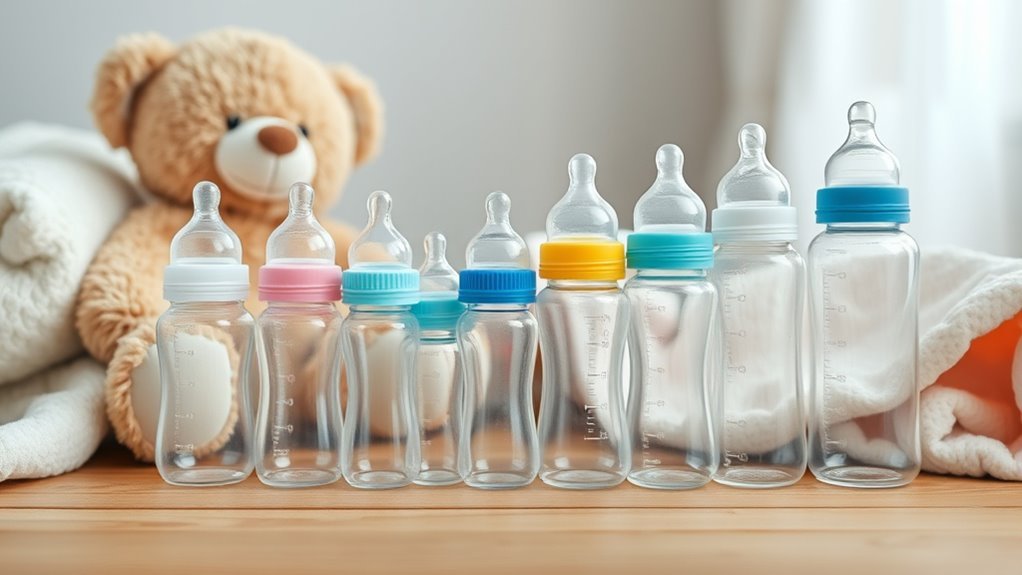
You’ll generally need between 4 and 10 bottles for feeding your baby, depending on their age and how you feed them.
Newborns require more bottles due to frequent feedings, especially if formula-fed. On the other hand, exclusively breastfed babies need fewer bottles since they feed less from bottles.
As your baby grows and feeding intervals lengthen, you’ll likely use fewer bottles.
Cleaning habits also play a role—some parents prefer having more bottles on hand to avoid constant washing. Plus, if you switch between breastfeeding and formula, that can affect how many bottles you actually need.
If you want to adapt your supply effectively, understanding these changes will help.
It’s all about finding the right balance that fits your baby’s feeding routine and your lifestyle.
Key Takeaways
- Newborns typically need 6 to 10 bottles because they feed frequently, every 2 to 3 hours.
- If your baby is exclusively breastfed, you’ll usually need about 2 to 3 bottles for pumped milk.
- Formula-fed infants generally require 8 to 10 bottles to keep up with their feeding demands.
- For babies who are combo-fed, having 4 to 6 bottles on hand works best.
- By the time your baby is six months old, their bottle needs drop to 4 to 6 as feeding intervals get longer.
How Many Baby Bottles Does Your Baby Really Need?
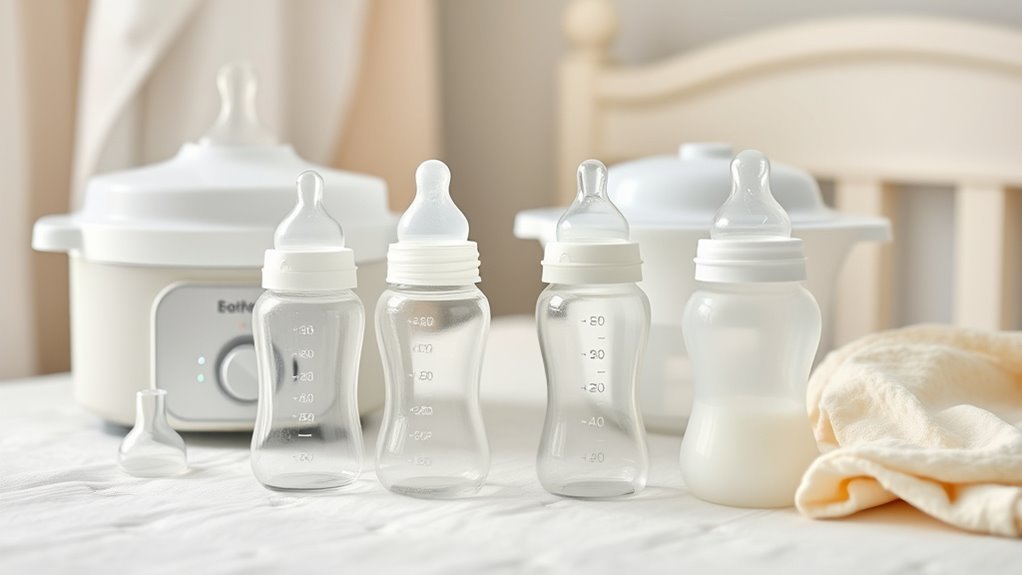
Determining how many baby bottles you really need depends on your baby’s feeding habits and age. For newborns, you’ll want 6 to 10 bottles since they feed every 2 to 3 hours, requiring frequent cleaning.
If your baby is exclusively breastfed, 2 to 3 bottles are enough for pumped milk. Formula-fed babies usually need 8 to 10 bottles to keep up with their feeding schedule.
If you’re combo-fed, having 4 to 6 bottles works well to balance breast and bottle feeds. As your baby approaches six months, the number of bottles you need drops to about 4 to 6 because feedings become less frequent.
When Should You Change How Many Baby Bottles You Have?
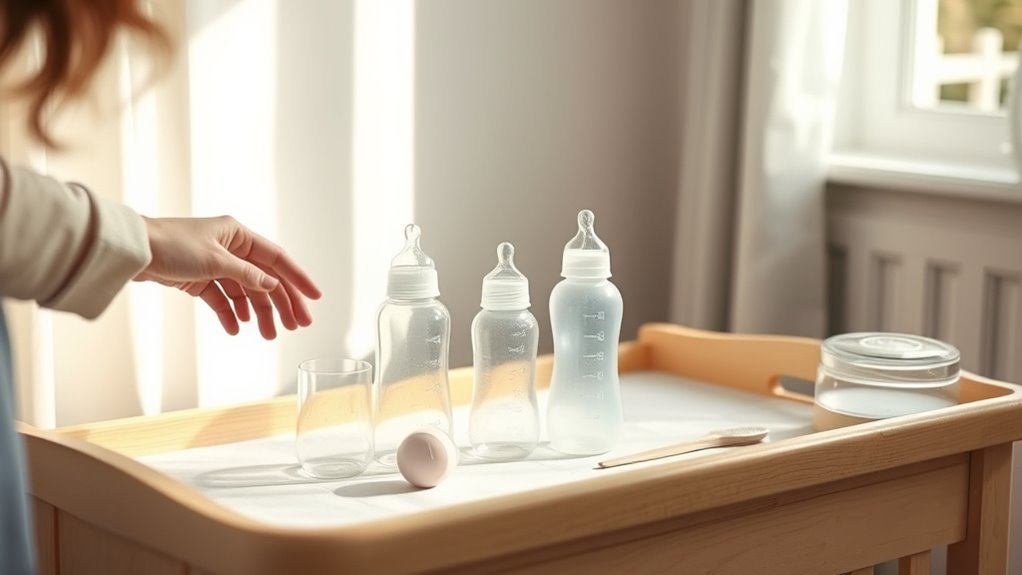
How do you know when it’s time to alter how many baby bottles you have? As your baby grows, the bottles you need usually decrease—from 8-12 to about 4-6 by six months—due to longer feeding intervals.
If your baby starts formula feeding or goes through growth spurts, you might need extra bottles to keep up with more frequent feedings. Breastfed babies often need fewer bottles, but shifting methods, like switching to formula, will likely increase your bottle count.
Also, how often you wash impacts your supply; washing right after use means you can manage with fewer bottles. Don’t forget to inspect bottles and nipples regularly; replace any worn ones to maintain an adequate supply and guarantee safe feeding as your baby’s needs change.
Frequently Asked Questions
What Is the 5-3-3 Rule for Baby Feeding?
The 5-3-3 rule means you keep 5 bottles if you’re formula feeding, 3 if you’re breastfeeding, and add 3 more for mixed feeding. It helps you manage feeding and cleaning efficiently as your baby grows.
It’s a simple way to stay organized without feeling overwhelmed. Trust me, it makes life a whole lot easier when you’re juggling everything!
Do Babies Need 4 or 8 Oz Bottles?
Newborns feed about 8 to 12 times daily, so you’ll start with 4 oz bottles to avoid discomfort.
As your baby grows and feeds less often, you’ll switch to 8 oz bottles to meet their bigger appetite.
It’s all about matching the bottle size to how much your little one needs at each feeding. That way, they stay comfortable and happy!
How Many 8 Oz Bottles Do I Need?
You’ll need about 6 to 10 eight-ounce bottles, depending on your baby’s age and feeding method.
Having enough bottles helps you keep a steady supply and reduces how often you wash them.
That way, feeding becomes a lot easier and less stressful for you.
How Many Bottles Should a Baby Eat?
Babies balance between bottles, but typically, you’ll need 6 to 10 to keep feeding frequent and fuss-free.
Adjust as your little one grows, switching to fewer bottles for bigger, better meals.
Conclusion
You’ll want just enough bottles to breeze through busy baby feedings without fuss or frustration. Start with a small set, then slowly stock up as your schedule shifts and your little one’s needs grow.
Switching sizes or styles? Swap smoothly to stay stress-free. By balancing bottles between wash and use, you’ll build a balanced, beautiful feeding routine that flows flawlessly.
This approach keeps both you and your baby content, calm, and comfortably cared for. Finding the right number of bottles for baby feeding helps create a stress-free experience. It ensures you’re always prepared, so feeding time remains a joyful and smooth part of your daily routine.






4 Comments