What Is a Baby Kangaroo Called?
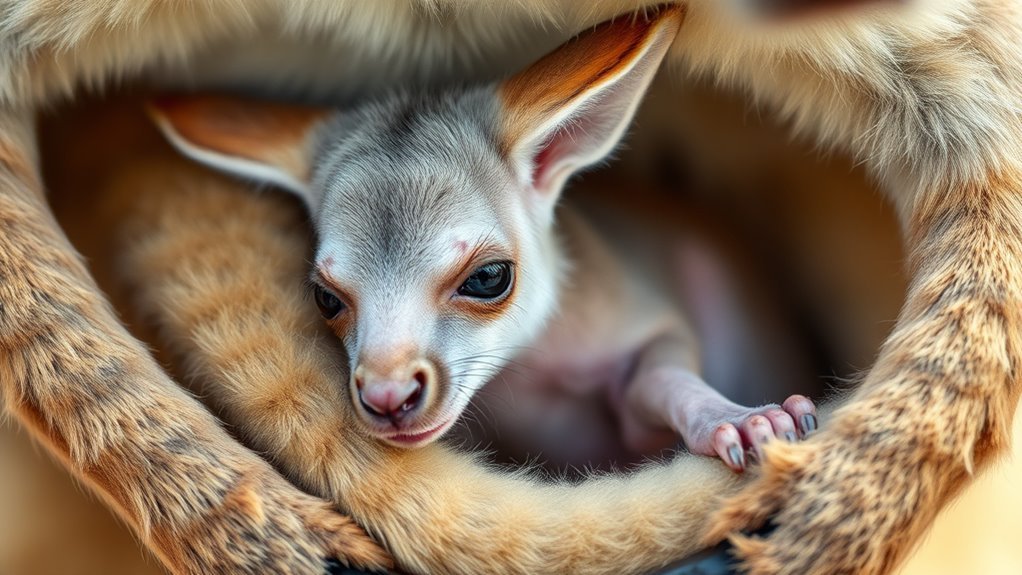
You call a baby kangaroo a “joey,” which is a tiny, underdeveloped marsupial that grows inside its mother’s pouch. This little joey is one of the cutest baby animals you’ll ever hear about.
Right after birth, the joey crawls into the pouch where it stays safe and nourished for months. It relies completely on its mother’s milk during this time.
Depending on the species, the joey stays in the pouch for six to eleven months. This is when it slowly prepares to explore the outside world and learn about its surroundings.
Keep going to discover exactly how long they stay in the pouch and when they eventually leave.
Key Takeaways
- A baby kangaroo is called a “joey.”
- The term “joey” means “little animal” in some languages. It’s a cute way to describe these tiny creatures.
- “Joey” also applies to other marsupials like koalas and wombats. So, it’s not just for kangaroos!
- Newborn joeys are about the size of a jellybean and highly underdeveloped. They’re super tiny when they’re born.
- Joeys spend several months in their mother’s pouch for safety and nourishment. It’s like their cozy little home until they grow bigger.
What Do You Call a Baby Kangaroo: And Why?
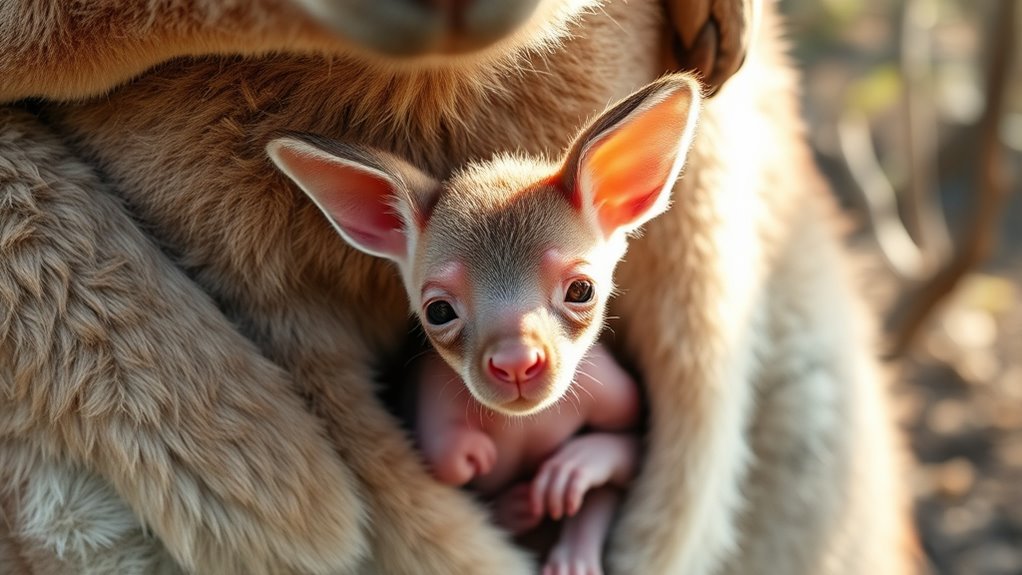
If you’ve ever wondered what to call a baby kangaroo, the answer is “joey.” This term, meaning “little animal” in some languages, applies not only to kangaroos but also to other marsupials like koalas and wombats.
When a newborn kangaroo is born, it’s tiny—about the size of a jellybean—and highly underdeveloped. It immediately crawls into its mother’s pouch, where it continues its growth and nursing.
Female kangaroos can even nurse two joeys at once, showcasing how essential the pouch is for their survival. So, when you hear “joey,” think of it as a universal name for the young of many marsupials, including your baby kangaroo, snug and growing safely inside its mother’s pouch.
How Long Do Joeys Stay in the Pouch and When Do They Leave?
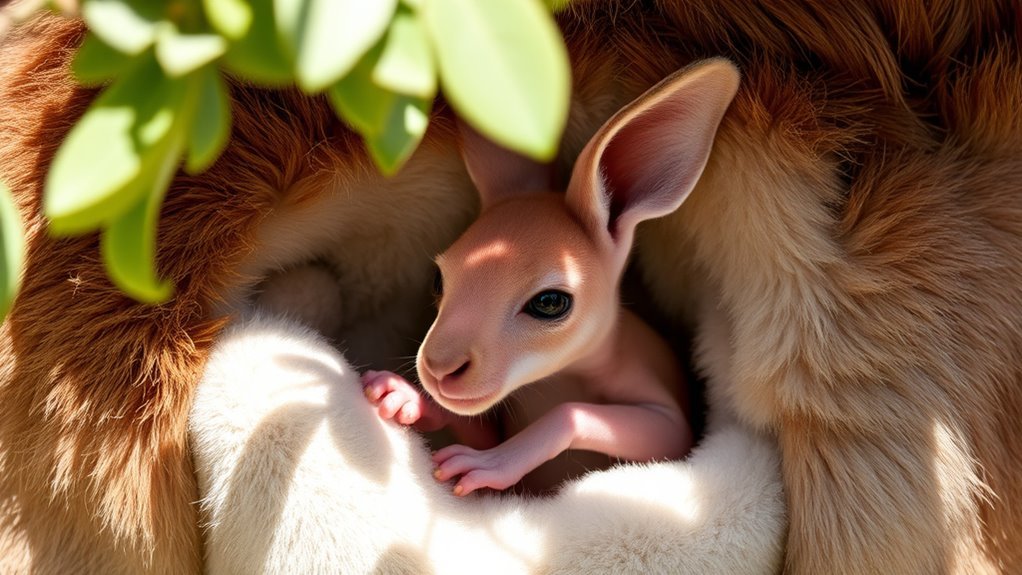
How long do joeys stay tucked inside their mother’s pouch? Joeys typically remain there for about six to eleven months, depending on the species.
For example, red kangaroo joeys start to peek out at six months and begin to leave the pouch for good around eight months, while grey kangaroo joeys stay until about eleven months.
Here’s what you can expect during this essential time of growth and development:
- The pouch offers safety and nourishment for the baby kangaroo during early stages.
- Joeys suckle inside the pouch to get important nutrients.
After leaving the pouch, red joeys continue to suckle for three to four months. Grey joeys may suckle until they’re 18 months old.
This pouch phase is critical for a joey’s survival and independence.
Frequently Asked Questions
What Is a Mother Kangaroo Called?
A mother kangaroo is called a doe or flyer. You’ll notice she has a pouch to carry her joeys. She keeps it clean by licking it regularly.
She can even nurse two babies at once with special milk for each. Isn’t that amazing? Kangaroos are pretty incredible moms!
What Do Aussies Call Baby Kangaroos?
You call baby kangaroos “joeys,” just like you call baby koalas and wombats “joeys.”
You embrace the term because it captures their small size, vulnerability, and unique need for their mother’s pouch to survive.
What Are 20 Kangaroos Called?
You call 20 kangaroos a mob, troop, or court. These terms show their social behavior.
Why Is It Called a Joey?
You call it a joey because, like a tiny treasure cradled in a pouch, it’s a “little animal” needing warmth and care.
The name captures its delicate start and the close bond with its mother.
Conclusion
Now that you know a baby kangaroo is called a joey, you might wonder what happens next. How long does that tiny joey stay safe in the pouch before it ventures out?
The answer might surprise you—it’s longer than you’d expect. But what really happens when the joey finally leaves?
That’s a story full of adventure and growth, one that will keep you curious and enthusiastic to learn more about these incredible creatures. Baby kangaroos, or joeys, experience a fascinating journey from pouch life to exploring the world on their own. Understanding this process helps us appreciate the unique development stages of kangaroos and why the pouch is so vital. So, the next time you hear about a joey, remember it’s not just a cute name but a symbol of survival and discovery in the wild.