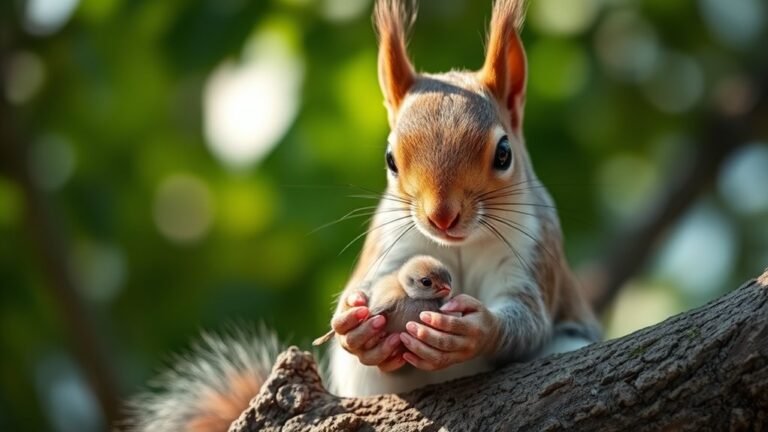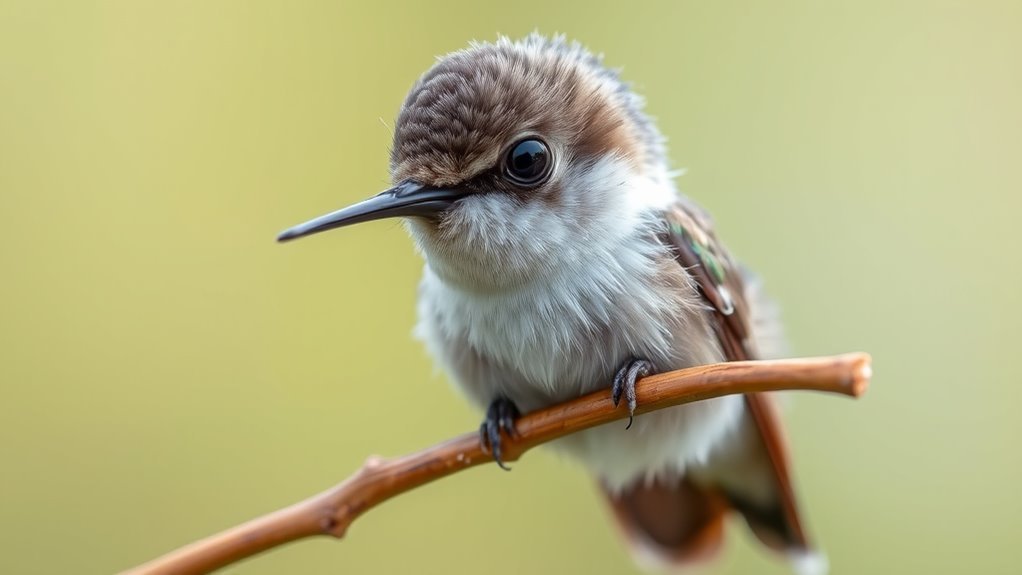
What Does a Baby Hummingbird Look Like?
You’ll spot a baby hummingbird by its tiny size—about one inch long—with dark skin and a shorter beak than adults. These little birds are truly fascinating to observe in their early life stages.
They hatch featherless and blind, which makes them look very different from the adults you’re used to seeing.
As they grow, soft, fluffy white feathers start to appear on their chests. Their little mouths open wide when they’re ready to be fed by their mom. She nourishes them with nectar and insects, giving them the energy they need to develop quickly.
Watching a baby hummingbird’s rapid growth and behavior gives you a special glimpse into their unique development. It’s amazing how fast these tiny creatures change and prepare to take on the world!
Key Takeaways
- Baby hummingbirds are about one inch long with dark skin and shorter beaks than adults. They hatch featherless and are blind for the first nine days.
- During breeding season, you might notice tiny yellow strands on their backs. Early on, they grow soft, fluffy white chest feathers and nearly double in size within the first week.
- Juveniles don’t have the vibrant feathers that adults do yet. By two weeks old, they’re already opening their mouths to be fed.
- Around the same time, they start testing their wings and sitting on the edges of the nest. By three weeks, they’re usually ready to leave the nest altogether.
Key Physical Features to Identify Baby Hummingbirds
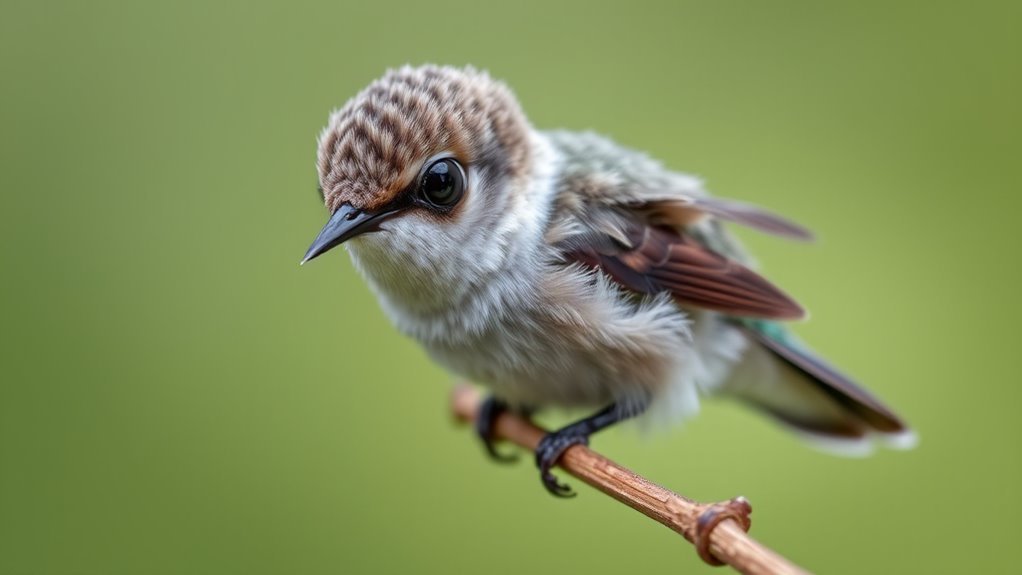
Identifying baby hummingbirds starts with knowing their key physical features. When you see a baby hummingbird, you’ll notice it looks quite different from adults.
At just one inch long, these chicks have dark skin and are completely blind for about nine days after hatching. Unlike adult hummingbirds, their beaks are shorter, signaling their juvenile status.
Measuring just an inch, baby hummingbirds have dark skin, short beaks, and remain blind for about nine days.
During the breeding season, you might spot tiny yellow strands on their backs, but they lack the vibrant feathers adults show. Instead, juvenile hummingbirds develop soft, fluffy white feathers on their chests as they grow.
Recognizing these traits helps you distinguish a baby hummingbird from older birds, especially during the breeding season when many nests are active.
Growth and Development Stages of Baby Hummingbirds
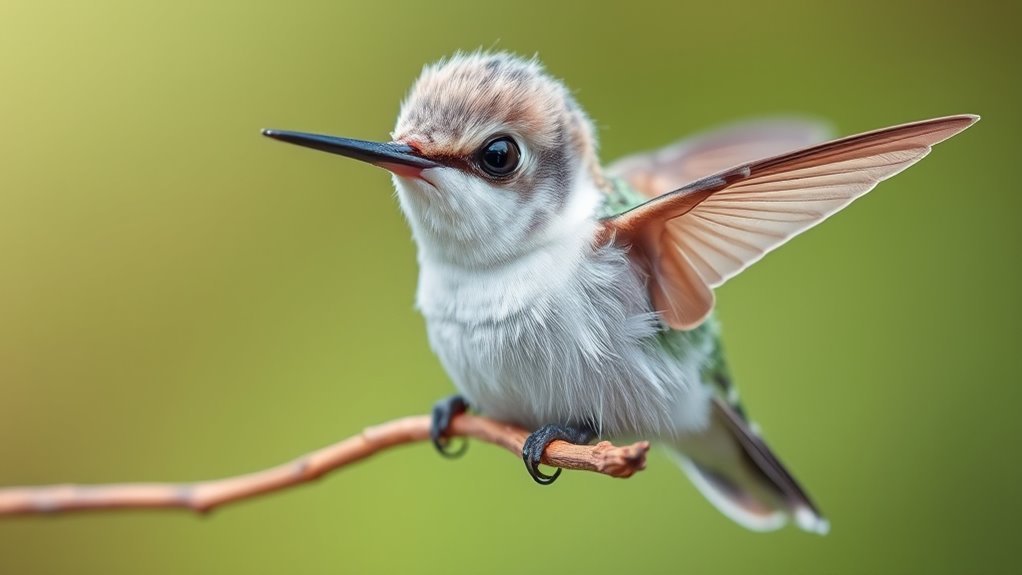
Although baby hummingbirds start life featherless, blind, and helpless, they grow remarkably fast in just a few weeks. At birth, a baby hummingbird looks just like a tiny, dark-skinned inch-long creature.
Within the first week, they almost double in size. By two weeks, baby hummingbirds begin to open their mouths enthusiastically, ready to drink nectar and eat insects fed by their mother.
At this stage, they’re able to see and start testing their wings, sitting on the nest’s edge. By the time they’re three weeks old, they’re ready to leave the nest and feel the wind beneath their wings.
This rapid growth and development shows just how quickly baby hummingbirds transform from helpless hatchlings into skilled flyers. It’s pretty amazing to watch, right?
Frequently Asked Questions
What Does a 3 Week Old Hummingbird Look Like?
At three weeks, you’ll see a tiny fluffball about an inch long, with developing feathers and a more defined beak. It’s stronger, perches on the nest’s edge, and starts stretching wings for its first flight.
You’ll notice it’s getting more curious and a bit restless too. It’s almost like it knows it’s time to leave the nest soon!
What Month Are Hummingbird Babies Born?
Hummingbird babies are usually born between late April and early June. You’ll notice eggs hatch about 15 to 18 days after incubation starts, aligning perfectly with the spring to early summer breeding season.
It’s pretty cool how their timing matches up with warmer weather and blooming flowers. That way, the little ones have plenty of food when they’re ready to leave the nest.
Why Do We Not See Baby Hummingbirds?
You don’t see baby hummingbirds because their tiny, camouflaged nests hide them well. They’re born blind and helpless, so they stay put for a while.
Plus, the mothers stay close by, watching over them. So, you rarely get a glimpse before they start flying.
How Long Do Baby Hummingbirds Stay With Their Mother?
Baby hummingbirds stay with their mother for about one to two weeks after leaving the nest. During this time, she feeds you every 20 minutes and teaches you how to fly and find food until you’re independent.
It’s pretty amazing how much care goes into those first couple of weeks. You really learn a lot from your mom before you’re ready to go solo.
Conclusion
Now that you know what a baby hummingbird looks like, you can spot these tiny wonders even in their early, “under-construction” phase. With their soft, downy feathers and delicate features, they’re like little miracles in the making.
They’re quietly preparing to take on the world. Keep an eye out—you might just catch a glimpse of nature’s smallest dreamers.
Baby hummingbirds are truly fascinating creatures. Their tiny size and delicate appearance make them a joy to watch. As they grow, these little birds develop their bright, buzzing energy, ready to flutter into their future.
So next time you see a baby hummingbird, remember you’re witnessing a remarkable stage in the life of nature’s smallest marvels. Spotting these tiny babies is a special reminder of the beauty and wonder hummingbirds bring to the world.