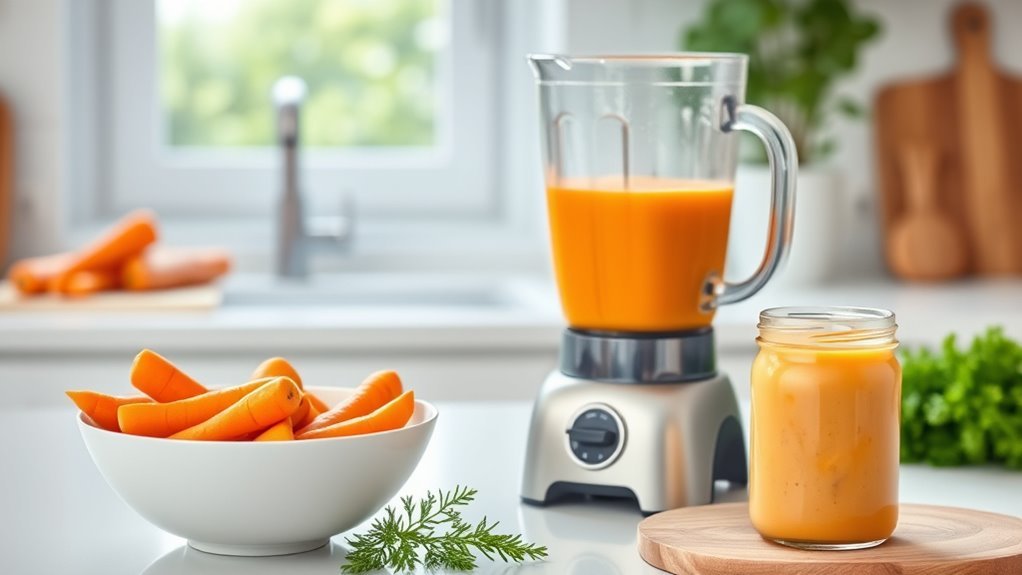
How to Make Baby Food in 3 Easy Steps
To make baby food in 3 easy steps, start by picking fresh, ripe fruits or veggies like sweet potatoes and apples. Choosing quality ingredients is key to healthy homemade baby food.
Next, steam or microwave them until soft. Then blend with water, breast milk, or formula to get a smooth puree. This makes it gentle and easy for your little one to eat.
Finally, cool the puree and store portions in ice cube trays. Freeze for up to a month so you always have nutritious baby food ready.
As you try more recipes, you’ll find simple ways to adjust textures and guarantee safe serving.
Homemade baby food can be fun and rewarding, giving your baby the best start!
Key Takeaways
- Select fresh, ripe fruits or vegetables and peel them for a smooth texture.
- Steam or microwave produce until soft and fork-tender for easy blending.
- Blend cooked ingredients with liquid until smooth, adjusting consistency as needed.
- Cool the puree before serving or storing in portioned containers like silicone trays.
- Thaw only the needed portion using the refrigerator or low microwave settings before feeding.
Select and Cook Baby Food Ingredients
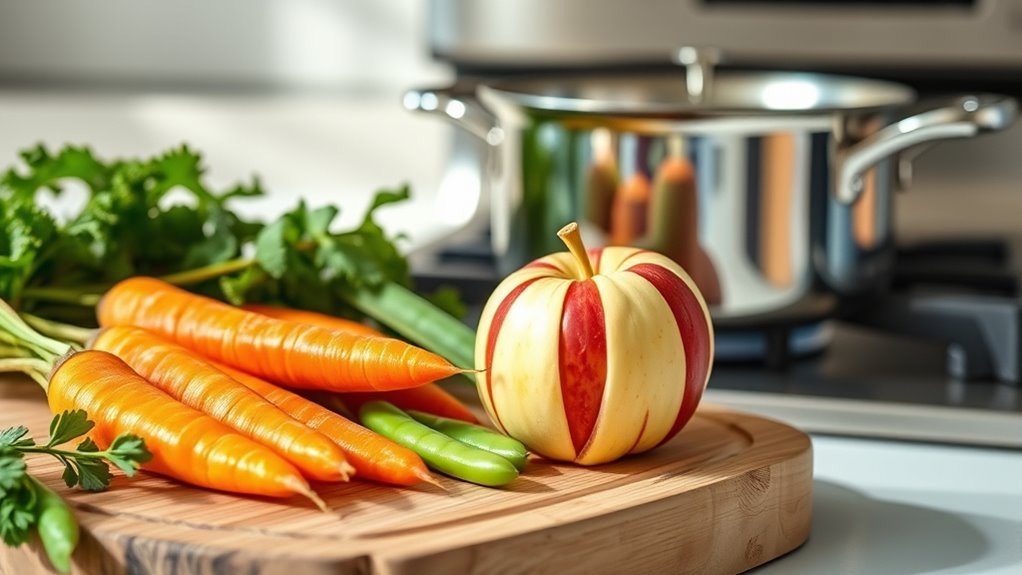
Start by choosing fresh, seasonal fruits and vegetables like sweet potatoes, carrots, and apples that are ripe and free from blemishes. When you select your baby food ingredients, focus on simple options to introduce new flavors gradually.
Peel or remove skins from fruits and vegetables to guarantee a smooth texture. For harder produce, steam them for 10–20 minutes until fork-tender, or microwave chopped pieces covered with water for 3–5 minutes.
This softens the ingredients, making them easier to puree. After cooking, blend the produce with a liquid such as water, breast milk, or formula to reach the right consistency for your baby.
Blend Baby Food to the Right Texture
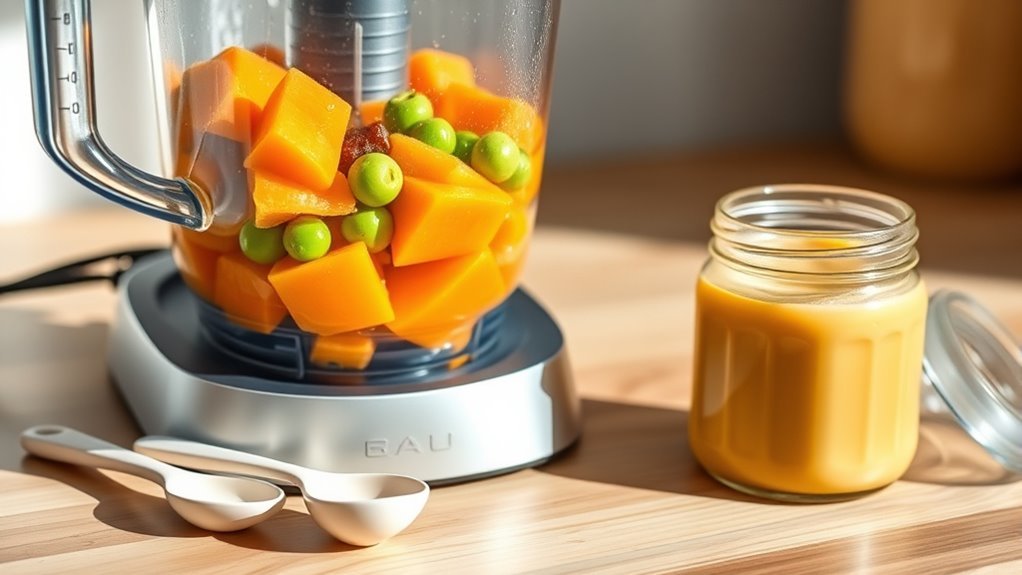
Although cooking softens your ingredients, blending them properly is key to creating the perfect baby food texture. Use a high-quality immersion blender to blend cooked fruits or vegetables into smooth purees ideal for stage 1 baby food.
Always cool cooked ingredients slightly before blending to keep nutrients intact and guarantee safety. Start by adding about ½ cup of liquid—water, breast milk, or formula—to help achieve a smooth consistency.
You can adjust the liquid amount to make the puree thicker or thinner depending on your baby’s needs. As you move beyond stage 1, gradually introduce textures by mixing in small, soft pieces.
This helps your baby get used to different textures while introducing solids confidently. This step-by-step approach guarantees nutritious, tasty baby food every time.
Store and Serve Baby Food Safely
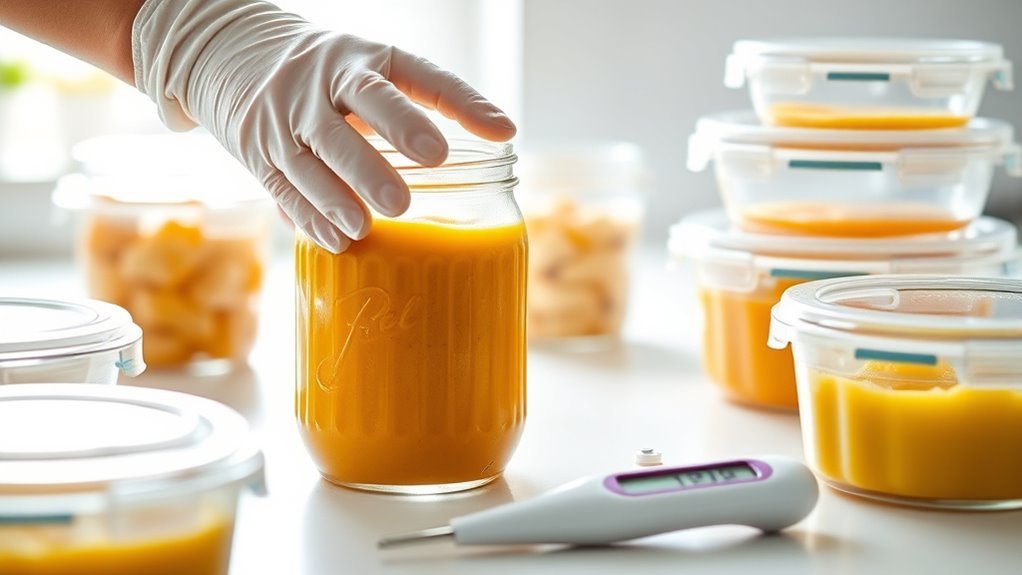
To keep your homemade baby food fresh and safe, cool it to room temperature before freezing. This helps preserve the texture and nutrients.
Use silicone ice cube trays for portioning. It makes freezing and storing individual servings super simple.
Once frozen, transfer the cubes to labeled freezer bags. That way, you can easily track the date and contents.
Store homemade baby food in airtight containers to prevent freezer burn. This helps maintain freshness for up to one month.
When it’s time to serve, thaw only the amount you need. You can thaw it in the refrigerator or microwave on low power to keep the food safe.
While store-bought baby food is convenient, homemade recipes let you control the ingredients and quality. Proper freezing, portioning, and thawing are key to keeping baby food safe and tasty.
Frequently Asked Questions
What Is the Easiest Way to Make Baby Food?
The easiest way to make baby food is to steam fruits or veggies until tender, then blend them with water, breast milk, or formula.
Use an immersion blender to puree quickly and freeze portions in silicone trays.
It’s super simple and saves you a ton of time! Plus, you know exactly what’s going into your little one’s meals.
How to Make Baby Food Stage 3?
Making Stage 3 baby food is like creating gourmet meals for your tiny food critic! Steam or roast veggies and meat, then blend with liquid.
Add healthy fats, and you’re almost there. Now, introduce soft chunks for adventurous self-feeding and flavor exploration. It’s all about making mealtime fun and exciting!
What Are Some Easy Homemade Baby Food Recipes?
You can whip up sweet potato puree, avocado-banana mash, carrot puree, pea-mint puree, or apple-cinnamon sauce. These recipes are quick, nutritious, and perfect for your baby’s developing taste buds and texture exploration.
They’re super easy to make, too. Just blend or mash the ingredients, and you’re good to go! Your little one will love trying new flavors and textures.
What Is the 3 Day Rule for Baby Food?
The 3 Day Rule means you introduce one new food to your baby and wait three days before adding another.
This helps you spot any allergic reactions or sensitivities, keeping your baby safe as you expand their diet.
It’s a simple way to make sure your little one is doing well with each new taste. Just a bit of patience goes a long way!
Conclusion
Making baby food is like tending a tiny garden—you carefully choose the seeds (ingredients), nurture them with the right touch (cooking), and blend them into a soft, nourishing meal.
Just as a gardener protects their plants, you store and serve your baby’s food safely, ensuring every bite helps them grow strong and healthy.
By following these simple steps, you’re not just feeding your baby—you’re cultivating a foundation for lifelong wellness. Making homemade baby food is a wonderful way to control what your little one eats, making sure it’s fresh and nutritious. Plus, it’s easy and rewarding!
So, take your time, enjoy the process, and watch your baby thrive with every tasty spoonful of your lovingly prepared baby food.





2 Comments