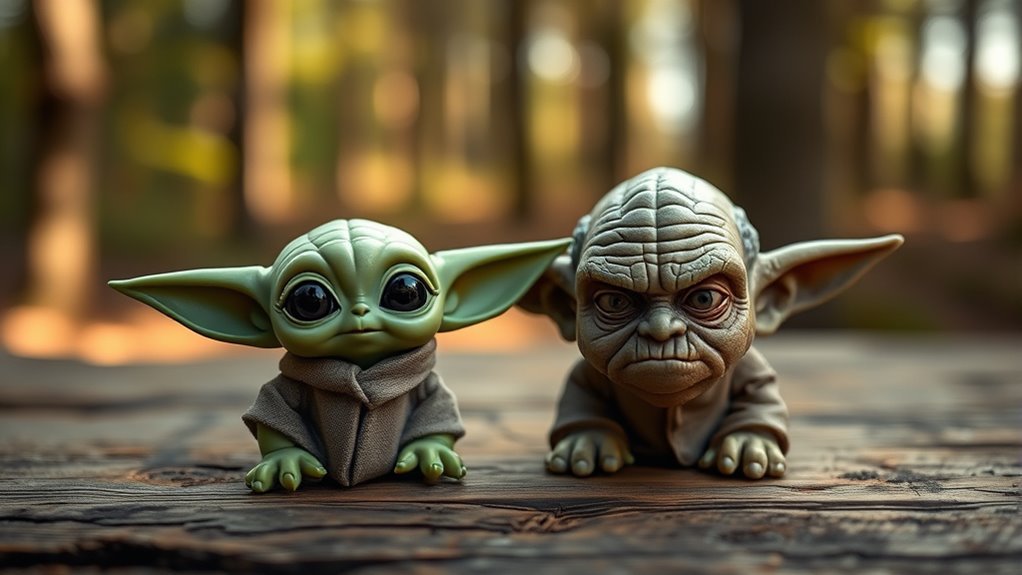
How to Determine if Baby Yoda Is Actually Yoda
You can quickly tell Baby Yoda, or Grogu, isn’t actually Yoda by looking at their timelines and life stages. Grogu is about 50 years old, while Yoda lived over 900 years and died years before *The Mandalorian*.
They share the same mysterious species but have different Jedi training and experiences.
Their stories and identities are unique, not connected by reincarnation. If you want to understand their distinct journeys and species better, there’s more to uncover.
It’s pretty fascinating once you dive into the details and see how each character stands on their own within the Star Wars universe.
Key Takeaways
- Grogu was born around 41 BBY, so he’s about 50 years old during *The Mandalorian*. That’s quite different from Yoda, who passed away in 4 ABY.
- Also, Grogu is still an infant for his species. They age way slower than humans, which makes him really different from the elderly Yoda we know.
- Grogu went through his own Jedi training and even survived Order 66. That gives him a completely separate history from Yoda’s legacy.
- Sure, they share the same unnamed species traits, but their identities and life stories are unique and unrelated.
- When you look at the timeline and how each character develops, it’s clear that Grogu isn’t a reincarnation or a younger version of Yoda. They’re totally different individuals.
Why Baby Yoda Isn’t the Same as Yoda According to the Star Wars Timeline
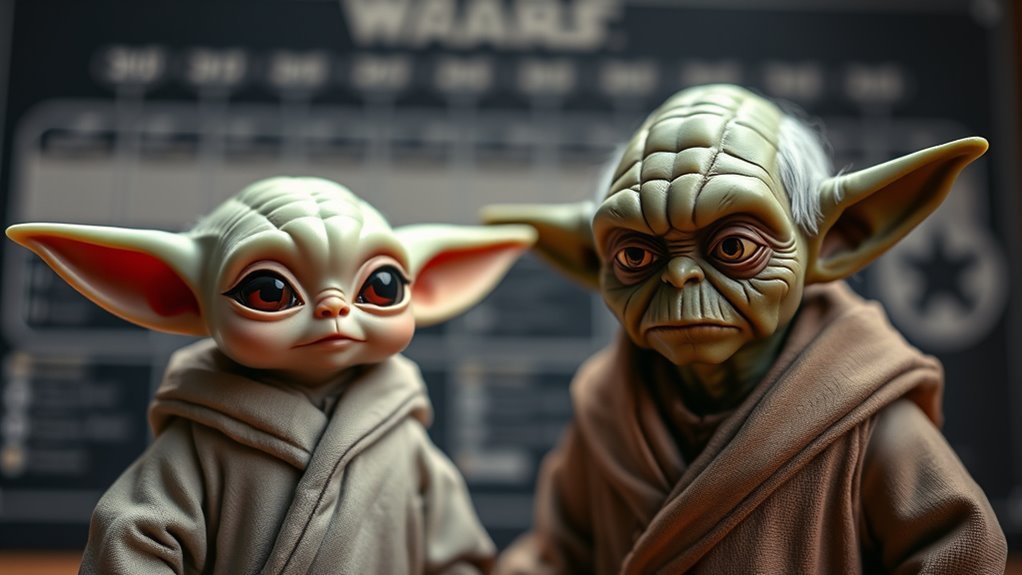
Although Baby Yoda, or Grogu, shares Yoda’s species, you can’t mistake them as the same character because the Star Wars timeline clearly separates their lives. Grogu was born around 41 BBY, while Yoda died in 4 ABY during “Return of the Jedi.”
The Mandalorian occurs about five years after Yoda’s death, proving Grogu isn’t a reincarnation. You’ll notice Grogu is around 50 years old but still an infant for his species, which ages slowly.
Both belong to the same unnamed species, but Grogu’s story stands alone, including his Jedi training before The Mandalorian. The timeline and lore make it clear that Baby Yoda’s journey is distinct from Yoda’s legacy, confirming they’re separate characters despite their shared traits.
What Makes Baby Yoda Different From Yoda and Their Mysterious Species
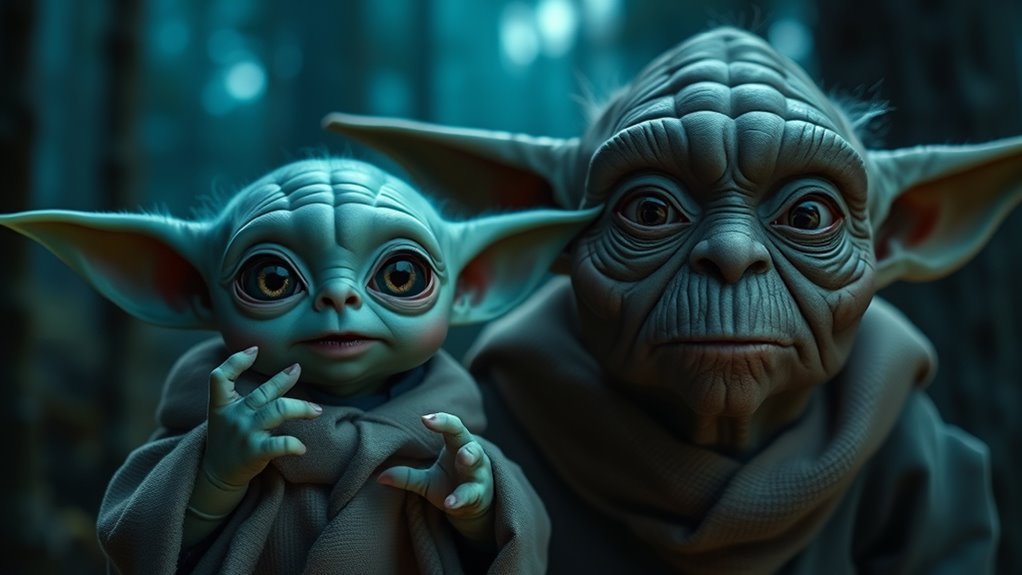
One key thing you should know is that Baby Yoda, officially named Grogu, stands apart from Yoda despite their shared species and Force sensitivity. Although both have large ears and green skin, Grogu is a distinct character, introduced in *The Mandalorian*, and is about 50 years old—still an infant for their species, which ages much slower than others.
Yoda, on the other hand, lived to be 900 years old, marking a huge difference in their life stages. Grogu’s identity is also shaped by surviving Order 66, a defining moment separate from Yoda’s story.
The species itself remains unnamed and mysterious in *Star Wars* canon, adding to the intrigue but confirming that Baby Yoda and Yoda are two different beings sharing unique traits rather than the same individual.
Frequently Asked Questions
Is Yoda Grogu’s Biological Father?
No, Yoda isn’t Grogu’s biological father. You’ll find they’re separate individuals from the same species, with no canonical evidence linking them as parent and child.
Their connection is more about shared traits, not family. So, while they look alike and have similar abilities, it’s not because they’re related. Just kind of like distant cousins, but even that’s a stretch!
Was Grogu Actually Yoda?
No, Grogu isn’t Yoda. You’ll find he’s a separate character with his own story and age.
They share a species but are distinct individuals, so don’t mistake Baby Yoda for the legendary Jedi Master Yoda.
Who Was Born First, Grogu or Yoda?
Yoda was born first, around 896 BBY, while Grogu came much later, about 41 BBY. So, you can see Yoda is over 850 years older than Grogu, making their timelines clearly separate.
Pretty wild, right? It’s like they’re from two totally different eras in the Star Wars universe.
Is Baby Yoda the Same Species as Yoda?
Yes, Baby Yoda, or Grogu, belongs to the same mysterious species as Yoda. You’ll notice shared traits like green skin and large ears.
But remember, they’re distinct individuals with separate histories and identities in the Star Wars universe. It’s pretty cool how they connect, though!
Conclusion
So, you’ve been looking for Baby Yoda and Yoda to be the same, but the timeline’s got other plans. Ironically, the tiny, adorable Baby Yoda isn’t just a younger version—he’s a whole different mystery wrapped in green skin.
You might’ve hoped for a simple answer, but instead, you’ve got a species so rare even Yoda himself would raise an eyebrow. Sometimes, the galaxy’s secrets are more complicated—and cuter—than you expect.
When it comes down to it, determining if Baby Yoda is actually Yoda is more about understanding the Star Wars timeline and species lore. Baby Yoda, officially known as Grogu, belongs to the same mysterious species as Yoda, but they are definitely not the same individual. So while both characters share that iconic look and mysterious background, the truth is Baby Yoda is his own unique character with his own story to tell. That’s what makes exploring Baby Yoda and Yoda so fascinating and fun!