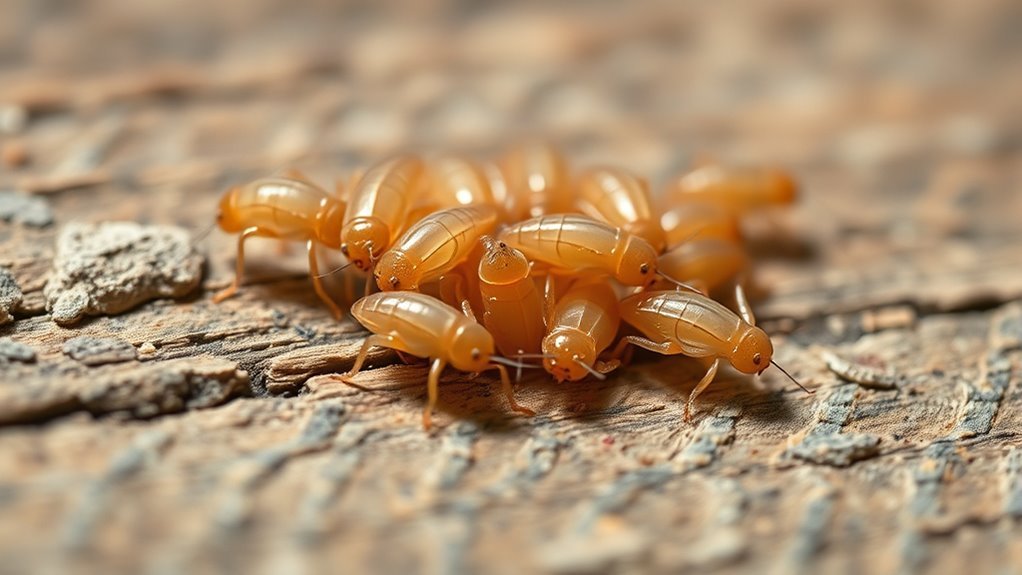
What Do Tiny Baby Roaches Look Like?
You’ll spot tiny baby roaches by their small size—about the length of a grain of rice—and distinct colors. These little pests are often overlooked, but knowing what baby roaches look like can really help you spot an infestation early on.
German cockroach nymphs look oval and light brown with two dark stripes, while American nymphs are reddish-brown and oblong with a halo marking.
They have long antennae and spiny legs, which makes them easier to identify once you know what to look for.
Baby roaches like hiding in dark, moist spots like behind appliances or cabinet hinges. Keep an eye out for these signs because learning where they lurk can save you a lot of trouble down the road.
Key Takeaways
- Baby roaches, or nymphs, are small, measuring about 1/8 to 1/4 inch. They’re about the size of a grain of rice.
- German cockroach nymphs are oval and light brown with two dark stripes. Meanwhile, American nymphs are oblong and reddish-brown.
- When they’re born, their color is white or light gray. But as they grow, they turn darker shades of brown.
- Baby roaches have long, spiny legs and two prominent antennae. These features help set them apart from other insects.
- You can identify baby roaches by their size, body shape, and color patterns. These clues also show what stage of development they’re in.
How to Spot Tiny Baby Cockroaches By Size and Color
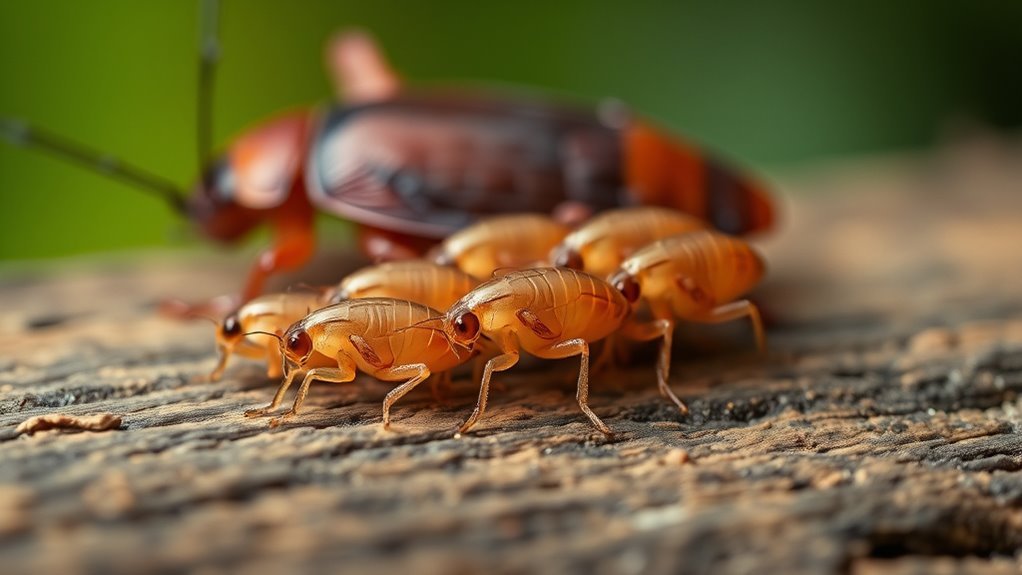
Spotting tiny baby cockroaches starts with knowing their size and color. Baby roaches, or nymphs, usually measure between 1/8 to 1/4 inches—about the size of a grain of rice.
German cockroach nymphs are oval and light brown with two dark stripes on their backs. Meanwhile, American cockroach nymphs are oblong, reddish-brown, and have a halo marking behind the head.
As nymphs mature, their color shifts from white or light gray to shades of light brown or dark brown. You can also spot them by their long, spiny legs and two long antennae, which set them apart from other small insects.
Paying attention to these size and color details really helps you accurately identify baby roaches early on. It’s a simple way to catch them before they become a bigger problem.
Where Baby Roaches Hide and Why It Matters
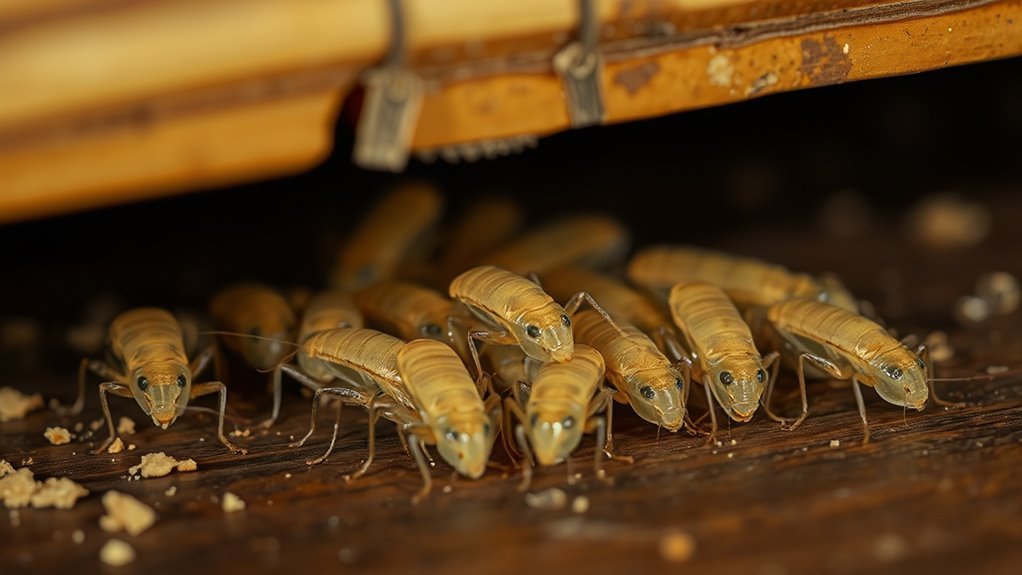
Where do baby roaches hide, and why should you care? Baby roaches, or nymphs, prefer dark areas and moist environments near food sources. They squeeze into tiny cracks—around 5mm wide—that adult roaches can’t access.
These hiding spots, like behind refrigerators or inside cabinet hinges, signal breeding activity and a growing infestation. Spotting nymphs means adult roaches are nearby, so thorough inspection is essential.
| Hiding Spots | Environment Type | Why It Matters |
|---|---|---|
| Behind appliances | Dark, moist | Close to food sources |
| Cabinet hinges | Moist | Hard to detect, breeding hub |
| Wall voids | Dark | Indicates established infestation |
Knowing where baby roaches hide helps you act fast before infestation worsens. Catching them early makes a big difference!
Frequently Asked Questions
Why Am I Seeing Tiny Baby Roaches?
You’re seeing tiny baby roaches because there’s an active infestation nearby. They hatch quickly, so their presence means adults are probably hiding close by.
You should act fast to get rid of them before the problem gets worse. Don’t wait too long—these little guys multiply quickly!
What Can Be Mistaken for a Baby Cockroach?
You might mistake bed bugs, carpet beetles, or booklice for baby cockroaches. Look closely at antennae, body shape, and wing covers to tell them apart.
Each has distinct features that help you identify them correctly. It’s all about paying attention to the little details!
Is It Bad to Find a Baby Cockroach?
Yes, it’s bad to find a baby cockroach because it means an infestation is active. You’ll want to act fast, as more roaches are likely nearby.
They can spread bacteria and trigger allergies, which is definitely something you want to avoid. So, catching them early helps keep things under control.
How Do You Get Rid of Small Baby Roaches?
Like fighting an unseen army, you’ll need to seal entry points, clean thoroughly, and use insect growth regulators or boric acid.
Don’t hesitate to call professionals—they’re your best allies in this relentless battle against baby roaches.
Conclusion
Now that you know what tiny baby roaches look like—small, pale, and quick—you’ll spot them before they become a full-blown infestation. These little critters love hiding in warm, dark places, so keep an eye out where you least expect it, like your pantry or behind appliances.
Don’t wait for a telegram to alert you; act fast and keep your home roach-free. Staying vigilant is your best defense against these unwelcome little guests!
Remember, spotting tiny baby roaches early can save you a lot of trouble down the road. Since they’re so quick to multiply, catching them while they’re still small and pale is key. Keep your kitchen and storage areas clean, seal up cracks, and remove food sources to make your home less inviting. By staying alert and knowing exactly what tiny baby roaches look like, you’ll protect your space from a nasty infestation before it even begins.





2 Comments