
When to Start Feeding Baby Cereal Safely
You should start feeding your baby cereal between four to six months, especially once they show signs like good head control, sitting up with support, and no tongue-thrust reflex.
These cues mean your baby is ready to explore solid foods safely. Iron-fortified, single-grain cereals are a great choice to begin with since they provide important nutrients like iron, which your baby needs at this stage.
Mix the cereal with breast milk or formula to create a smooth texture that’s easy for your baby to swallow.
Introducing new cereals one at a time is a smart move because it helps you watch for any allergies or sensitivities.
And here’s a tip: avoid adding cereal to bottles. This can increase the risk of choking and makes it harder for your baby to learn how to eat solids properly.
Keeping these simple tips in mind will help you create a safe and positive feeding experience as you explore baby cereals further.
Key Takeaways
– Start feeding baby cereal between 4 to 6 months when they show good head control and can sit with support.
Make sure the tongue-thrust reflex has disappeared before introducing cereal to prevent choking.
– Use iron-fortified single-grain cereals mixed with breast milk or formula for a smooth, familiar texture.
Introduce one new cereal at a time, waiting 3 to 5 days to monitor for allergic reactions.
– Avoid adding cereal to bottles to reduce choking risks and promote healthy eating habits.
Recognizing When Your Baby Is Ready for Cereal

Although every baby develops at their own pace, you can usually start feeding cereal between 4 to 6 months when they show clear signs of readiness. To know if your baby is ready for solid foods, look for good head control and the ability to sit up with support.
These are key signs of readiness that show their muscles are strong enough. Also, check if the tongue-thrust reflex has disappeared—this reflex makes babies push food out with their tongue, so its absence means they’re prepared to swallow.
Your baby should be able to move food from the spoon to their throat, demonstrating developed swallowing skills. Another indicator is doubling birth weight, often around 13 pounds.
Introducing Baby Cereal Safely: Dos and Don’ts
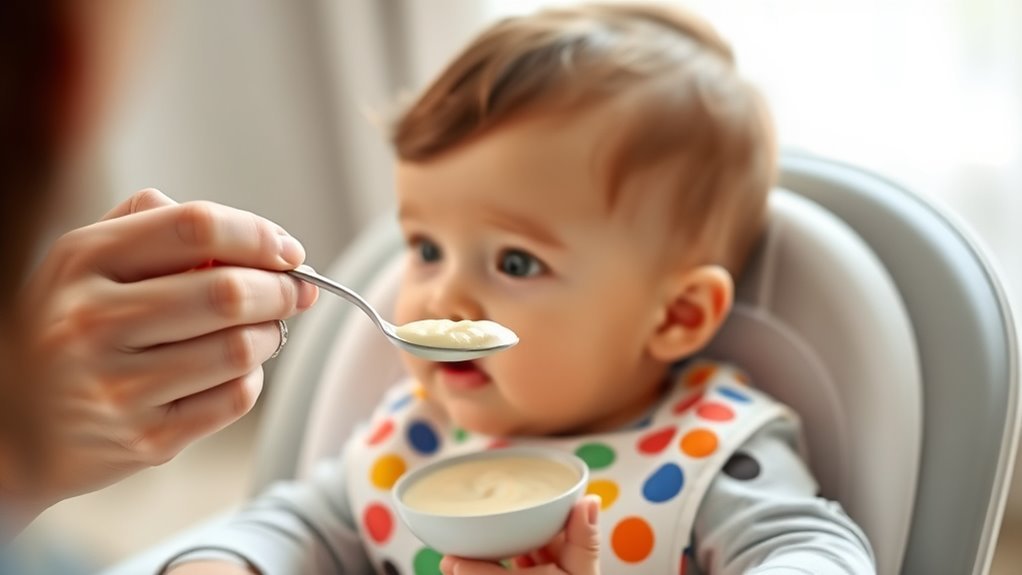
When you start introducing baby cereal around six months, make certain your little one shows signs of readiness like good head control and curiosity about food. Begin with iron-fortified single-grain cereals mixed with breast milk or formula for a smooth texture and familiar taste.
Always wait 3 to 5 days before trying a new cereal to monitor allergic reactions. Avoid adding cereal to bottles, as this can increase choking hazards and encourage poor eating habits.
Since rice cereal contains higher arsenic levels, consider safe alternatives like oatmeal or barley for your baby’s first foods. Remember, knowing when to start and following these dos and don’ts helps guarantee your baby’s introduction to solid foods is safe and healthy.
Frequently Asked Questions
Can I Give My 4 Month Old Baby Cereal?
You can give your 4-month-old cereal if they show good head control and interest in food. Choose oats or barley over rice.
Avoid mixing cereal in bottles, and introduce new foods slowly to watch for allergies. It’s always a good idea to take things one step at a time and keep an eye on how your baby reacts.
Is 5 Months Too Early for Baby Cereal?
Is 5 months too early for baby cereal? Not always—it depends on your baby’s readiness.
If they show good head control and interest, you can start, but always check with your pediatrician to keep things safe and smooth.
Can I Give My 4 Month Old Baby Cereal in a Bottle?
You shouldn’t give your 4-month-old cereal in a bottle because it risks choking and aspiration.
It’s best to wait until your baby shows signs they’re ready for solids.
When that time comes, introduce cereal with a spoon instead.
And always follow your pediatrician’s advice to keep things safe and healthy.
Can I Give My 3 Month Old Baby Cereal in a Bottle for Reflux?
You shouldn’t give your 3-month-old cereal in a bottle for reflux. It poses choking risks and isn’t recommended.
Instead, try smaller, frequent feedings and keep your baby upright after meals to help manage reflux safely. This approach usually works better and is much safer for your little one.
Conclusion
When your little one shows signs of readiness, it’s like watching a tiny explorer prepare for their first adventure. Introducing baby cereal gently opens the door to a world of new textures and tastes, like a soft sunrise warming a quiet morning.
Remember to take it slow, listen to your baby’s cues, and sprinkle in patience. This tender beginning sets the stage for a lifelong journey of healthy, happy eating.
Starting baby cereal safely is all about timing and care. When you notice your baby can sit up with support, shows interest in food, and can control their head movements, it’s usually a good time to begin. Always choose iron-fortified cereals and introduce them gradually, watching closely for any reactions. This approach helps build a strong foundation for your baby’s nutrition and enjoyment of new foods. By paying attention to these signs and moving at your baby’s pace, you’re nurturing a positive and safe feeding experience from day one.






3 Comments