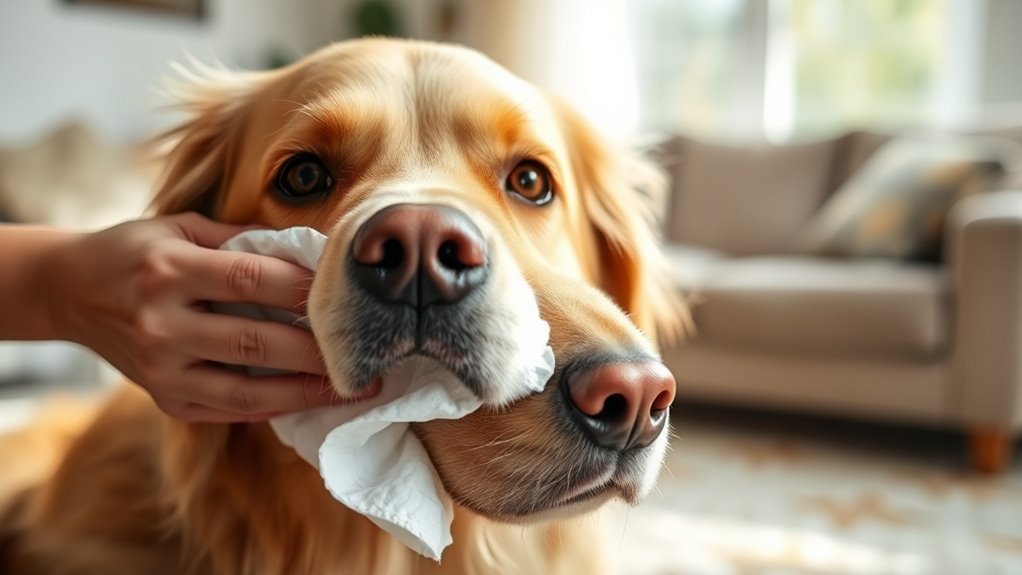
Are Baby Wipes Safe for Dogs?
You shouldn’t use baby wipes on your dog because their pH is designed for humans, not dogs, which can disrupt your pet’s natural alkaline skin barrier.
Ingredients like alcohol and fragrances in baby wipes can cause dryness, irritation, or allergic reactions.
Dog skin is more delicate, so regular use may lead to itching or infections.
Instead, it’s better to choose wipes made specifically for dogs that protect their skin health.
Keep exploring to discover safer cleaning options for your furry friend.
Taking care of your dog’s skin with the right products makes all the difference!
Key Takeaways
- Baby wipes have a pH of 4.5–5.5, which can disrupt dogs’ alkaline skin barrier and cause redness or irritation.
- Ingredients like alcohol and fragrances in baby wipes can strip natural oils, increasing dryness and allergic reactions in dogs.
- Dog skin is thinner and more sensitive than human skin, making baby wipes more likely to cause itching, hot spots, and infections.
- Regular use of baby wipes weakens dogs‘ natural skin defenses, raising the risk of long-term skin problems.
- Pet wipes formulated for dogs maintain proper pH balance and avoid irritants, making them a safer alternative to baby wipes.
Why Baby Wipes Aren’t Good for Your Dog’s Skin
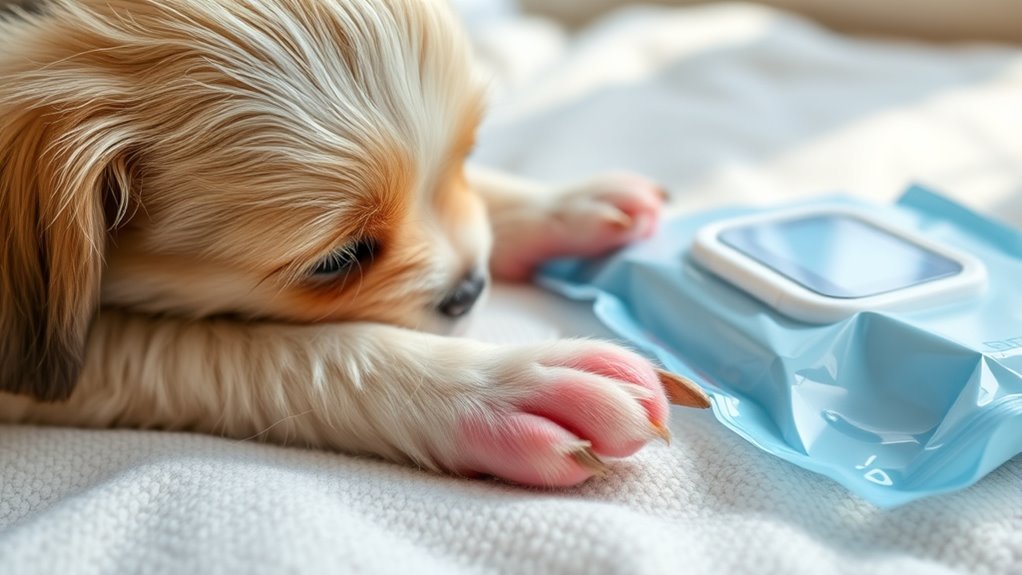
Although baby wipes seem convenient for quick cleanups, they aren’t good for your dog’s skin because their pH level and ingredients can cause irritation. Baby wipes usually have a pH of 4.5–5.5, which disrupts the alkaline barrier of dogs’ skin, leading to redness and infections.
The alcohols and fragrances in many cleaning wipes strip your dog’s natural oils, causing dryness and allergic reactions, especially in sensitive areas. Dogs’ skin is thinner and more delicate than yours, so even occasional use of baby wipes can trigger itching, licking, or hot spots.
Regular use weakens their natural defenses, increasing the risk of long-term skin problems. So, although baby wipes might seem safe for dogs, they can do more harm than good when it comes to maintaining healthy skin.
Safe Alternatives to Baby Wipes for Cleaning Your Dog
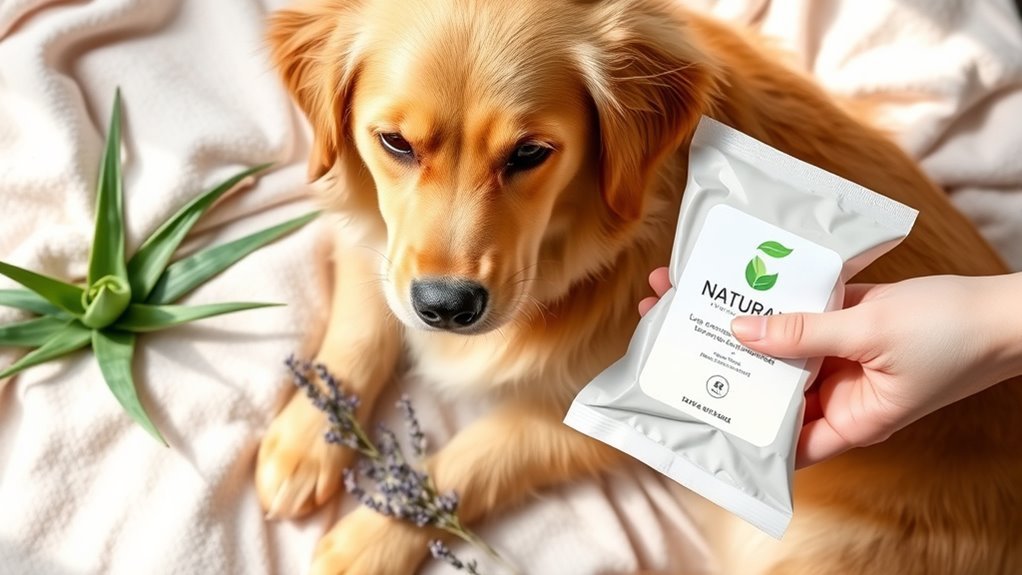
Since baby wipes can irritate your dog’s skin, it’s better to choose cleaning options made specifically for pets. Pet wipes are formulated to match a dog’s unique skin pH, unlike baby wipes designed for human skin pH. This makes them unlikely to cause irritation, especially for dogs sensitive to harsh ingredients.
Using pet wipes, which are often unscented and alcohol-free, helps clean my dog’s paws and other areas gently without stripping natural oils. These wipes often contain soothing agents like aloe vera, promoting skin health while keeping your dog clean.
If you prefer, a damp towel is also a safe alternative to wipe sensitive spots. Choosing pet wipes guarantees effective cleaning that’s safe for humans and your dog alike. It helps maintain hygiene without risking skin irritation.
Frequently Asked Questions
What Baby Wipes Are Safe to Use on Dogs?
You should only use unscented, alcohol-free baby wipes on your dog in emergencies. But honestly, it’s best to choose pet-specific wipes made just for dogs to avoid irritation and skin problems.
Always check with your vet first. They can help you figure out what’s safest for your furry friend.
What Can I Use Instead of Dog Wipes?
When you want to freshen your furry friend without dog wipes, reach for a damp cloth or homemade mix with mild soap and a touch of aloe.
You’ll keep their paws clean and cozy, naturally and safely.
What Can I Use to Wipe My Dog?
You can use pet-specific wipes or a damp cloth with cool boiled water to wipe your dog. Avoid products with alcohol or fragrances to prevent irritation.
For paws, a damp towel works well to remove dirt safely. It’s simple and gentle, so your dog stays comfy.
What’s the Difference Between Pet Wipes and Baby Wipes?
Think of pet wipes like a trusty quill tailored for your dog’s skin, while baby wipes are more like parchment meant for humans. Pet wipes match your dog’s pH and avoid harsh chemicals, keeping their coat safe and soothing.
They’re made just for pups, so you don’t have to worry about irritation. Baby wipes, on the other hand, can be too harsh for your furry friend’s sensitive skin. So, when it comes to cleaning your pet, it’s best to stick with pet wipes designed specifically for them.
Conclusion
So, are baby wipes really safe for your dog’s skin? Probably not, since they often contain ingredients that can irritate or dry out your pup’s sensitive coat.
Instead, why risk discomfort when there are gentle, pet-specific wipes made just for dogs? You want the best for your furry friend, right?
Choosing safe alternatives guarantees you keep your dog clean without causing harm. It makes grooming a pleasant experience for both of you. Using dog-safe wipes ensures your pet’s skin stays healthy and irritation-free, which is super important.
So, when it comes to cleaning your dog, opt for wipes designed specifically for pets instead of baby wipes. This way, you’re prioritizing your dog’s comfort and well-being while keeping them fresh and clean. After all, your dog deserves the best care possible!





2 Comments