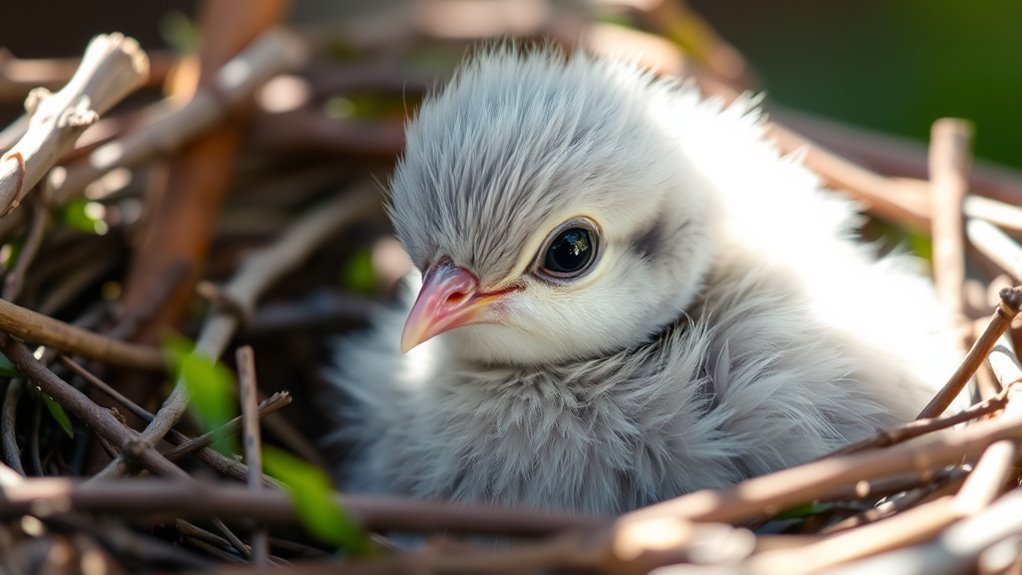
What Is a Baby Pigeon Called?
A baby pigeon is called a squab, but you’ll rarely see one because they stay hidden in nests for 4-5 weeks. These little squabs are pretty secretive during their early days.
Both pigeon parents share care duties, feeding squabs nutrient-rich pigeon milk for the first 10 days.
This careful nurturing helps squabs grow quickly before they begin flying and blending in with adults.
It’s fascinating how both mom and dad work together to keep their young safe and well-fed.
If you want to understand more about their unique growth and protective habits, there’s plenty to discover about these elusive birds.
Key Takeaways
- A baby pigeon is called a squab. Squabs are rarely seen because they stay hidden in their nests.
- They hang out in the nest for about 4 to 5 weeks before they start to fly. Both pigeon parents feed them a special nutrient-rich pigeon milk during this time.
- Once they leave the nest, young pigeons quickly start to look like adults. That’s why it’s often tricky to tell them apart at first.
What Do You Call a Baby Pigeon and Why Are They Hard to Spot?
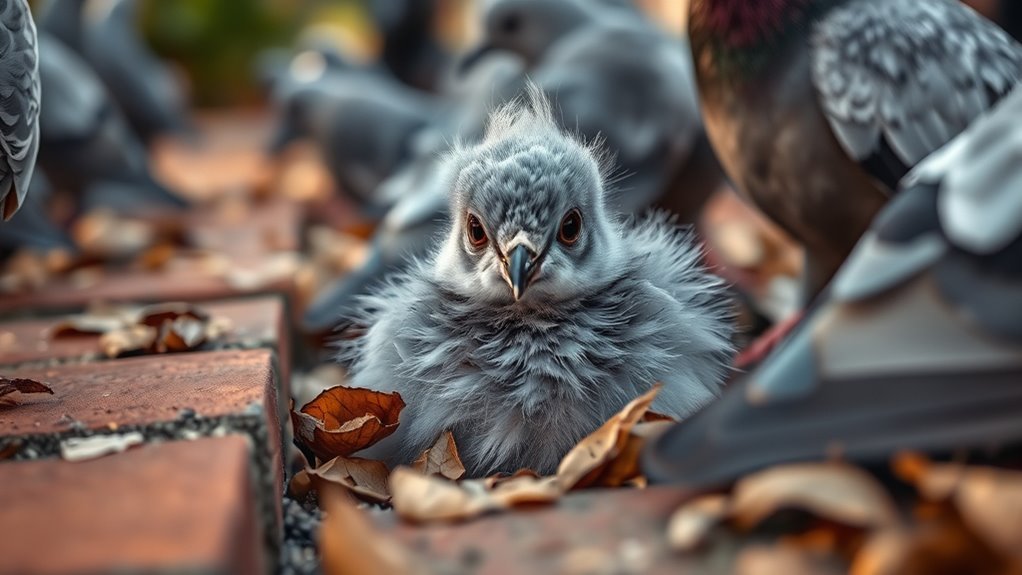
A baby pigeon is called a squab, but you rarely get to see one. Squabs stay hidden in nests during their early weeks, making baby pigeons hard to spot.
Pigeons usually lay two eggs per clutch, and both parents share care by feeding their young nutrient-rich pigeon milk. Their nesting habits—often in trees or urban corners—keep squabs well concealed from view.
After about four to five weeks, squabs begin fledging and soon look like domesticated adult pigeons, blending in seamlessly. Because of this timing and their secretive nesting, spotting a genuine baby pigeon outside the nest is quite rare.
How Baby Pigeons Grow and Get Cared For by Their Parents
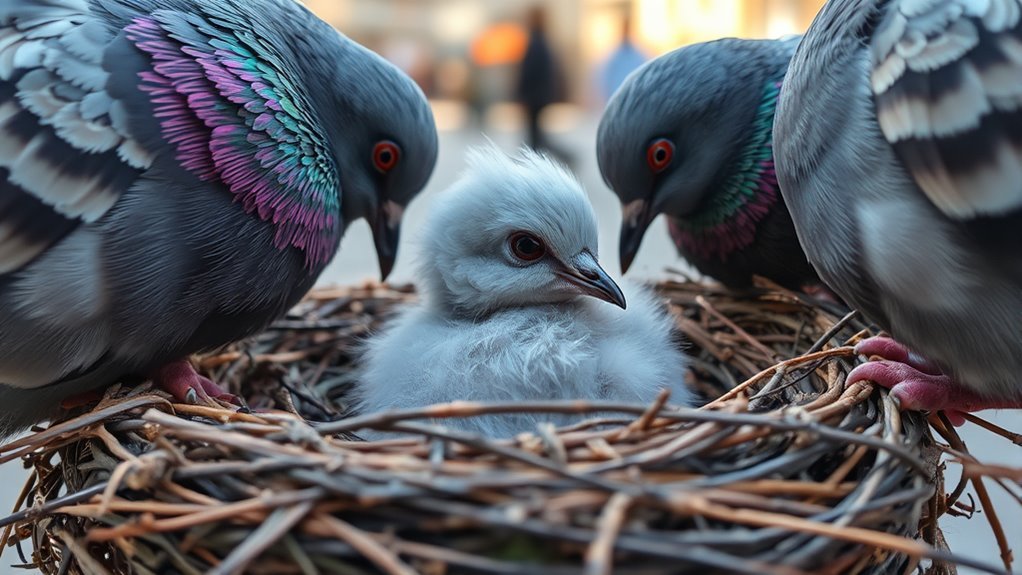
Though baby pigeons, called squabs, seem fragile, both parents work tirelessly to guarantee they grow strong by feeding them a special nutrient-rich pigeon milk during their first 10 days.
After an incubation of 16-19 days, parents continue their care, making sure the squabs stay nourished and safe.
Squabs remain in the nest for 4-5 weeks, growing rapidly. Once fledging happens, they quickly become independent.
Domestic pigeons can raise up to five broods yearly, showing remarkable parental dedication.
| Stage | Description |
|---|---|
| Incubation | 16-19 days, both parents share |
| Pigeon Milk | Nutritious feed for first 10 days |
| Nest Time | 4-5 weeks growing period |
| Fledging | Young pigeons begin flying |
| Independence | Squabs leave nest after fledging |
Frequently Asked Questions
Why Don’t We See Baby Pigeons?
You don’t see baby pigeons because they stay hidden in nests for weeks, usually in secluded spots.
What Is the Filthiest Bird?
You’d call the common pigeon the filthiest bird because they thrive in dirty urban areas, leave droppings everywhere, and carry diseases.
They might be pests, but they also help clean up leftover food in cities. It’s kind of a trade-off, right?
What Is Dove Meat Called?
Dove meat is called squab, especially when it comes from young domestic pigeons under four weeks old.
You’ll find it tender, flavorful, and often used in gourmet dishes across various cultures worldwide.
It’s pretty popular among chefs who want something a bit different and delicious.
What Is the Term for a Baby Pigeon?
You call a baby pigeon a squab. You’ll notice squabs stay in the nest for weeks, fed by their parents with pigeon milk.
They look like adults once they’re ready to leave, usually around four to five weeks old. It’s pretty interesting how quickly they grow!
Conclusion
Just like the hidden chapters in a classic novel, baby pigeons—called squabs—often stay out of sight, tucked away in nests. You might not spot them easily, but their quiet growth is a demonstration of nature’s careful storytelling.
As their parents nurture them with unwavering care, you’re reminded that even the most overlooked characters have essential roles in life’s grand narrative. So next time you see a pigeon, remember the secret story of its beginning.
Knowing what a baby pigeon is called helps us appreciate these birds more deeply. Squabs may be hidden, but their journey from fragile hatchlings to graceful flyers is truly fascinating. So, the next time you notice a pigeon, think about the squab stage—it’s a crucial part of the bird’s life cycle and a reminder of nature’s quiet wonders.





One Comment