3 Tips to Prevent Your Baby From Falling off the Bed
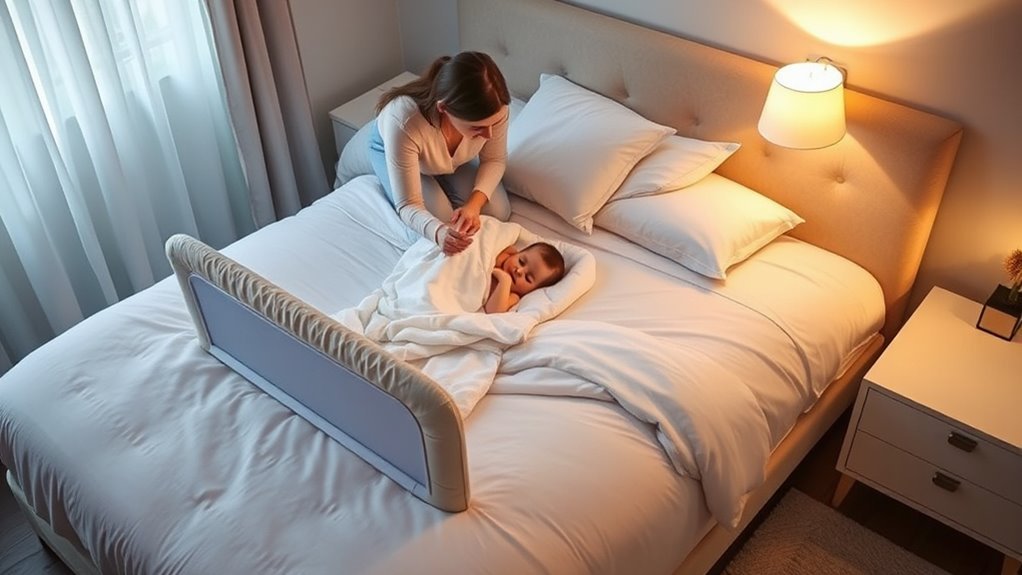
To prevent your baby from falling off the bed, start by using bed rails or soft barriers to create a secure, cushioned boundary. These help keep your little one safely in place while they sleep, giving you peace of mind.
Next, establish a consistent sleep routine with calming activities like gentle rocking or a bedtime story. This helps your baby sleep more peacefully and move less during the night.
Finally, cushion the landing area around the bed with thick rugs or foam mats. This softens any accidental falls and adds an extra layer of safety.
By staying aware of these simple steps, you can make your baby’s sleeping space much safer.
Plus, it gets you ready to explore even more helpful safety strategies down the road.
Key Takeaways
– Use bed rails or soft barriers to create a secure perimeter and prevent your baby from rolling off the bed.
This helps keep them safe and gives you peace of mind.
– Position the bed against a wall to limit exposure and reduce fall risk on one side.
It’s a simple trick that can make a big difference.
– Establish consistent sleep routines with calming activities to minimize restless movements during sleep.
A calm baby is less likely to toss and turn.
– Surround the bed with thick rugs or foam mats to cushion any potential falls and reduce injury risk.
Soft surfaces nearby can really help protect your little one.
– Always closely monitor your baby’s movements, especially as they become more mobile and active.
Being attentive is key to keeping them safe.
Why Preventing Baby Falls From Beds Matters
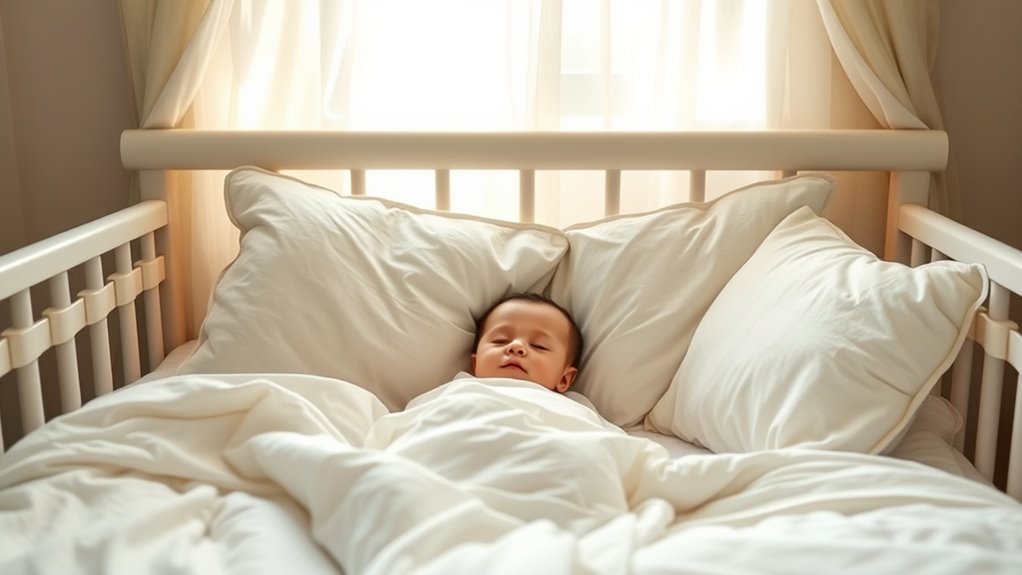
Because babies have a large head-to-body ratio and are just learning to move, they can easily roll off beds and suffer serious injuries. Baby falls from beds and changing tables often lead to head trauma or fractures, making prevention vital.
You need to stay vigilant, especially as your baby starts wiggling and crawling. Monitoring your baby closely and implementing safety measures, like placing a soft surface near the bed, can minimize the risk.
Child safety depends on anticipating these risks and acting early. Falls from elevated surfaces are common, so don’t underestimate how quick your baby’s movements can be.
Use Bed Rails and Soft Barriers to Stop Falls
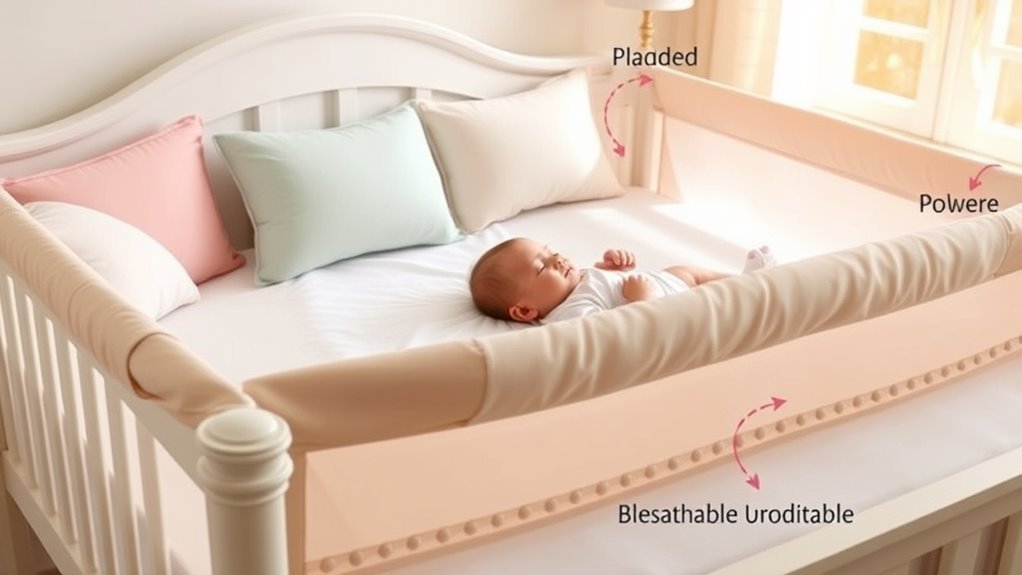
When you install bed rails and soft barriers, you create an essential line of defense that helps prevent your baby from rolling off the bed. Bed rails act as a secure barrier, greatly reducing falls by fitting various bed sizes with adjustable options.
Soft barriers, like foam guards, provide a gentle edge that cushions your baby, lowering injury risk if they do roll toward the edge. Proper positioning of the bed against a wall further enhances safety by limiting one side’s exposure.
You should also foster your baby’s awareness about bed safety to reduce falls. Combining these measures guarantees a safer sleeping environment, giving you peace of mind while protecting your baby from potential injury by creating a cushioned surface and firm boundaries.
Stick to Sleep Routines and Cushion the Landing Area

Establishing a consistent sleep routine helps your baby relax and reduces restless movements that can lead to falls. Stick to sleep routines that calm your baby, like reading a story or singing a lullaby, to promote peaceful sleep and fall prevention.
Plus, cushion the landing area to reduce risk if a fall occurs.
- Use bed rails to create a secure edge that prevents your baby from rolling off.
- Position the bed against a wall to add natural fall protection.
- Surround the bed with thick rugs or foam mats for a soft landing zone.
- Regularly inspect the sleeping area and check hazards to maintain a safe environment.
Frequently Asked Questions
What Can I Use to Prevent My Baby From Falling off the Bed?
You can use adjustable bed rails, soft bumpers, or foam guards to create a secure edge. Position the bed against a wall to make it even safer.
Also, place thick rugs or cushions around the bed. This way, they’ll help cushion any accidental falls and give you peace of mind.
How Do I Make Sure My Baby Is Okay After Falling off Bed?
You should comfort your baby right away. Watch for warning signs like vomiting or seizures, and keep a close eye on them for 24 hours.
If you notice anything unusual, don’t hesitate to contact your pediatrician for advice. It’s always better to be safe and get professional guidance.
What Is the 5-3-3 Rule for Babies?
The 5-3-3 rule for babies is like a watchful guardian: you never leave your baby unattended on elevated surfaces for more than 5 seconds, 3 minutes, or 3 feet.
This helps keep them safe from falls and injuries.
It’s a simple way to stay alert and protect your little one.
What Is the Old Wives Tale About Babies Falling off the Bed?
The old wives’ tale says if your baby falls off the bed, they’ll face lifelong bad luck or misfortune. It reflects fears about safety, but you shouldn’t rely on it—focus on keeping your baby secure instead.
Honestly, accidents happen, and babies can be pretty wiggly. So, it’s way more important to make sure their sleeping area is safe than to worry about old superstitions.
Conclusion
Sure, because who doesn’t want their baby to experience the thrill of a surprise bed dive? But seriously, preventing falls isn’t just about avoiding a midnight circus act.
Use bed rails and soft barriers like a pro. Stick to those sleep routines religiously, and cushion the landing zone like your little one’s fame depends on it.
Trust me, your nerves—and their tiny limbs—will thank you for keeping bedtime drama-free. Using these simple tips to prevent your baby from falling off the bed can make all the difference.
By creating a safe sleep environment with bed rails, maintaining consistent routines, and adding soft cushioning, you reduce the risk of falls significantly. These easy steps help ensure your baby’s safety, giving you peace of mind and your little one a secure, comfortable place to sleep every night.