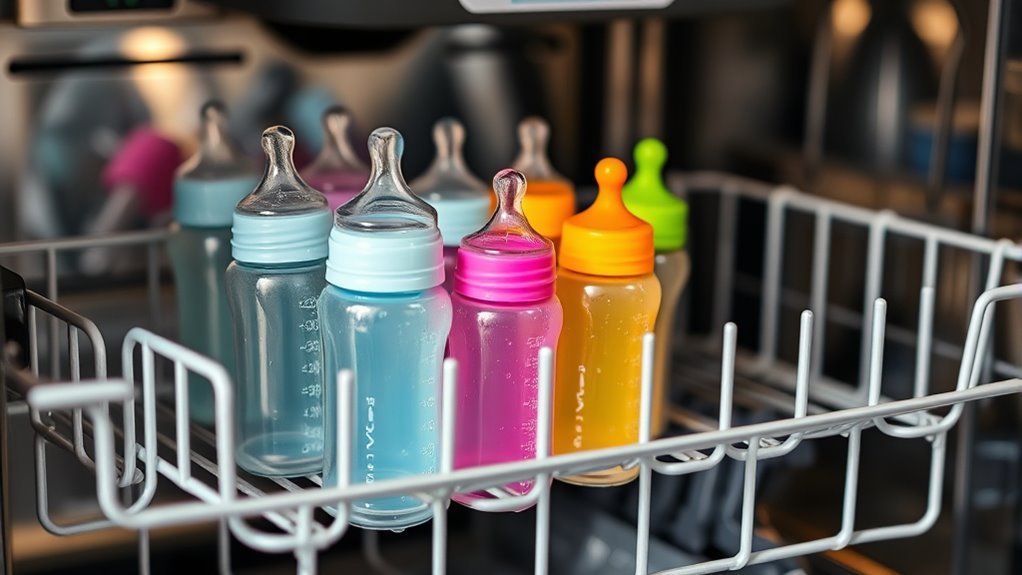
Can You Put Baby Bottles in the Dishwasher?
Yes, you can put baby bottles in the dishwasher, but you need to prepare them properly first. Cleaning baby bottles in the dishwasher is a convenient and effective way to keep them germ-free.
Just make sure to follow the right steps to ensure thorough cleaning and avoid any leftover milk residue.
Start by disassembling all parts of the bottle and rinsing them with cool water. This helps prevent milk from hardening and sticking to the bottles.
Place the bottles upside down on the top rack of the dishwasher. Use a fragrance-free detergent to avoid any irritation for your baby.
Select the sanitize cycle for an effective clean. Finish with the heated dry option to keep the bottles completely dry and germ-free.
Follow these steps, and you’ll keep your baby’s bottles safe and hygienic. There’s actually more to learn about each step, so keep reading!
Key Takeaways
- Baby bottles can be safely washed in the dishwasher when fully disassembled and rinsed with cool water to remove milk residue.
- Place baby bottles upside down on the top rack for thorough cleaning and to avoid damage during the wash cycle.
- Use the dishwasher’s sanitize cycle, which heats water to at least 150°F, to eliminate 99.9% of bacteria effectively.
- Select fragrance-free detergent to prevent chemical residues that could harm the baby and maintain bottle material integrity.
- Activate the heated dry option to remove moisture and prevent bacteria growth, ensuring bottles are hygienic and ready for use.
Prepare and Load Baby Bottles Safely for the Dishwasher
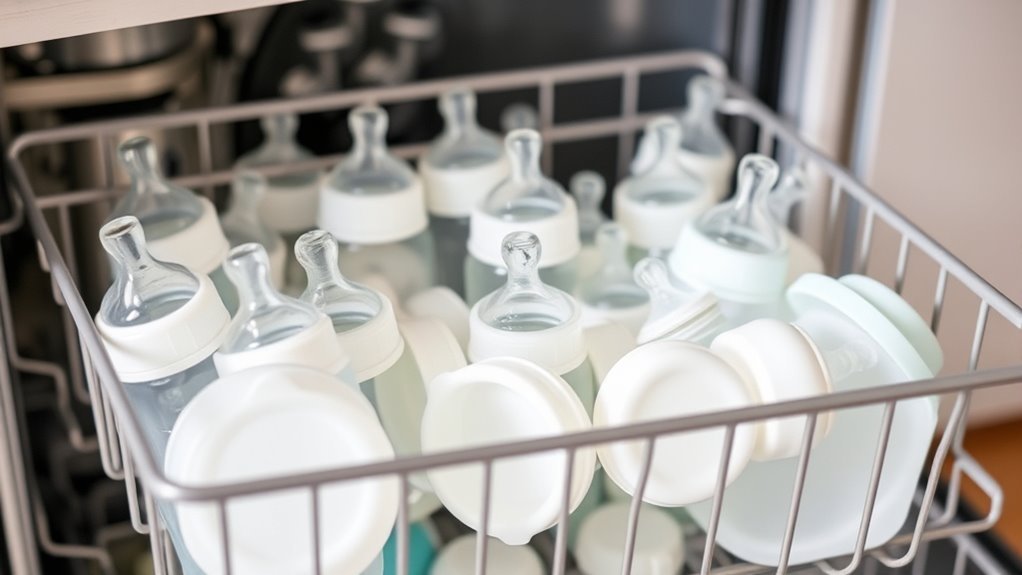
Before you load baby bottles into the dishwasher, disassemble all parts completely and rinse them with cool water to prevent milk residue from hardening. This step is essential to guarantee your baby bottles get thoroughly clean and sanitize effectively.
Place all disassembled parts, including nipples and rings, in a closed-top basket to avoid losing small pieces during the wash cycle. Always put baby bottles and their components on the top rack of the dishwasher to prevent warping from the heating element below.
Position bottles upside down to allow water to flow freely inside, making sure every surface is cleaned thoroughly. By following these steps, you’ll keep your baby bottles clean, safe, and ready for the next use without any stubborn milk residue left behind.
Choose the Right Dishwasher Cycle and Drying Settings for Baby Bottles
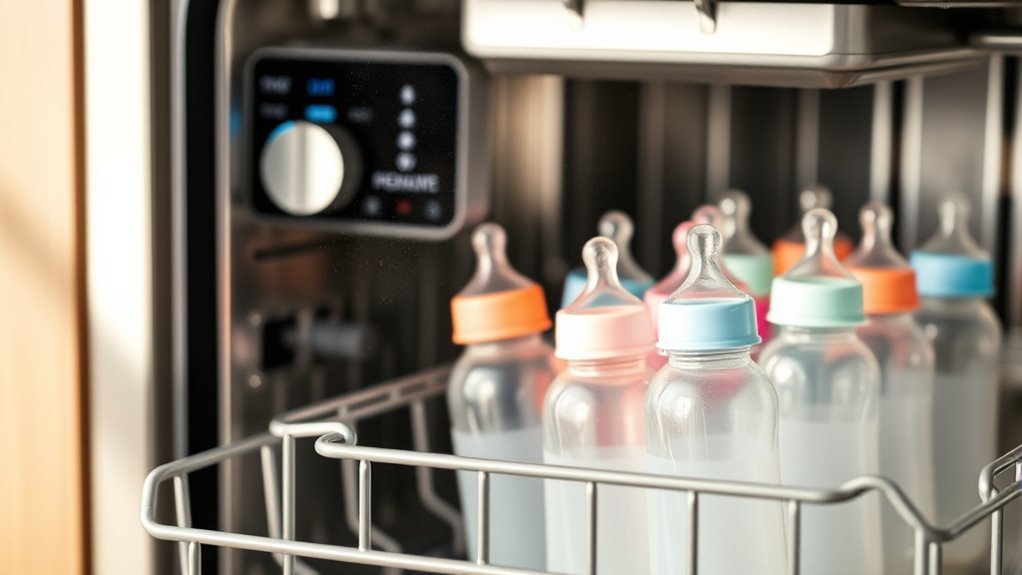
When you run your dishwasher, selecting the right cycle and drying settings plays a crucial role in keeping baby bottles hygienic. Always choose the sanitize cycle, as it heats water to at least 150°F, killing 99.9% of bacteria and ensuring proper hygiene.
Choosing the sanitize cycle ensures baby bottles are hygienically cleaned by eliminating 99.9% of bacteria.
Place baby bottles and their parts on the top rack to prevent warping or melting from the heating element. Avoid eco or cooler wash cycles since they don’t reach high enough temperatures to remove milk residues effectively.
Select the heated dry option to eliminate moisture that can harbor germs after cleaning. Use a fragrance-free detergent to keep chemical residues off the bottles.
Following these steps guarantees your baby bottles are thoroughly cleaned and safe for your baby with each dishwasher cycle.
Frequently Asked Questions
What Baby Bottles Can Go in the Dishwasher?
You can put baby bottles labeled dishwasher safe in the dishwasher. Place all parts on the top rack to avoid damage.
Glass and silicone bottles handle heat well, but watch plastic ones for discoloration or warping. Just keep an eye on them to make sure they stay in good shape.
Can I Sanitize Baby Bottles in the Dishwasher?
You can give baby bottles a spa day by using your dishwasher’s sanitize cycle. Just make sure it hits 150°F and use the sanitize setting.
Also, check that the bottles are dishwasher-safe for a thorough, gentle cleanse. It’s an easy way to get them super clean without extra hassle!
Can I Put Dr. Brown’s Bottles in the Dishwasher?
Yes, you can put Dr. Brown’s bottles in the dishwasher. Just disassemble them first and place everything on the top rack.
Use a hot cycle with sanitize if your dishwasher has that option. Also, try to avoid overcrowding the rack to keep the bottles clean and undamaged.
It’s pretty easy to do, and this way your bottles will stay in great shape!
What Is the Best Way to Wash a Baby Bottle?
Just like a Victorian mother would cherish her baby’s health, you should rinse bottles promptly and disassemble them.
Place dishwasher-safe bottles upside down on the top rack. Use hot water and gentle detergent to clean them thoroughly.
Then, air-dry the bottles completely before the next use. It’s simple, but it keeps your baby safe and healthy!
Conclusion
You absolutely can put baby bottles in the dishwasher, and it’s honestly a lifesaver when you’re juggling a million things! Just make sure you load them carefully, or you might end up with a bottle explosion worthy of a science experiment.
Choosing the right cycle and drying settings is like giving your bottles a spa day—they come out spotless and ready for the next feeding. Trust me, this little dishwasher hack will save your sanity!
Using the dishwasher for baby bottles not only saves you time but also ensures they’re thoroughly cleaned and sanitized. Just remember to place all parts securely and pick a gentle cycle to keep everything in perfect shape. So yes, putting baby bottles in the dishwasher is a convenient and effective way to maintain your baby’s feeding gear without added stress.






One Comment