Can You Wash Baby Bottles in the Dishwasher?
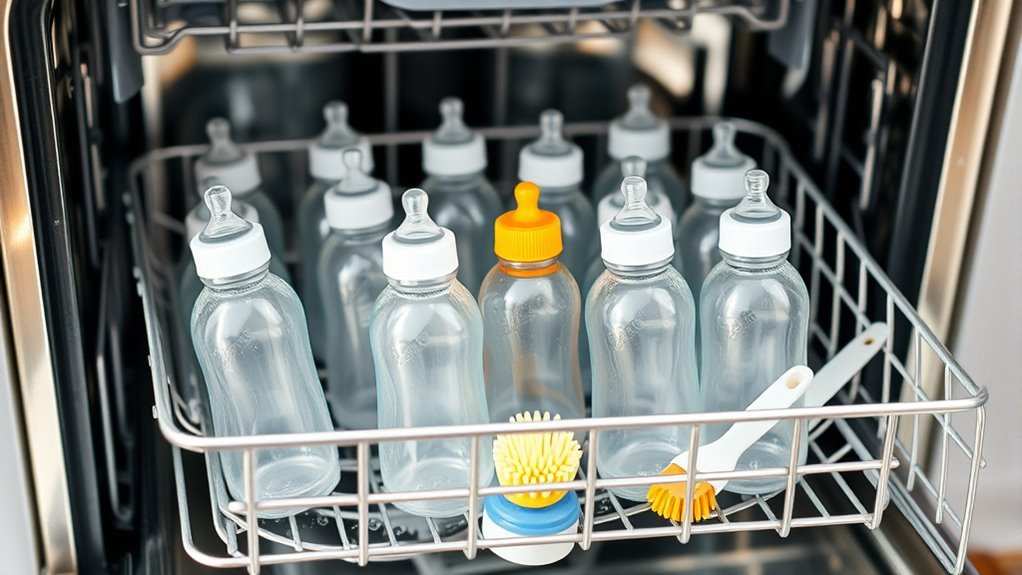
Yes, you can safely wash baby bottles in the dishwasher. Just make sure to rinse all parts with cool water and disassemble them completely before loading. This helps get rid of any leftover milk or formula.
Place the parts on the top rack, upside down, so they get cleaned properly. Use the hottest water setting available and select the sanitize option if your dishwasher has one. This kills 99.9% of germs and keeps the bottles hygienic.
It’s best to use a fragrance-free detergent to avoid any residue on the bottles.
After the cycle, either heat-dry or air dry the bottles completely.
Keep reading to find out some tips on how to get the best results and keep your baby’s bottles spotless every time!
Key Takeaways
- Baby bottles can be safely washed in the dishwasher as long as you follow the manufacturers’ instructions for the best results.
- First, take apart all the bottle parts and rinse them with cool water. This helps stop milk residue from building up.
- When loading the dishwasher, put the bottles and parts on the top rack. Make sure to place the bottles upside down so they drain and get cleaned properly.
- It’s best to use the hottest water setting along with the sanitize option. This combo kills 99.9% of germs, keeping things really clean.
- Also, pick a detergent that’s fragrance-free and dye-free. Rinse thoroughly to avoid any harmful residue left on the bottles.
Is It Safe and Effective to Wash Baby Bottles in the Dishwasher?
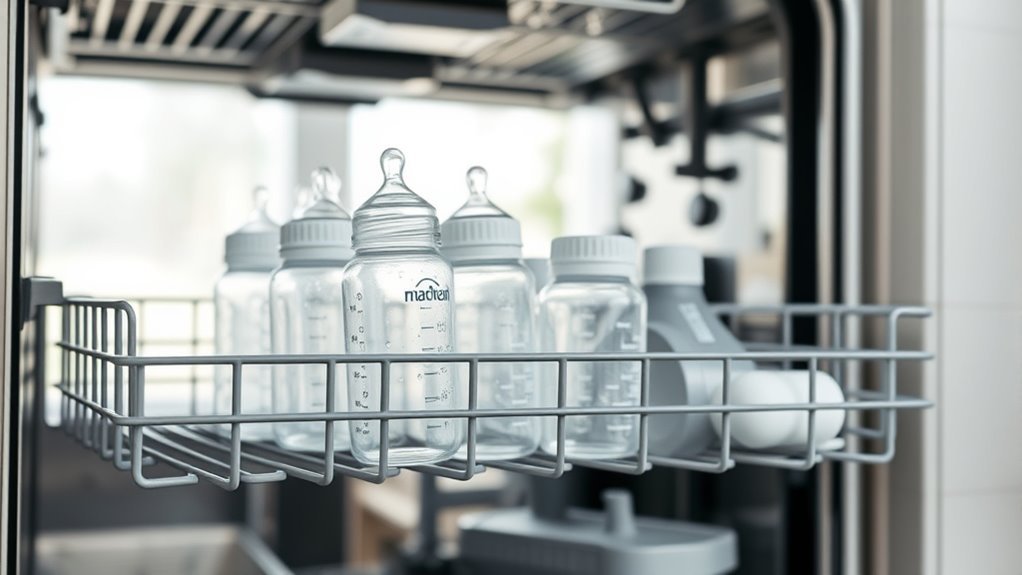
Wondering if you can safely wash baby bottles in the dishwasher? Yes, you can, as long as you follow the manufacturers instructions. Using a dishwasher with a hot water cycle and the sanitize option effectively kills 99.9% of germs, guaranteeing your baby bottles are safe.
Always place baby bottles and their parts on the top rack to avoid melting and guarantee a deep clean. Rinse and disassemble bottles before loading to boost cleaning efficiency.
Use fragrance-free, dye-free detergent and the heated dry setting or a drying rack to keep bottles dry and free from harmful residues. Over 70% of U.S. parents trust this method, making it a safe, convenient way to keep baby bottles clean and ready for use.
How to Prepare and Load Baby Bottles in Your Dishwasher
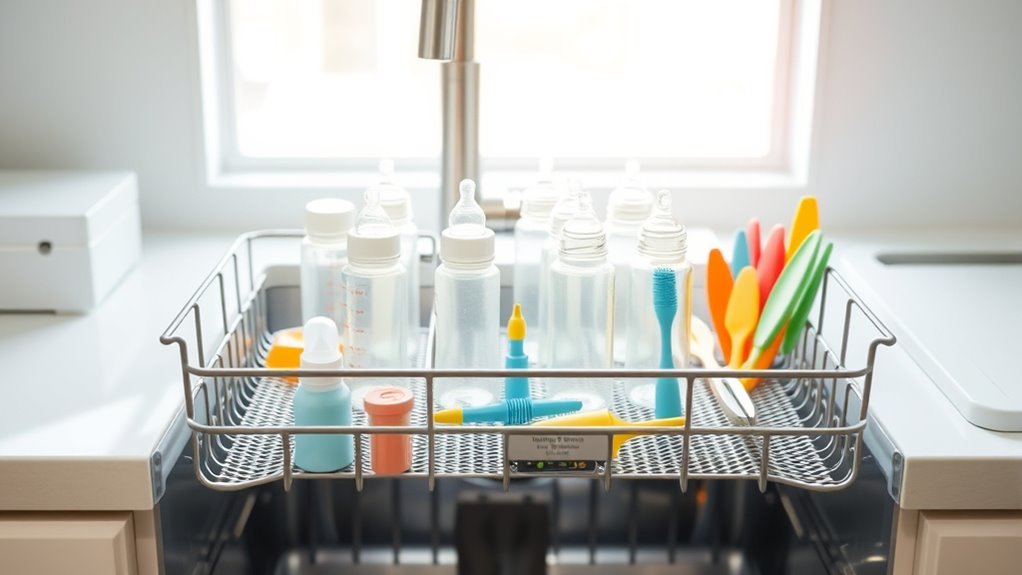
Start by rinsing every bottle part with cool water right after feeding to prevent milk residue from drying and sticking. Next, disassemble baby bottles completely, separating nipples, rings, and bottles to facilitate thorough cleaning.
Load all parts on the top rack of your dishwasher to avoid damage from intense heat on the bottom rack. Position bottles upside down so water can drain and clean efficiently during the cycle.
Use the hottest water setting available—ideally the sanitize feeding items option—to kill 99.9% of bacteria and assure hygienic results. Following these steps helps you wash and sanitize baby bottles effectively, eliminating milk residue and making sure your baby’s feeding items are safe and clean after every wash.
Frequently Asked Questions
Can Dr. Brown’s Bottles Be Dishwasher Safe?
Yes, Dr. Brown’s bottles are dishwasher safe. Just disassemble all parts, place them on the top rack, and use a hot water cycle with sanitize.
Avoid abrasive detergents to keep them in great condition. It’s pretty simple to take care of them this way!
Do You Need to Sterilize Baby Bottles After the Dishwasher?
You don’t always need to sterilize baby bottles after the dishwasher, especially if it has a sanitize cycle.
But for newborns or vulnerable babies, it’s best to sterilize for extra safety and peace of mind.
Does the Dishwasher Count as Sterilizing?
No, the dishwasher doesn’t count as sterilizing. It cleans bottles well but won’t kill all bacteria.
For newborns or sensitive infants, you’ll need to sterilize by boiling, steaming, or using a dedicated sterilizer. That way, you can be sure everything is super safe and clean.
What Baby Bottles Can Go in the Dishwasher?
Think of dishwasher-safe baby bottles as trusted passengers on a heat voyage. You can safely wash plastic, glass, or silicone bottles labeled “dishwasher safe.”
Just make sure to place nipples securely on the top rack to avoid melting or warping. It’s a simple way to keep everything clean without any damage.
Conclusion
Washing baby bottles in the dishwasher can be as reliable as a well-oiled machine—if you prepare and load them properly. Just like a race car needs the right fuel and care to perform, your bottles need to be rinsed and placed securely to get spotless and germ-free.
Remember, a 2019 study found dishwashers sanitize bottles effectively, saving you time and worry. So, trust your dishwasher—it’s your baby’s clean champion.
Using the dishwasher for baby bottles is not only convenient but also ensures thorough cleaning and sanitizing. Just make sure to rinse off any milk residue first and place the bottles and nipples in the top rack where they get the best clean. With these tips, washing baby bottles in the dishwasher becomes an easy, reliable routine for keeping your baby’s feeding gear safe and hygienic.




2 Comments