10 Steps to Introduce a Sippy Cup to Your Baby
You can start introducing a sippy cup around 6 months when your baby has good head control and can sit up. This is a great time to help your little one transition from bottle or breast to a sippy cup. Choose a soft-spouted, easy-to-clean cup that’s suited to their age and stage.
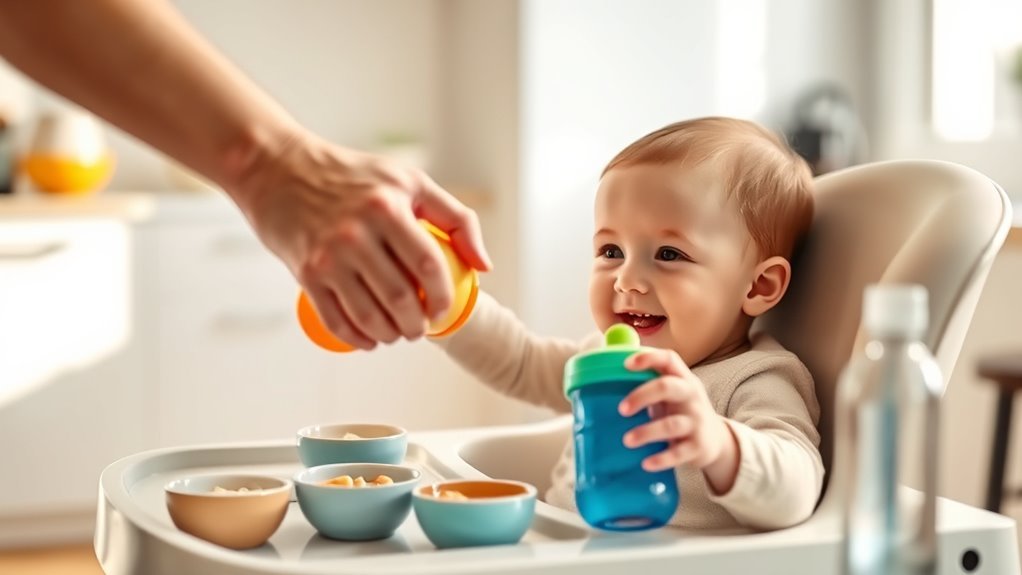
Let your baby explore the cup during mealtimes by offering familiar liquids like breast milk, formula, or water. Encourage them to hold the cup independently—it’s all about making the experience fun and stress-free.
If your baby refuses, don’t worry! Handle refusals with patience, offering small amounts and spill-proof options to keep things manageable.
Gradually shift from bottle to cup by 12 to 18 months to support your baby’s drinking skills and overall development. Keep going step by step, and you’ll discover helpful tips for each stage of this exciting journey.
Key Takeaways
- Introduce a sippy cup around 6 months when the baby has good head and neck control.
- Choose age-appropriate cups: soft spouts for 4-6 months, straw spouts for 9 months, and insulated cups for toddlers over 12 months.
- Use familiar liquids like breast milk or formula to encourage acceptance and let the baby explore the cup freely.
- Place the sippy cup within easy reach during mealtime and model drinking behavior to promote interest and independent use.
- Handle refusal by dipping the spout in milk, removing valves if needed, practicing without the lid, and gradually weaning by age 2-3.
When to Introduce a Sippy Cup to Your Baby?
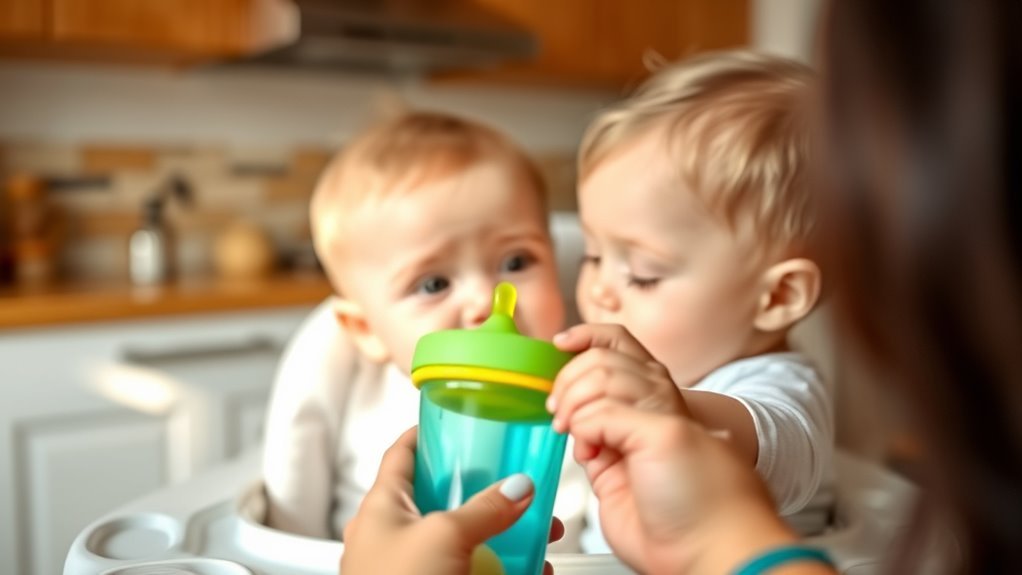
Introducing a sippy cup to your baby usually works best around 6 months, when they gain better head and neck control. This milestone makes it easier for them to handle the cup and drink safely.
However, individual readiness varies—some babies might be ready as early as 4 months, while others may not accept a sippy cup until after their first birthday. It’s important to watch your baby’s cues and be patient during this shift.
Pediatricians recommend you guide your baby away from the bottle and fully onto a sippy cup by 12 to 18 months to support dental health and independence. By paying attention to your baby’s personal development, you can introduce a sippy cup at the right time for them.
How to Choose the Right Sippy Cup for Your Baby
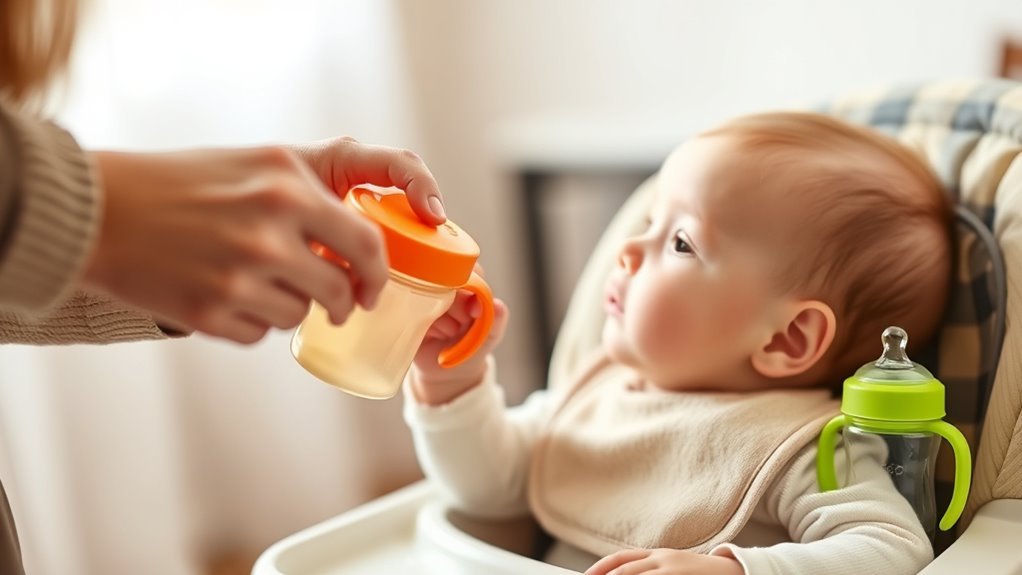
How do you pick the best sippy cup to match your baby’s age and needs? Start by choosing soft spouts for babies 4-6 months to ease the bottle change.
For 9-month-olds, straw-shaped spouts encourage oral muscle growth and offer a larger capacity.
Toddlers over 12 months benefit from insulated cups with rim spouts to keep drinks warm and support more advanced drinking skills.
Also, pick materials that fit your lifestyle. Make sure the cup is easy to clean to keep germs away.
| Age Group | Recommended Spout |
|---|---|
| 4-6 months | Soft spouts |
| 9 months | Straw-shaped spouts |
| 12+ months | Insulated cups |
| Portability | Lightweight plastic |
| Hygiene | Easy to clean |
Getting Your Baby Ready for the Sippy Cup
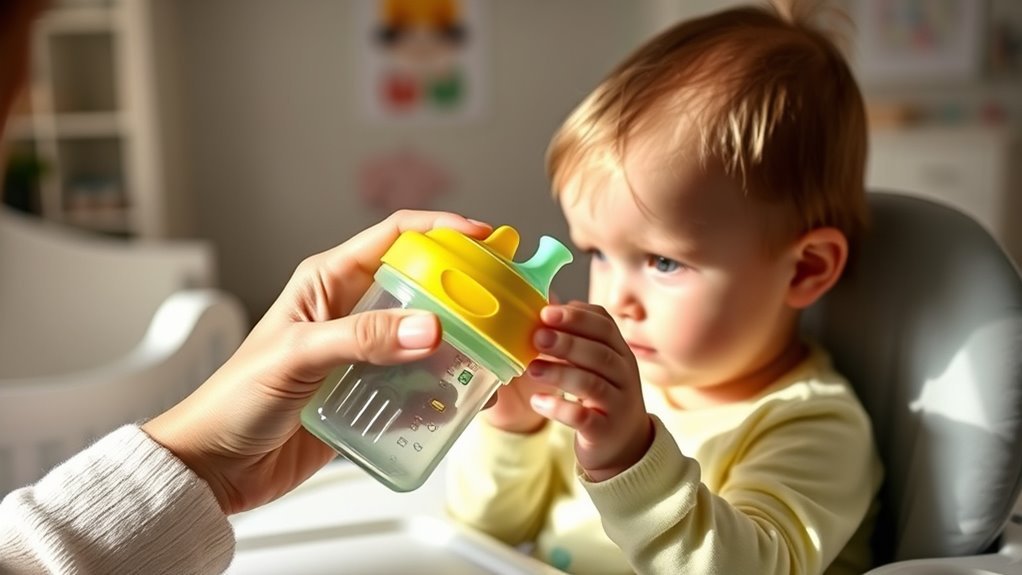
Once your baby can sit up steadily and hold their head up well, you can start offering a sippy cup to help them get used to it. Look for signs of readiness around six months, such as independent sitting and strong head control.
Begin by introducing familiar liquids like breast milk or formula in the sippy cup to encourage acceptance. Let your baby explore the cup by holding and playing with it, which eases any apprehension.
Start with familiar liquids in the sippy cup and let your baby explore it to build comfort.
Choose a sippy cup with a soft, flexible spout for comfort, making the shift smoother. This gradual introduction helps your baby adjust naturally.
Preparing your baby this way sets the stage for a successful change from bottle to sippy cup, supporting healthy drinking habits as they grow. It’s all about making the transition easy and comfortable for your little one.
Step-by-Step Guide to Introducing the Sippy Cup at Mealtimes
When you bring the sippy cup to mealtime, place it within easy reach so your baby can explore it on their own. Let them touch and play with the cup to build comfort and curiosity.
You’ll encourage drinking by making the cup a familiar part of your routine. It’s all about helping your little one get used to it in a fun, relaxed way.
Mealtime Placement Strategy
Although introducing a sippy cup can feel challenging, placing your baby’s high chair at the table during mealtimes creates a shared environment that encourages engagement. This placement helps your little one feel included and more comfortable trying new things.
You can model drinking behavior by using your own cup, showing your baby how to sip during mealtime. Offer breast milk or formula in the sippy cup to reinforce drinking habits tied to eating rather than random grazing.
- Position the high chair close to the family table
- Introduce the sippy cup empty first to build comfort
- Use your own cup to model drinking behavior
- Celebrate small successes to encourage positive associations
This strategy fosters comfort and ease, making mealtime a natural moment for learning. It really helps make those first sips feel like a team effort!
Encouraging Cup Exploration
As your baby grows curious about the sippy cup, you can encourage exploration by letting them handle it during mealtimes without pressure. Place the sippy cup filled with familiar liquids like breast milk or formula within their reach to promote acceptance and reinforce the idea of drinking at meals.
Show your baby how to sip from the cup by taking a few drinks yourself—babies often mimic adult actions, making the cup more appealing. Expect some spills and treat them as part of the learning process.
Stay positive and patient, encouraging your baby’s exploration and gradual skill development. By making mealtimes a relaxed, playful environment, you’ll help your baby feel confident with the sippy cup and enthusiastic to practice drinking independently.
Encouraging Your Baby to Hold and Explore the Sippy Cup
Let your baby explore the sippy cup during mealtime by placing it within reach to encourage independent holding. Make cup playtime fun and relaxed so your baby feels comfortable getting used to it.
Your gentle support will help build their confidence and interest in using the cup. Just take it slow and enjoy these little moments together!
Allow Cup Exploration
When you encourage your baby to hold and explore the sippy cup during mealtime, you help them become more comfortable and confident with it. Allow your baby to interact with the cup freely, turning it into a fun exploration rather than a strict feeding moment.
Offering a small amount of liquid inside makes the experience manageable and less overwhelming. Try letting your baby explore the cup outside of the high chair to reduce pressure and increase curiosity.
Use positive reinforcement to motivate their interest and learning.
- Allow hands-on interaction to build familiarity
- Encourage exploration with a small amount of liquid
- Introduce the cup in relaxed, playful settings
- Praise your baby’s efforts to promote confidence and interest
Encourage Independent Holding
Encourage your baby to hold the sippy cup independently by placing it within their reach during feeding times. This simple act helps your little one grasp the cup and become familiar with its feel.
Use a sippy cup with a soft, flexible spout to make it easier for your baby to hold and drink without frustration. You can encourage independent drinking by praising their efforts each time they try to hold or sip from the cup.
Show your baby how you drink from a cup, as babies often mimic adult behaviors. Letting your baby explore the sippy cup outside mealtimes also builds familiarity, making them more comfortable and confident when it’s time to drink.
Incorporate Cup Playtime
As your baby grows curious about new objects, you can introduce cup playtime to help them explore the sippy cup in a relaxed setting. This approach encourages familiarity and makes learning enjoyable.
Start by letting your baby handle an empty sippy cup, allowing them to get comfortable before adding liquid. Be sure to model behavior by sipping from your own cup, showing them how it’s done.
Use positive reinforcement to praise their attempts, boosting their confidence. Finally, set up for success by placing the cup within reach on a stable surface or high chair.
- Encourage your baby to explore the sippy cup during mealtime
- Model behavior by drinking from your own cup
- Gradually introduce familiar liquids once interest grows
- Use positive reinforcement to celebrate progress and promote skill-building
Offering Familiar Liquids in the Sippy Cup to Boost Acceptance
Although switching to a sippy cup can feel like a big change for your baby, offering familiar liquids like breast milk or formula helps make the shift smoother. By offering these familiar liquids in the sippy cup, you create a comforting experience that boosts your baby’s acceptance.
Using liquids your baby already enjoys promotes positive associations with the new cup, easing the change from bottle to sippy cup. Make certain the liquid is at a comfortable temperature, similar to what your baby is used to, to encourage acceptance.
Gradually introduce the sippy cup during mealtimes, reinforcing it as part of your baby’s routine. This thoughtful approach guarantees your baby adapts more easily to the sippy cup and embraces it confidently.
Tips for Reducing Sippy Cup Spills
To reduce sippy cup spills, start by filling the cup with just a small amount of liquid and choose spill-proof designs with soft spouts. Let your baby hold the cup to build their motor skills and practice in easy-to-clean places like the bath or outdoors.
Introducing the cup during mealtimes can also help your baby focus and minimize messes. It’s a simple way to make learning less messy and more fun!
Spill Prevention Techniques
When you introduce a sippy cup to your baby, choosing one with a spill-proof design and a soft spout can greatly reduce messes. Start by filling the cup with small amounts of liquid to avoid overwhelming your baby and minimize spills.
Encourage your baby to hold the cup independently by placing it on a tray or table, promoting exploration and self-feeding. During their first attempts, supervise closely and assist by guiding the cup to their mouth and stabilizing it to prevent spills.
- Choose a sippy cup with a simple, spill-proof design and soft spout
- Fill with 1-2 fl oz of liquid to reduce mess
- Encourage self-picking by placing the cup within reach
- Supervise and assist during first attempts to guarantee success
Managing Messy Moments
Since spills are part of your baby’s learning process, managing messy moments with practical strategies can make feeding time less stressful. Start by filling the sippy cup with small amounts (1-2 fl oz) to minimize spills and make clean-up easier.
Choose spill-proof sippy cups with weighted straws or soft spouts to help reduce messes while your baby practices drinking. Use scoop bibs or towels during mealtime to catch spills and keep the area clean.
Practice in easy-to-clean spaces like outdoors or the bath to better manage messes. Remember, spills are normal, so stay patient and use positive reinforcement to encourage your baby’s progress.
With these tips, you’ll effectively manage spills and make sippy cup use a positive experience for both of you.
Handling Sippy Cup Refusal: What to Do
Why might your baby refuse the sippy cup, and how can you encourage them to accept it? Sometimes, your baby isn’t interested because the sippy cup feels unfamiliar or even a bit tricky to use.
Your baby might resist the sippy cup because it feels new and a bit challenging to handle.
To make the shift smoother and help your baby learn to drink from a cup, try these helpful tips:
- Dip the sippy cup spout in breast milk or formula to pique their interest.
- Introduce the cup midway through feeding to create a natural switch.
- Remove valves if the cup is too hard to use, making it easier for your baby.
- Let your baby practice sipping without the lid initially, adding it as they get comfortable.
Transitioning From Bottle to Sippy Cup Gradually
If your baby has started to accept the sippy cup, the next step is to ease them off the bottle gradually. Begin introducing the sippy cup around 6 months when your baby shows readiness.
Replace one bottle feeding per day with the sippy cup to support a smooth shift. Use a soft, flexible spout to mimic the bottle feel and encourage your baby to explore the cup during mealtimes.
Aim to complete this shift by 12 months to promote dental health.
| Age (Months) | Feeding Method | Tips for Shift |
|---|---|---|
| 6 | Bottle + Sippy Cup | Introduce soft spout sippy cup |
| 7 | 1 feeding with sippy | Encourage cup exploration |
| 9 | 2 feedings with sippy | Gradually reduce bottle feedings |
| 11 | Mostly sippy cup | Reinforce positive associations |
| 12 | Sippy cup only | Complete bottle phase |
Weaning Your Baby Off the Sippy Cup
As your child nears their second birthday, you’ll want to start introducing open or straw cups to help them move away from the sippy cup. This change supports oral muscle development and reduces the risk of tooth decay.
To successfully wean your baby off the sippy cup, focus on gradual changes.
- Limit sippy cup use to mealtimes and slowly reduce frequency.
- Encourage drinking from an open cup by modeling and praising attempts.
- Watch for readiness signs like holding and sipping independently.
- Complete the change by age 2 to 3 to avoid prolonged bottle habits and dental issues.
It might take a little time, but your little one will get the hang of it! Just keep encouraging them and be patient.
Frequently Asked Questions
When and How to Introduce a Sippy Cup to a Baby?
You should introduce a sippy cup around six months when your baby can sit and shows interest.
Offer breast milk or formula in a soft-spout cup, let them explore, and model drinking to encourage change confidently. It’s all about making it fun and easy for your little one.
How Do I Transition My Baby to a Sippy Cup?
You just magically hand your baby a sippy cup, and they instantly love it—right? Actually, start with a soft spout, model drinking, offer during meals, and patiently encourage until they get the hang of it.
It might take a little time, but don’t worry. Just keep showing them how it’s done and they’ll catch on soon!
How Do I Know if My Baby Is Ready for a Sippy Cup?
You’ll know your baby’s ready for a sippy cup when they sit up well and show interest in cups.
They might reach for drinks or even mimic you during meals. It’s pretty cute when they do that!
Also, watch for signs like losing interest in the bottle around 9 to 12 months. That’s a big clue they’re ready to make the switch.
When to Start Putting Breast Milk in a Sippy Cup?
Think of six months as the sunrise for introducing breast milk in a sippy cup. You’ll want to start then, when your baby shows interest.
This helps them sip independently and embrace mealtime routines naturally. It’s all about making the transition smooth and fun.
Conclusion
Introducing a sippy cup might seem tricky at first, but with patience and the right approach, it becomes a smooth changeover. While bottles feel familiar and comforting, sippy cups open the door to independence and growth.
You’ll face spills and refusals, yet each step brings your baby closer to mastering this new skill. Embrace the messy moments—they’re signs of progress, turning everyday challenges into exciting milestones.
Remember, introducing a sippy cup is all about patience and consistency. Each small success builds your baby’s confidence and helps develop important motor skills. So keep encouraging your little one, celebrate every tiny victory, and soon enough, your baby will be happily using their sippy cup like a pro. You’ve got this!