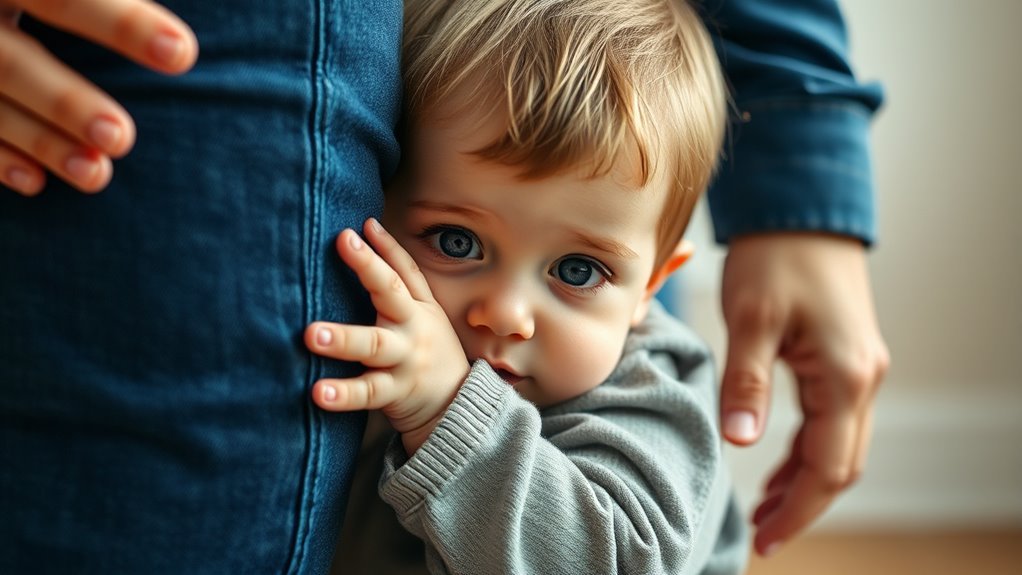
What Is a Velcro Baby?
A Velcro baby is one who clings tightly to you and rarely wants to be put down or left alone, especially between 6 to 9 months.
This clinginess is a common behavior linked to separation anxiety and their growing awareness of the world around them. You might notice they want to be close all the time and seem extra fussy when you try to step away.
This constant need for attention and reluctance to explore new things comes from their need for emotional security.
It’s all about forming a healthy attachment with you. Understanding why your little one behaves this way can really help you support them better.
So, if you want to learn more about Velcro babies and how to handle this stage, keep reading these insights.
Key Takeaways
– A Velcro baby clings tightly to caregivers and rarely wants to be put down or left alone.
This behavior typically peaks between 6 to 9 months due to separation anxiety and awareness.
– Velcro babies seek constant physical closeness as a survival mechanism promoting emotional security.
Signs include extreme clinginess, crying when put down, fussiness, and reluctance to explore.
– The behavior is rooted in attachment theory and fosters secure emotional bonding with caregivers.
What Is a Velcro Baby?

A Velcro baby clings tightly to their caregiver, rarely wanting to be put down or left alone. This clingy behavior often peaks between 6 to 9 months, linked to separation anxiety as your baby becomes more aware of their surroundings.
Rooted in attachment theory, this need for physical closeness is a natural survival mechanism promoting secure attachment and emotional security. You’ll notice your baby demands constant attention and resists being set aside, which plays a critical role in child development.
Supporting your Velcro baby with consistent caregiver support and incorporating their needs into your daily routine helps build trust and comfort. Understanding this behavior guarantees you respond effectively, fostering a strong bond that supports your infant’s growing world.
Signs and Causes of Velcro Babies

When your baby clings tightly and cries whenever you try to put them down, they might be showing signs of being a Velcro baby. Velcro babies are known for their extreme clinginess and constant demands for attention, often seeking constant proximity to caregivers.
Babies who cling tightly and cry when put down may be showing signs of Velcro baby behavior.
This clinginess is a normal behavior rooted in a survival mechanism—babies are biologically wired to stay close for safety. Causes of clinginess include developmental leaps, environmental changes, or physical discomfort.
You may notice changes in sleep patterns, fussiness, and reluctance to explore as other signs. Understanding these signs helps you support your child’s development while fostering a healthy attachment.
Meeting your baby’s emotional needs through consistent care guarantees this clinginess remains a natural, manageable phase rather than a source of stress. It’s all about being patient and responsive to what your little one needs.
Frequently Asked Questions
Why Does a Baby Become a Velcro Baby?
A baby becomes a Velcro baby because they seek comfort and security during developmental stages or stressful changes.
You’ll notice they cling more when feeling anxious, uncomfortable, or adjusting to new routines or caregivers around them.
It’s their way of saying, “Hey, I need a little extra love right now.”
Totally normal, and it usually passes as they get more confident and comfortable.
How Long Does the Velcro Baby Stage Last?
Think of a Velcro baby’s clinginess like a fading sunset, usually lasting from 6 months to around 2 or 3 years.
You’ll see it slowly ease as they grow, gaining confidence and independence at their own pace.
Are Velcro Babies Born or Made?
Velcro babies are born with a natural sensitivity and temperament that make them clingy, but you can shape their attachment through responsive parenting.
How Do You Tell if You Have a Velcro Baby?
You’ll know you have a Velcro baby when your arms feel permanently attached, and putting them down sparks a symphony of cries. They demand constant attention, cling tightly, and refuse to nap solo—welcome to nonstop closeness!
It’s like they want to be glued to you all the time. You can’t set them down without an instant meltdown. It’s exhausting but also kind of sweet, right?
Conclusion
If you’ve noticed your little one clinging to you like Velcro, you’re not alone. Velcro babies crave constant closeness, making you feel like their safe harbor in a storm.
Remember, this intense attachment often stems from their need for security and comfort. With patience and understanding, you can gently help them build confidence while still being their steady anchor.
In time, those tight grips will loosen, revealing a more independent spirit ready to explore. Supporting your Velcro baby with love and reassurance helps them feel safe enough to gradually gain independence.
So, while it might feel overwhelming now, know that this phase is about your baby seeking comfort and connection. With your steady presence, your Velcro baby will grow into a confident, curious child eager to explore the world on their own.






One Comment