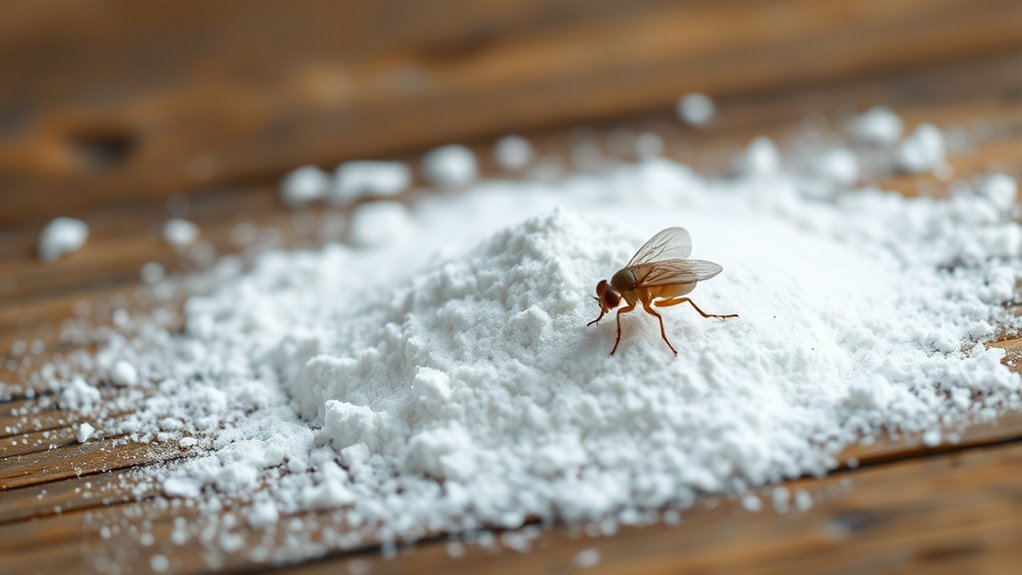
Does Baby Powder Kill Fleas and How to Use It Effectively
You can use baby powder to kill adult fleas by dehydrating them, but it won’t affect flea eggs or larvae.
So, while it can help reduce the number of biting adults, it’s not a complete solution for flea infestations.
To use it safely, avoid talcum-based powders. Instead, choose cornstarch-based options.
Always apply baby powder in well-ventilated areas and keep it away from your pets to prevent any respiratory issues.
Remember, baby powder alone isn’t reliable for full flea control.
Combining it with vacuuming, washing bedding, or natural remedies will work much better.
If you want to manage fleas effectively and protect your pets, there’s more you should know about proper flea treatment methods.
Key Takeaways
- Baby powder kills adult fleas by drying them but does not affect flea eggs or larvae. So, it’s not a complete solution on its own.
- Fleas may avoid treated areas, which means baby powder might not be the most reliable way to control all the fleas.
- It’s best to use cornstarch-based powder in well-ventilated spaces. This helps reduce any respiratory risks for your pets.
- Try to avoid applying baby powder directly on your pets or in places they hang out to prevent them from inhaling it.
- For better flea control, combine baby powder with vacuuming and washing your pet’s bedding regularly. This approach works much better overall.
How Baby Powder Kills Fleas: And Its Limits
Although baby powder can kill adult fleas by absorbing moisture and causing dehydration, it only works on this stage and doesn’t affect flea eggs or larvae. You might use baby powder, mostly made from talcum powder, hoping to kill fleas by suffocating them through moisture absorption.
However, its effectiveness is limited because fleas can quickly avoid treated areas, making it less reliable for controlling a flea infestation. Also, baby powder won’t stop flea eggs or larvae from developing, so the problem can persist.
You should consider health risks, too—talcum powder may cause respiratory issues for pets. Safer alternatives like diatomaceous earth provide better flea control without these concerns.
Using Baby Powder Safely And Better Flea Control Alternatives
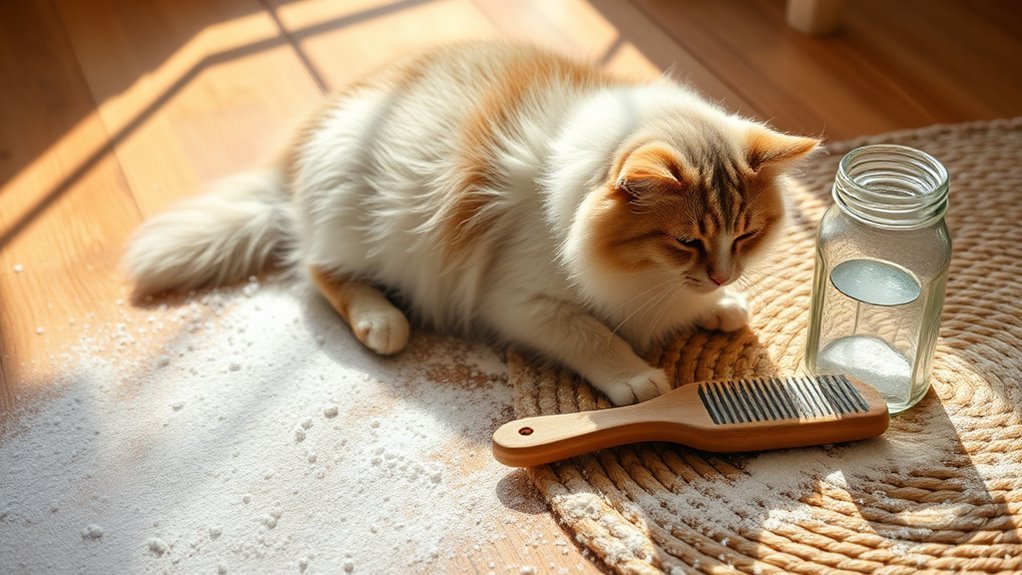
If you choose to use baby powder to tackle fleas, you need to handle it with care to avoid health risks for your pets. Talcum-based powders can be harmful if inhaled or ingested, so opt for cornstarch-based baby powder, which is safer to use but still not very effective at getting rid of flea eggs or larvae.
For better flea control, combine regular vacuuming and washing pet bedding with natural flea control options like neem powder or food-grade diatomaceous earth. These alternatives are safer and more thorough in disrupting the flea life cycle.
Always seek expert advice from your veterinarian to develop a pet care plan that uses safe, effective products tailored to your pet’s needs. This way, you can ensure a flea-free home without risking their health.
Frequently Asked Questions
What Is the Best Homemade Flea Killer?
The best homemade flea killer combines food-grade diatomaceous earth, neem powder, and yarrow powder. Mix them well, and if it’s safe for your pet, add a bit of eucalyptus oil for extra punch.
Then, apply the mixture carefully to your pet’s fur and the areas where they hang out. This way, you’ll tackle those pesky fleas effectively and keep your furry friend comfortable.
What Do Amish Use for Fleas?
You’ll find the Amish use natural flea remedies like diatomaceous earth, essential oils, cedar chips, and herbal solutions. They really prefer to keep things simple and natural.
They also prioritize cleanliness and regular vacuuming to disrupt flea cycles. This helps keep their homes flea-free without relying on harsh chemicals.
Does Dawn Dish Soap Really Kill Fleas?
Like a superhero swooping in, Dawn dish soap really kills fleas by breaking their exoskeletons. You’ll want to leave it on for 10 minutes during baths, but remember, it won’t stop eggs or larvae.
What Kills Fleas in 30 Minutes?
You can kill fleas in 30 minutes using Dawn dish soap, commercial flea sprays with permethrin, or washing pet items in hot water above 130°F.
These methods work quickly to eliminate fleas effectively. It’s pretty handy when you need fast results!
Conclusion
While baby powder can help smother fleas by drying them out, it’s not a magic bullet that wipes out an entire infestation. Think of it as a small shield, not a fortress.
You’ll want to use it carefully to avoid irritation and combine it with more effective flea control methods like regular cleaning and vet-approved treatments.
Don’t rely solely on baby powder—taking a multi-pronged approach is your best bet to truly kick fleas to the curb. Using baby powder can be a helpful part of your flea control toolkit, but it’s most effective when paired with thorough cleaning and professional flea treatments.
So, if you’re wondering does baby powder kill fleas, the answer is yes, but only to a limited extent. For lasting flea control, make sure to use baby powder alongside other methods to keep your home and pets flea-free.