How to Clean Baby Tongue in 3 Easy Steps
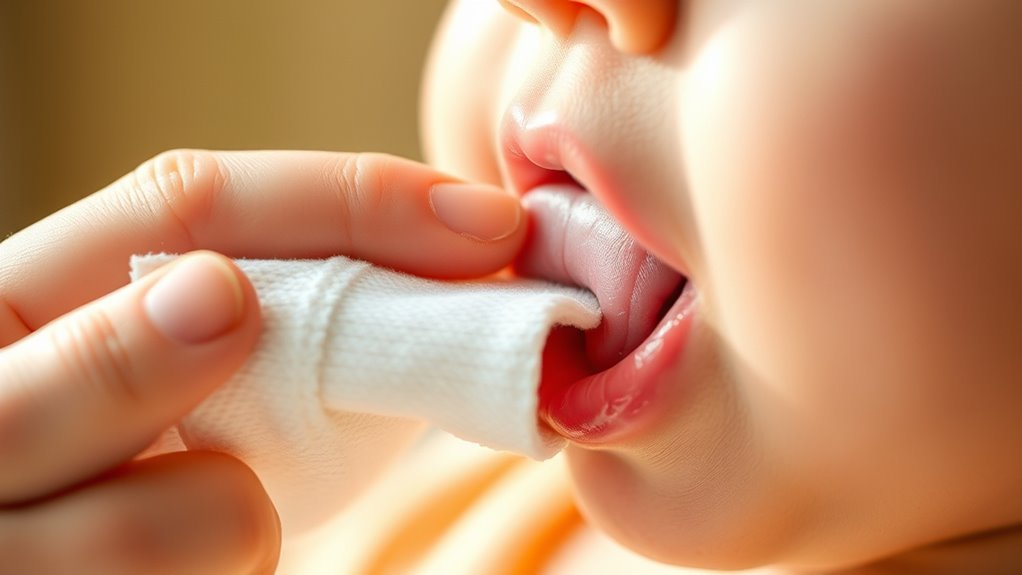
To clean your baby’s tongue, start by washing your hands and dampening a clean gauze or soft cloth with warm water. This simple step helps keep your baby’s mouth fresh and free from milk residue.
Next, gently wipe your baby’s tongue in small circular motions, moving from back to front. Doing this once daily is usually enough, and it’s best to begin around 4 to 6 months old.
Keep it gentle and watch for any unusual patches or changes. This easy routine supports good oral health and helps your baby’s mouth stay happy and comfortable.
There’s always more to learn about caring for your baby’s delicate mouth, but starting here is a great way to build a healthy habit together!
Key Takeaways
- Use a clean, damp gauze or soft cloth to gently wipe the baby’s tongue.
- Employ small, circular motions, starting from the back to the front of the tongue.
- Clean the tongue once daily, preferably after feeding, to remove milk residue.
- Be gentle around gums and ensure your hands and tools are clean before starting.
- Monitor for persistent white patches and consult a pediatrician if abnormalities appear.
What You Need to Clean Your Baby’s Tongue
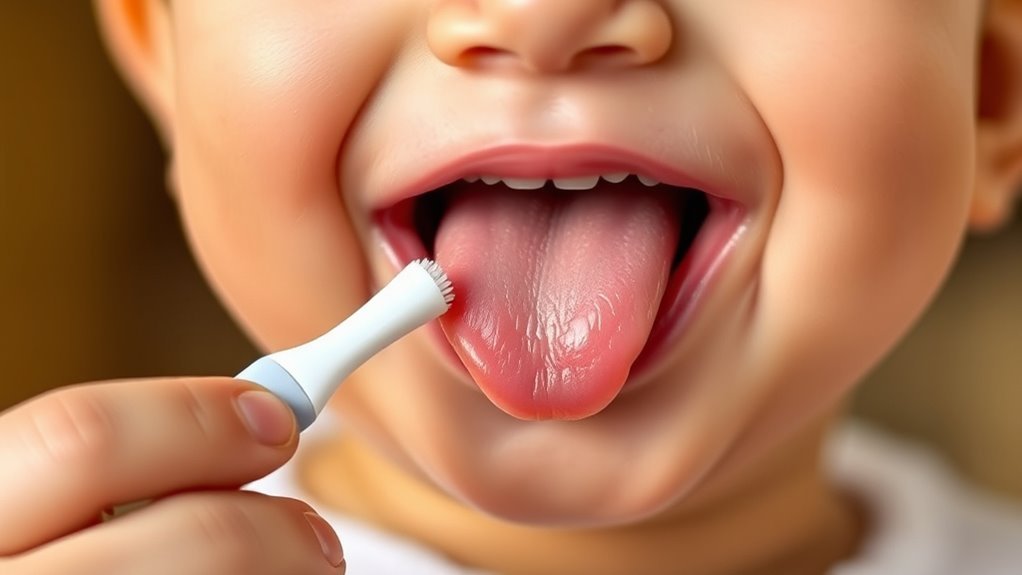
Before you begin cleaning your baby’s tongue, gather all the essential tools you’ll need, such as clean gauze, a soft washcloth, a silicone baby tongue cleaner, or a small, soft-bristled toothbrush made for infants. Having warm water ready lets you dampen your cleaning tool, making it gentler for your baby’s delicate mouth.
Choose a clean cloth or the tongue cleaner that feels best for your infant. Remember to wash your hands first to maintain good oral hygiene and prevent bacteria transfer.
Always wash your hands first, then select a clean cloth or tongue cleaner gentle enough for your baby’s mouth.
Using the chosen cleaning tool, you’ll gently clean the tongue with soft, circular motions—from back to front. After each use, rinse or discard the cleaning tool to keep everything sanitary.
This simple preparation guarantees you’re ready to care for your infant’s oral hygiene safely and effectively.
How to Gently Clean Your Baby’s Tongue Step by Step
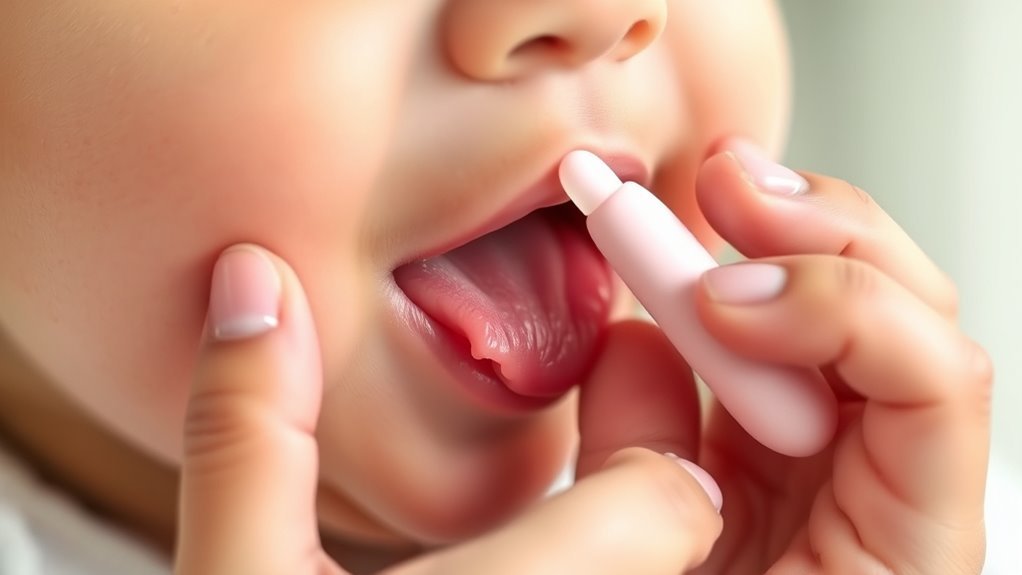
Although cleaning your baby’s tongue may feel delicate at first, you can do it easily with gentle, small circular motions using a clean, damp washcloth, gauze, or a silicone tongue cleaner.
First, wash your hands thoroughly to avoid introducing bacteria. Then, softly wipe your baby’s tongue from back to front, being careful around the baby’s gums.
This tongue cleaning helps remove milk residue and prevent a white coating, which could signal thrush. If you notice thick white patches, consult a pediatric dentist or doctor.
Try to make this a part of your baby’s nightly routine. It helps them get used to oral hygiene early on.
Cleaning their mouth early supports good oral health and sets the foundation for their first dental visit.
When and How Often to Clean Your Baby’s Tongue
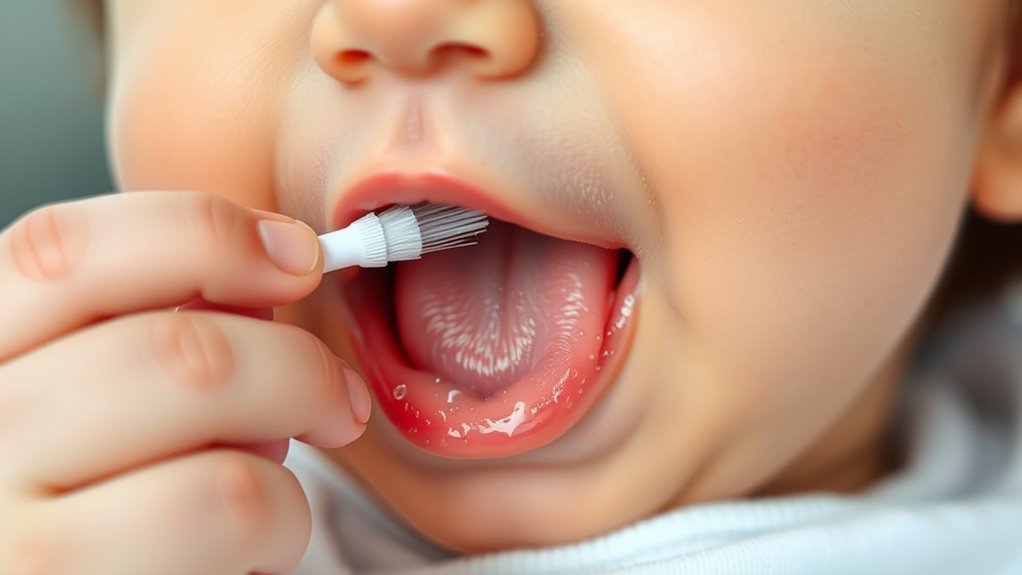
Once you’ve gotten comfortable gently cleaning your baby’s tongue, it’s helpful to know the best time and frequency to do it. Start cleaning around 4 to 6 months, when teething begins, to support good oral hygiene even before teeth appear.
Usually, cleaning your baby’s tongue once daily is enough. But if your baby feeds frequently, an extra wipe in the evening using a soft cloth can be beneficial.
Cleaning your baby’s tongue once daily is usually sufficient, with an extra wipe if feedings are frequent.
Always use a gentle approach—wipe the tongue in small circular motions to avoid gagging. Establishing this routine early helps your baby get used to oral care, making brushing easier later on.
Keep an eye out for persistent white patches or creamy spots, which may signal thrush. If you notice these, be sure to consult your pediatrician promptly.
Frequently Asked Questions
How to Clean the Tongue of a 3 Month Old Baby?
You gently wipe your 3-month-old’s tongue with a clean, damp cloth or gauze wrapped on your finger. Use small circular motions, avoiding the gag reflex.
Do this once daily, preferably after feeding or before bedtime. It’s a simple way to keep their mouth fresh and clean.
What Cleans a Baby’s Tongue?
You clean a baby’s tongue using a clean, damp washcloth or gauze wrapped around your finger. Gently wipe in circular motions.
For older babies, a silicone tongue cleaner or soft baby toothbrush works well too. It’s pretty simple once you get the hang of it!
What Do I Use to Clean My Newborn’s Tongue?
You might worry about hurting your newborn, but using a clean, damp washcloth, gauze, or silicone baby tongue cleaner gently and carefully cleans their tongue safely.
Always wash your hands first to keep everything hygienic. It’s simple and won’t bother your little one!
How Do I Clean My Kids’ Tongue?
You clean your kid’s tongue gently using a soft toothbrush or damp washcloth. Use circular motions without pressure.
For kids over six months, add a tiny fluoride toothpaste amount. And always supervise their brushing routine.
Conclusion
Cleaning your baby’s tongue is simple and important for their oral health. Some say you don’t need to clean a baby’s tongue because saliva naturally keeps it clean, but this isn’t entirely true.
Gently wiping their tongue helps remove milk residue and prevent discomfort or infections. By doing it regularly with the right tools, you’re supporting your baby’s comfort and hygiene.
So, don’t skip this easy but valuable step in your daily routine. Cleaning baby tongue regularly not only keeps their mouth fresh but also promotes good oral health habits from the very start. It’s a small effort that goes a long way in keeping your baby happy and healthy.






6 Comments