How Many Baby Bottles Do You Need for Newborn Feeding?
You’ll need between 2 to 10 baby bottles for newborn feeding, depending on how you feed your baby.
Choosing the right number of baby bottles can make feeding time smoother and less stressful for new parents. If you’re breastfeeding and pumping, 2 to 3 bottles usually work well.
Formula feeding requires more—around 8 to 10 bottles—to keep up with frequent feeds every 2 to 3 hours.
If you’re combining both, aim for about 6 to 10 bottles.
As your baby grows, you’ll want to adjust the number to fit their changing needs and feeding habits.
Keep exploring to find out when and why these changes matter most.
Key Takeaways
- Breastfed newborns typically need 2 to 3 bottles for pumped milk feeding. This is usually enough to get through the day without constant washing.
- Formula-fed newborns usually require 8 to 10 bottles for their frequent feeds. They tend to eat more often, so having plenty on hand really helps.
- Combo-fed babies need about 6 to 10 bottles to accommodate mixed feeding. It’s a bit of a middle ground depending on how much breast milk and formula they get.
- Feeding every 2 to 3 hours means you’ll want enough bottles to avoid washing delays. Running out can make feeding time more stressful than it needs to be!
- Remember, bottle count should be regularly adjusted based on your baby’s age and any changes in feeding style. What works now might need a tweak as your little one grows.
How Many Bottles Does Your Newborn Need Based on Feeding Style?
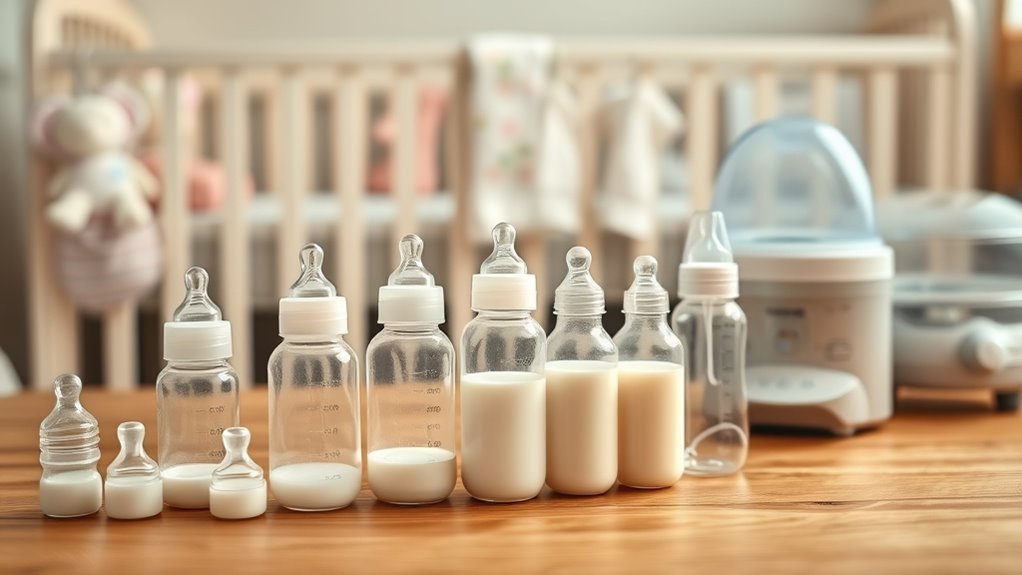
The number of bottles your newborn needs depends largely on their feeding style. If your baby is breastfed, you’ll typically need 2 to 3 bottles for pumped milk and occasional feeding.
Formula-fed newborns usually require 8 to 10 bottles because they feed more frequently. For combo-fed babies, who get both breast milk and formula, expect to have around 6 to 10 bottles, depending on their routine.
Since newborns feed every 2 to 3 hours, having enough bottles guarantees convenience and smooth feeding sessions. The number of bottles you use also supports managing milk supply and growth demands.
Keeping the right amount on hand helps you stay prepared and reduces stress during feeding times. This makes your newborn’s feeding experience much easier to handle.
When Should You Change How Many Bottles You Have As Your Baby Grows?
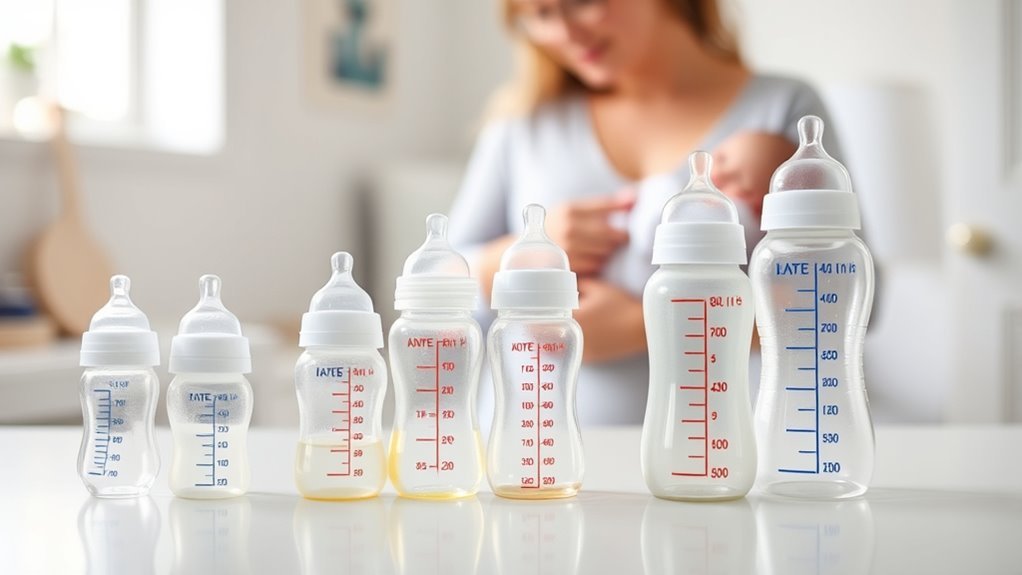
As your baby grows, their feeding habits change, and so should the number of bottles you keep on hand. Between 2-3 months and 3-6 months, formula feeding babies need fewer bottles, while breastfed babies maintain their count.
Once solid foods enter the diet around 6 months, feeding needs evolve, and you can further decrease baby bottles. Always assess bottle count if your baby’s appetite increases or decreases or if you convert breastfeeding to formula feeding.
| Age Range | Formula Feeding Bottles | Breastfed Babies Bottles |
|---|---|---|
| 0-3 months | 8-10 | 2-3 |
| 3-6 months | 6-8 | 2-3 |
| 6+ months | 4-6 | 2-3 |
Adjust accordingly to match your baby’s evolving feeding needs.
Frequently Asked Questions
How Many Bottles Do You Realistically Need for a Newborn?
You’ll realistically need around 6 to 10 bottles for your newborn. This range covers frequent feedings, washing time, and convenience.
Adjust based on feeding methods and routines, making sure you always have a clean bottle ready. It really helps to stay prepared!
Do Babies Need 4 or 8 Oz Bottles?
Most newborns start with 4 oz bottles since they typically consume small amounts.
You’ll switch to 8 oz bottles around 3-4 months when their appetite grows.
Keep both sizes handy to match your baby’s feeding needs. It just makes things easier as they grow!
How Many Bottles per Day Does a Newborn Need?
You’ll need about 8 to 12 bottles daily to keep up with your newborn’s frequent feedings every 2 to 3 hours.
Having enough bottles lets you clean and prep without stress or running out.
It makes those busy days a little easier, trust me!
How Many 4oz Bottles Do I Need for a Newborn?
You’ll need about 8 to 10 four-ounce bottles for a newborn if formula feeding. This guarantees you have enough clean bottles ready for 8 to 12 daily feedings without running out during wash cycles.
It might seem like a lot at first, but trust me, having extras makes life way easier. You won’t have to stress about washing bottles constantly or running low when your baby is hungry.
Conclusion
So, how many baby bottles do you really need? Enough to survive the midnight chaos without losing your mind—but not so many that you start a mini bottle museum. Trust me, your sleep-deprived self will thank you for striking that perfect balance.
Remember, as your baby grows, your bottle inventory can evolve too—kind of like your sanity, which may ebb and flow but hopefully never disappears completely.
Welcome to the wild ride of newborn feeding! Finding the right number of baby bottles is key to keeping feeding time smooth and stress-free. Too few, and you’re stuck washing constantly; too many, and you’re overwhelmed with clutter. Start with a manageable amount, and adjust as your little one’s feeding needs change. That way, you’ll always have enough clean bottles on hand without overdoing it. Balancing your baby bottle supply helps you stay organized and makes those late-night feedings a bit easier.






6 Comments