How Big Should a Baby Blanket Be for Practical Use
You’ll want a baby blanket size that fits your child’s age and purpose. Choosing the right baby blanket size is key for comfort and safety, whether you need something for swaddling, stroller rides, or bedtime.
For newborns, swaddle blankets should be at least 40 x 40 inches to wrap securely, while receiving blankets range from 30 x 30 to 30 x 40 inches for versatile use.
As your child grows, stroller blankets stay around 30 to 40 inches, and toddler blankets expand to about 40 x 60 inches for crib or bed comfort.
Picking breathable, age-appropriate sizes guarantees safety and coziness. Keep exploring to make the best choice for your little one.
Key Takeaways
- Newborn swaddle blankets should be at least 40 x 40 inches for secure wrapping and comfort. This size helps keep your little one snug and cozy.
- Receiving blankets typically measure 30 x 30 to 30 x 40 inches. They’re great for versatile use like burping your baby or providing light coverage.
- Infant stroller blankets range from 30 to 40 inches. They keep babies warm without dragging on the ground, which is super convenient.
- Toddler blankets are usually around 40 x 60 inches. This size works well for cribs or toddler beds.
- Always choose breathable, lightweight fabrics that suit your child’s age. It’s the best way to ensure both safety and comfort.
Baby Blanket Sizes By Age And Blanket Type
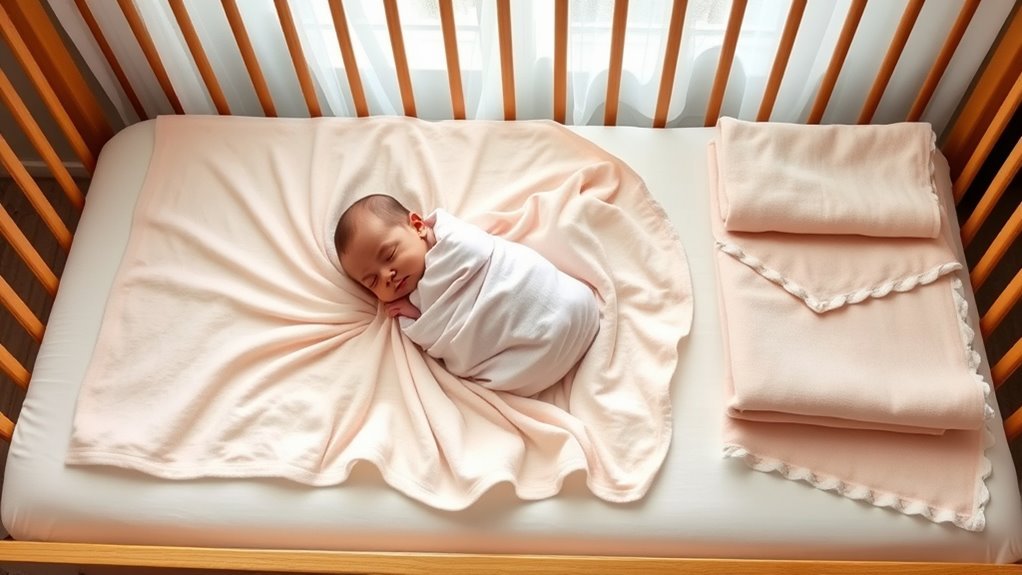
When choosing a baby blanket, you’ll want to match the size to your child’s age and the blanket’s purpose. Baby Blanket Sizes vary by stage and type.
During the Newborn Stage, swaddle blankets usually measure at least 40 x 40 inches, providing secure wrapping. Meanwhile, receiving blankets around 30 x 30 to 30 x 40 inches offer versatility.
For Infants, stroller blankets sized 30 to 40 inches keep them warm without dragging. Security blankets typically measure 12 to 14 inches square for comfort.
Toddler Blankets grow to about 40 x 60 inches, perfect for cribs or toddler beds. Crib blankets, ranging from 30 x 40 to 36 x 52 inches, require caution for safety.
When buying a blanket, choose the Standard Sizes that offer the appropriate size for your child’s needs. It really helps to pick the right fit!
How To Choose The Right Baby Blanket Size For Safety And Comfort
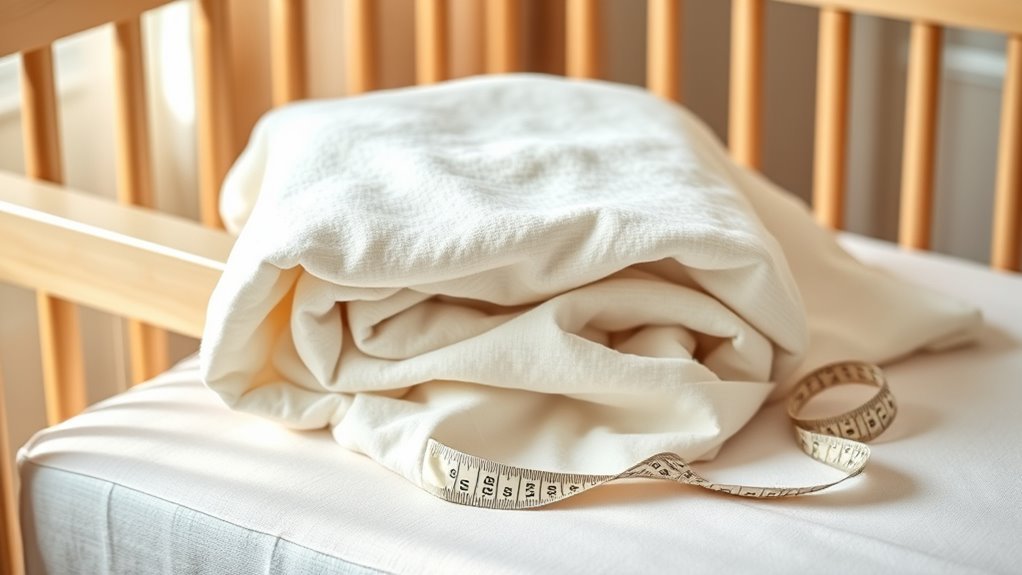
Although selecting a baby blanket might seem simple, choosing the right size is essential for your child’s safety and comfort. For swaddle blankets, aim for at least 40 x 40 inches to wrap your newborn securely without overheating.
Receiving blankets, sized around 30 x 30 to 30 x 40 inches, serve as a versatile blanket for burping and light coverage. Crib blankets should be about 40 x 60 inches and used only after 12 months to avoid safety hazards.
Security blankets, typically 12 to 14 inches square, provide emotional comfort but require supervision and aren’t safe for sleep under one year. Always pick baby blankets made from breathable fabric like lightweight muslin for swaddling or fleece for warmth, balancing comfort with safety perfectly.
Frequently Asked Questions
What Is a Good Size for a Homemade Baby Blanket?
A good size for a homemade baby blanket is between 30 x 40 inches and 40 x 60 inches. You’ll want to choose depending on whether it’s for swaddling, everyday use, or toddler comfort.
It really depends on how you plan to use it. For swaddling, a smaller size works best. But if it’s for a toddler to cuddle with, go bigger!
Is 30X30 Big Enough for a Baby Blanket?
Think of a 30×30 inch blanket like a cozy napkin for your baby—it’s perfect for quick cuddles and burping.
But it’s too small to wrap them up fully or keep them warm through longer naps or crib time.
What Is the Old Wives Tale About Baby Blankets?
The old wives’ tale says you shouldn’t wrap your baby too tightly in blankets, or you’ll restrict their movement and development.
They also warn against dark blankets, saying they can cause overheating and discomfort for your baby. It’s kind of like they believe the blanket color and tightness really affect how comfy and safe the baby feels.
Is 24 Inches Wide Enough for a Baby Blanket?
No, 24 inches wide isn’t enough for a practical baby blanket. You’ll want something at least 30 to 40 inches wide to swaddle, cover, and grow with your baby comfortably and safely.
Think about it — babies need room to move and stretch. A smaller blanket might not provide enough coverage or warmth as they grow. So, going a bit wider is definitely the way to go!
Conclusion
Now that you know the perfect baby blanket size for every age and type, you can make a choice that’s both safe and cozy. Just like a trusty pocket watch, the right blanket keeps things running smoothly—comfortably and on time.
Remember, picking the right size isn’t just about warmth; it’s about giving your little one a snug, secure feeling every time. Choosing the ideal baby blanket size ensures your baby stays comfortable without any safety worries.
So go ahead, wrap them up in just the right fit! A well-sized baby blanket is practical for everyday use and adds that extra layer of comfort your little one deserves.






One Comment