How to Feed Baby Raccoons and What They Do Eat
You feed baby raccoons using warm kitten milk replacement formula (KMR) with a small syringe or bottle, avoiding small pet bottles to prevent choking.
It’s important to offer feedings regularly and watch closely for hunger cues. This helps ensure they get the right amount of nutrition at the right times.
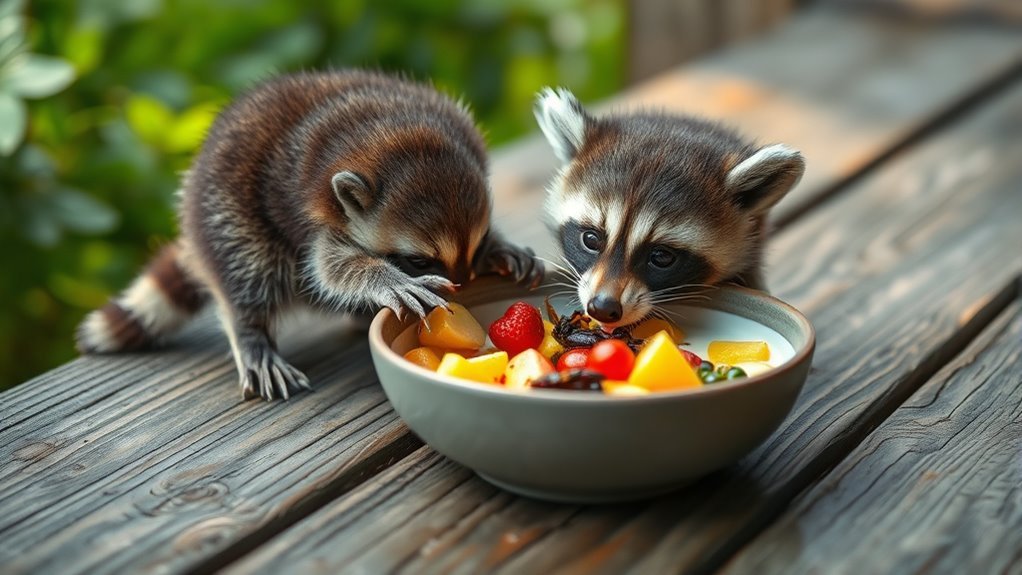
Around 16 weeks or when they weigh about one pound, you can start introducing soft fruits, vegetables, and protein sources like cooked eggs or insects.
This gradual change supports their digestion and closely mirrors their natural diet in the wild.
Keep following proper feeding techniques, and you’ll get better at understanding how to support their healthy growth.
Plus, this smooth dietary shift makes all the difference in helping baby raccoons thrive.
Key Takeaways
- Feed baby raccoons kitten milk replacement formula warmed to body temperature using a syringe or bottle with a human baby nipple. Avoid small pet nursing bottles to prevent aspiration and feed at regular intervals based on hunger cues.
- Around 16 weeks or when they reach about one pound in weight, start introducing soft fruits, vegetables, cooked eggs, and small insects gradually. This helps them get used to different foods.
- Keep a consistent feeding schedule and watch the raccoons for signs that they’re satisfied and digesting well. It’s important to make sure they’re healthy and happy.
- When you transition them to solid foods, do it slowly. This supports their natural diet habits and makes sure they get balanced nutrition to grow strong.
How to Feed Baby Raccoons: Milk Formula Preparation and Feeding Tips
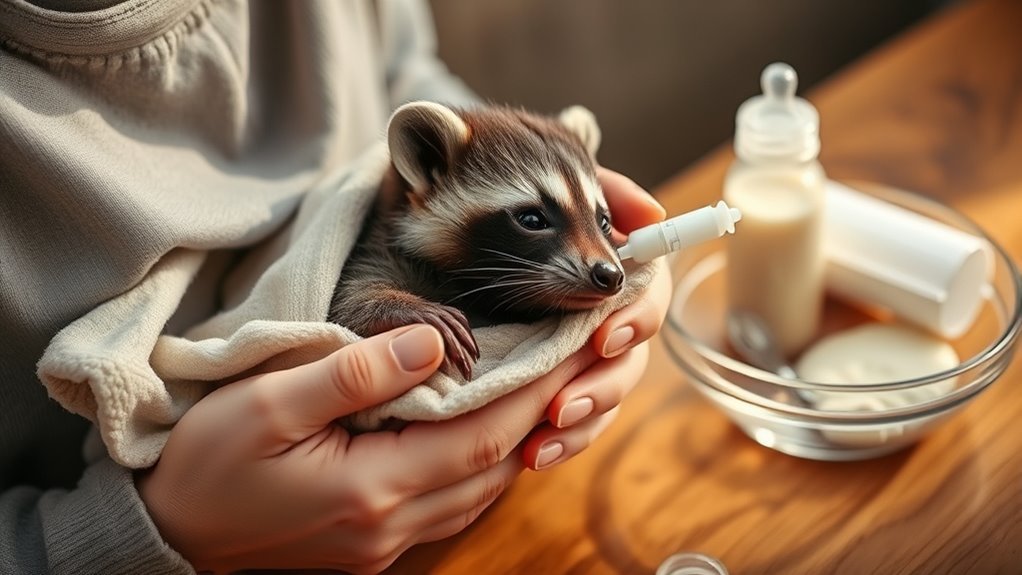
When feeding baby raccoons, you’ll want to use a kitten milk replacement formula (KMR) because it closely matches their mother’s milk. This milk formula supports proper nutrition during those vital early days.
Before feeding, warm the formula to body temperature to prevent digestive issues common in young raccoons. Use a small syringe or a bottle with a human baby nipple for controlled feeding—avoid small pet nursing bottles, as they can cause aspiration.
Feed baby raccoons at regular intervals, watching for hunger cues and ensuring they stay satisfied throughout the day. In wildlife rehabilitation, these feeding tips help promote healthy growth.
While you focus on milk formula now, remember that mother raccoons eventually shift their babies to solid food as they develop. So, keep that in mind as they get older!
Baby and Adult Raccoon Diets: Safe Natural Foods and Transitioning to Solids
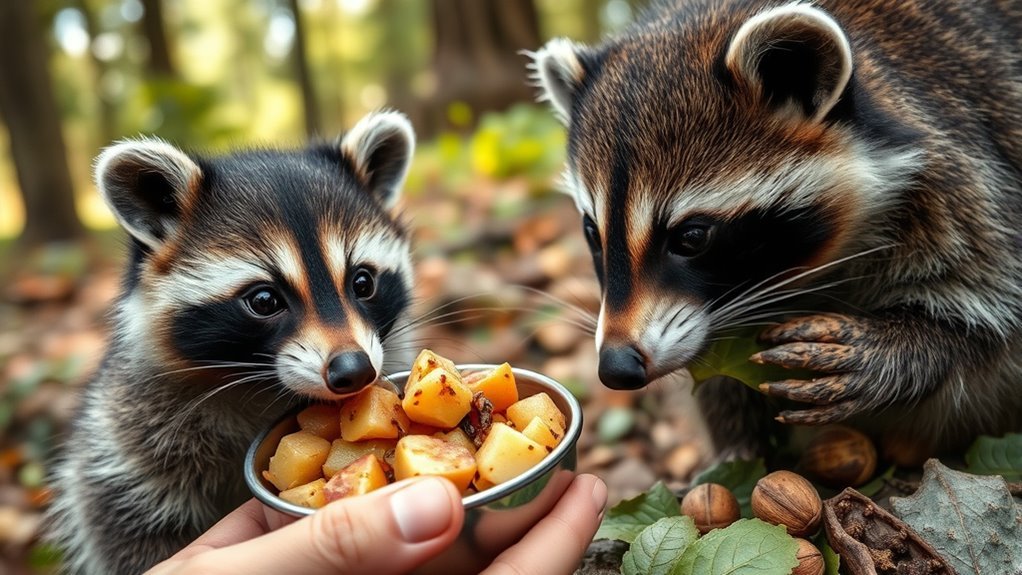
As baby raccoons grow and reach about one pound, usually around 16 weeks old, you’ll need to start introducing them to solid foods to support their natural development. Until then, they rely heavily on their mother’s milk or kitten milk replacement if orphaned.
Gradually, offer safe natural foods like soft fruits and vegetables—bananas, berries, and cooked sweet potatoes work well. Include protein sources such as cooked eggs or small insects to mimic their omnivorous diet.
Shift slowly to avoid digestive issues, keeping a close eye on how they respond. This careful adjustment helps baby raccoons adapt smoothly from milk to solids, ensuring they get proper nutrition at every stage, preparing them for their adult diet.
Frequently Asked Questions
What Do You Feed a Baby Raccoon Without a Mother?
You feed a motherless baby raccoon kitten milk replacement formula like KMR. Start with rehydration fluids such as warmed Pedialyte.
Use a small syringe or bottle, feeding every 2-3 hours to guarantee proper growth. It’s important to keep the feedings regular so the little one stays healthy and strong.
What Month Are Baby Raccoons Usually Born?
Baby raccoons are usually born between late March and early June, with the peak months being April and May.
You’ll notice they’re born blind and helpless, relying entirely on their mother during those first essential weeks.
It’s pretty amazing how much care they need right from the start!
How Long Can Baby Raccoons Survive Without Food?
Imagine a tiny raccoon curled up, fragile and hungry; they can only survive about 24 to 48 hours without food.
If you spot one unfed beyond that, act fast and get veterinary help immediately.
Can I Give a Baby Raccoon Water?
You shouldn’t give baby raccoons water until they’re about 8 weeks old. Instead, use milk or special formulas.
Once they start eating solids, introduce small amounts of clean water. Just be sure to watch carefully for any signs of dehydration.
Conclusion
Feeding baby raccoons is like nurturing a delicate garden—you need the right ingredients and gentle care. By preparing the proper milk formula and gradually introducing safe natural foods, you help them grow strong and healthy.
Remember, patience and attention are key as they shift from milk to solids. With your careful guidance, these little creatures will thrive, ready to explore the wild with confidence and curiosity.
When you feed baby raccoons, always focus on their nutritional needs. Start with special milk replacers designed for them, and slowly add fruits, vegetables, and proteins as they grow. This approach ensures they get the right balance of nutrients.
Taking the time to feed baby raccoons properly helps them develop well and stay healthy. With the right feeding routine, these adorable animals will be prepared for life outside, enjoying the wild with energy and curiosity. Feeding baby raccoons the right way truly makes all the difference in their growth and survival.



One Comment