Why Does My Baby Cry in Her Sleep?
Your baby cries in her sleep mainly because her immature nervous system reacts during active sleep, causing brief noises and movements. This happens as she shifts between light and deep sleep phases, which is completely normal but can feel a bit unsettling to parents.
Discomfort from teething or digestive upsets can also trigger these cries.
Sometimes, overtiredness plays a part too.
If you want to understand why your baby cries in her sleep and how to comfort her better, there are helpful tips and insights to explore.
It’s all about learning what’s behind those little sounds and movements so you can feel more confident and calm during those nighttime moments.
Key Takeaways
- Babies may cry in their sleep because they go through active sleep cycles. These cycles involve moving between light and deep sleep phases.
- Their nervous system is still developing, so sometimes they cry briefly when shifting between sleep stages.
- Discomfort from things like teething or digestive issues can also make babies cry while sleeping.
- If a baby is overtired, they’re more likely to have crying episodes during sleep.
- Usually, sleep crying is normal. But if the crying is persistent or severe, it’s a good idea to talk with a pediatrician.
Why Your Baby Might Cry in Her Sleep
Although it can be alarming, your baby crying in her sleep often happens because she’s going through active sleep cycles. These make up about half of her total sleep time and cause brief noises and movements.
During these active sleep phases, your baby might experience shifts between light and deep sleep. Her immature nervous system sometimes struggles with this, leading to brief cries.
Discomfort from teething or digestive issues, especially around developmental milestones, can also trigger sleep crying. If she’s overtired, it’s even harder for her to settle, making crying episodes more frequent.
How to Comfort Your Baby When She Cries in Sleep
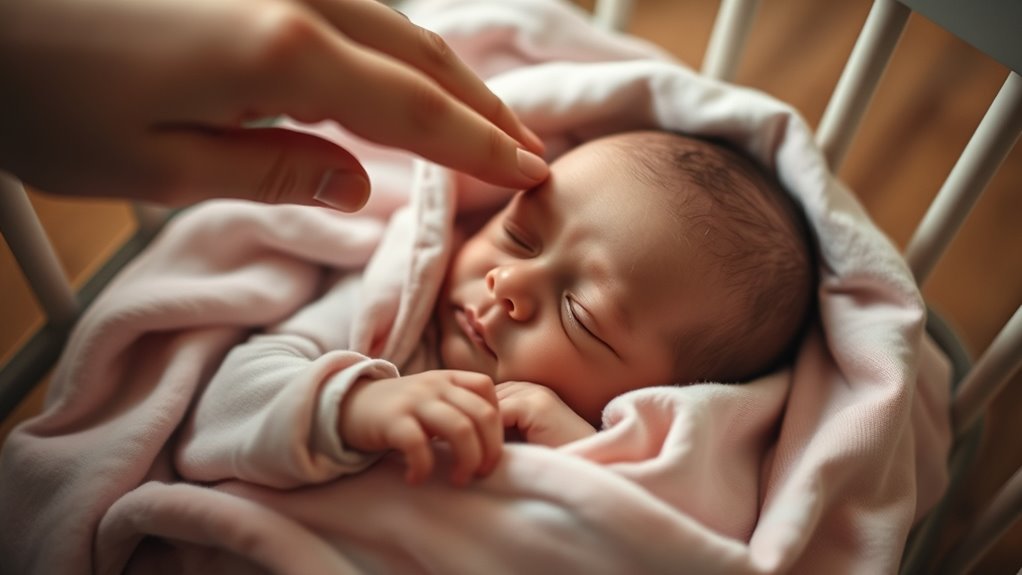
When your baby cries in her sleep, giving her a moment to try calming herself can often help. Wait 30-60 seconds before comforting her, allowing your baby to settle back without fully waking.
When you do soothe her, keep things calm—dim the lights and reduce any stimulation to help her drift back to sleep easily. It’s a good idea to check basic needs like hunger or a wet diaper first, since these often cause crying during sleep.
Instead of picking her up right away, try gently patting or rubbing her back to comfort her without messing up her sleep cycle. Also, having a consistent bedtime routine with calming activities really supports your baby’s sense of security and can help cut down on crying episodes during sleep.
Frequently Asked Questions
Should You Wake a Baby Crying in Their Sleep?
You shouldn’t wake a baby crying in their sleep right away. Wait 30-60 seconds first, as they often self-soothe.
Only check if crying intensifies, lasts longer, or shows signs of distress needing your attention. It’s usually best to give them a moment to settle on their own.
How Do I Know if My Baby Is in Pain While Sleeping?
About 15% of babies cry in sleep due to pain. You’ll know by high-pitched cries, stiff limbs, back arching, or fussiness.
Watch for fever or feeding issues, and check swollen gums if teething’s possible.
These signs can help you figure out if your little one is uncomfortable while sleeping. Just keep an eye out and trust your instincts!
At What Age Do Babies Usually Have Night Terrors?
Night terrors usually start between ages 2 and 6, peaking around 3 to 4 years old. Babies younger than 2 rarely experience them.
Why Does My Baby Cry in Her Sleep but Not Wake Up?
Think of your baby’s sleep as a stormy sea; the crying is waves crashing softly without waking the shore.
You’ll notice this happens because her developing brain stirs, processing sensations while she remains peacefully asleep.
Conclusion
When your baby cries in her sleep, you comfort her with patience, soothe her with love, and watch over her with care. You understand that it’s part of her growth, part of her dreams, and part of her way to communicate.
You stay calm, stay close, and stay attentive. By doing this, you help her feel safe, help her feel heard, and help her feel loved—even when she’s asleep.
Crying in her sleep is a natural part of your baby’s development. It’s her way of expressing feelings and processing experiences, even when she’s not awake. So, when your baby cries in her sleep, remember it’s a normal part of her growth and emotional communication. Staying patient and loving through these moments reassures her and strengthens your bond, helping her feel comforted and secure as she navigates her little world.





One Comment