What Should I Do if I Kissed My Baby With a Cold Sore?
If you kissed your baby with a cold sore, it’s important to act quickly to reduce the risk of passing the herpes simplex virus.
First, wash the kissed area promptly with soap and water. This simple step can help lower the chance of virus transmission.
Try to avoid touching your baby’s face unnecessarily after that.
Keep a close eye on your little one for any symptoms like fever, irritability, or poor feeding. Cold sores might seem minor for adults, but the herpes simplex virus can be serious for young babies.
If you notice any signs or feel concerned, don’t hesitate to seek medical advice immediately.
Taking quick action is key to protecting your baby’s health.
You’ll find more helpful guidance on how to handle this situation ahead, so stay informed and vigilant.
Key Takeaways
- Immediately wash the kissed area with soap and water to reduce the risk of virus transmission.
- Try to avoid touching the baby’s face any more than necessary to prevent spreading the virus.
- Keep a close eye on your baby for any symptoms like fever, irritability, or trouble feeding.
- If you notice anything unusual or see signs of a cold sore on your baby, get medical advice right away.
- Follow what your healthcare provider recommends to make sure your baby gets early treatment and to avoid any complications.
What to Do If You Kissed Your Baby With a Cold Sore
If you kissed your baby while you had a cold sore, immediately wash the kissed area with soap and water. This helps lower the risk of passing the virus.
If you kiss your baby with a cold sore, promptly wash the area with soap and water to reduce virus transmission risk.
The herpes simplex virus spreads easily from an active cold sore, especially to a young baby whose immune system is still developing. Even if you don’t have visible sores, asymptomatic shedding means you can still transmit the virus. So, try to avoid touching your baby’s face unnecessarily.
Keep a close eye on your baby for any unusual signs like fever or irritability. If you notice anything off, don’t hesitate to seek medical advice right away.
Healthcare providers may suggest prescription treatment to manage any potential complications. Following these best practices helps protect your infant from serious consequences linked to HSV-1 exposure.
Recognizing Cold Sore Symptoms in Your Baby and When to Seek Help
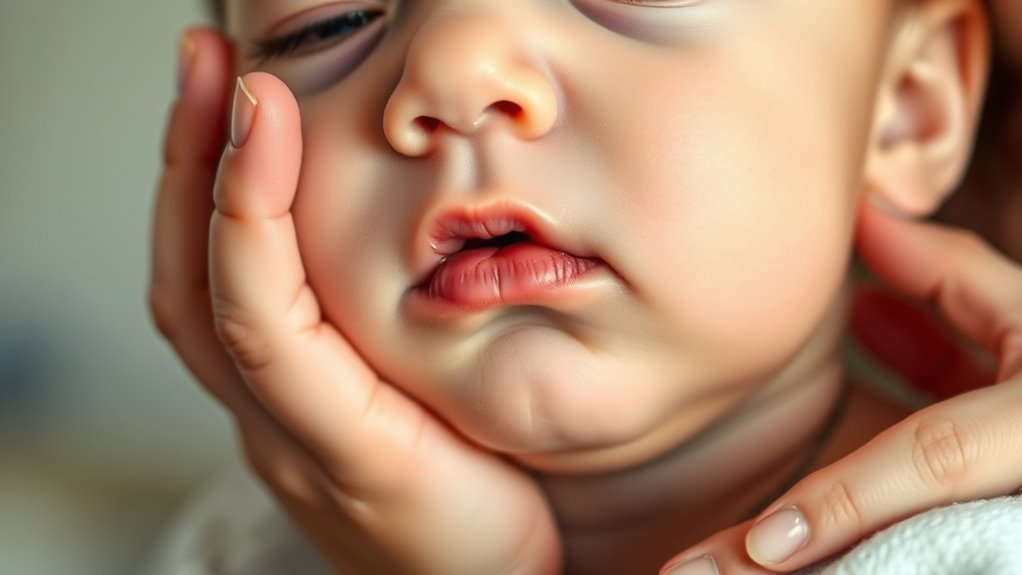
While cold sores can be common in adults, recognizing their symptoms in your baby is essential. Early signs like fever, irritability, or poor feeding may indicate a serious infection.
The herpes virus causes cold sores, and young babies are especially vulnerable. You must take precautions and monitor symptoms closely.
| Symptom | When to Seek Help |
|---|---|
| Fever | Immediate medical attention |
| Fever blisters | As soon as blisters appear |
| Poor feeding | If persistent or worsening |
| Irritability | If unusual or severe |
If your baby shows visible symptoms like blisters or increased fussiness, seek help promptly. Early detection and care can prevent complications. Don’t wait to get advice if something feels off.
Frequently Asked Questions
What to Do if Someone With a Cold Sore Kissed a Baby?
If someone with a cold sore kissed your baby, wash the kissed area gently with soap and water right away.
Keep an eye on your baby for any symptoms. And if you notice anything unusual, don’t hesitate to contact a doctor immediately.
Can Someone Who Gets Cold Sores Kiss a Baby?
You shouldn’t kiss a baby if you have cold sores, even without visible symptoms. The virus can spread silently, risking severe infections.
Always wait until you’re fully healed to protect your baby’s fragile immune system.
What Happens if a Baby Gets Exposed to a Cold Sore?
If your baby gets exposed to a cold sore, they could develop serious complications like neonatal herpes.
Watch for fever, irritability, or blisters. If you see any symptoms or unusual behavior, call a doctor immediately.
How Quickly Do Cold Sores Appear After Kissing Someone?
You’ll see tingling, burning, or itching, then redness and blisters. Cold sores usually appear 2 to 12 days after kissing someone infected.
You’ll want to watch closely for these early signs to act fast. It’s best to catch them early so you can start treatment right away.
Conclusion
So, you kissed your baby with a cold sore—welcome to the exclusive club of overachieving parents! While it’s not exactly a gold star moment, don’t panic.
Just keep an eye out for any suspicious lip drama on your little one, and call the doctor if things get weird. Remember, babies don’t need a viral souvenir from you.
Next time, maybe stick to blowing kisses from a safe, cold-sore-free distance. Parenting is always an adventure!
If you kissed your baby with a cold sore, the most important thing is to monitor your baby closely for any signs of infection, like redness or blisters around their mouth. Cold sores are caused by the herpes simplex virus, which can be serious for infants. So, contacting your pediatrician right away if you notice anything unusual is key. To keep your baby safe, avoid kissing them when you have an active cold sore and practice good hygiene. Remember, preventing cold sore transmission is the best way to protect your baby’s health and well-being.



One Comment