What Do Puppies Lose When They Lose Their Baby Teeth?
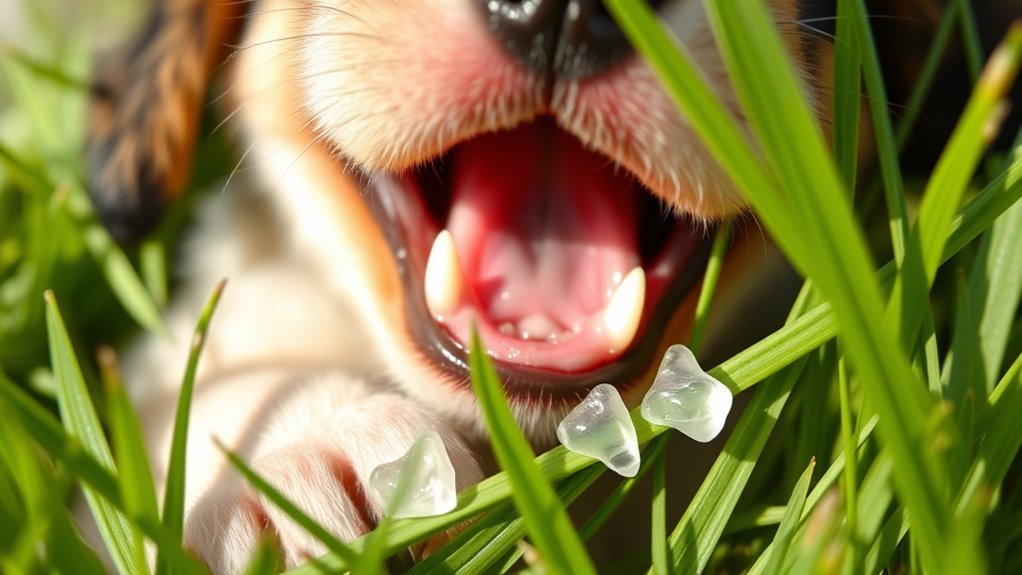
When your puppy loses its baby teeth, it’s shedding small, sharp teeth like incisors, canines, and premolars between 3½ to 5 months old. This natural process is important because it makes room for a full set of 42 adult teeth.
Plus, it helps their jaws develop correctly, which is super important for their overall health.
Losing these baby teeth is key for proper chewing and stops overcrowding in their mouth. Taking care of your puppy during this phase guarantees healthy adult teeth later on.
This sets the stage for strong chewing skills and overall growth. There’s actually a lot more to understand about why this change really matters for your pup’s development.
Key Takeaways
- Puppies lose their 28 baby teeth, including incisors, canines, and premolars, during the teething phase.
- Baby teeth shed to make room for 42 adult teeth that will replace them.
- The loss of baby teeth usually occurs between 3½ to 5 months of age.
- Teeth are lost in a specific order: incisors first, then canines, followed by premolars.
- Losing baby teeth allows adult teeth to emerge properly, supporting chewing and jaw development.
Which Puppy Baby Teeth They Lose and Why They’re Important
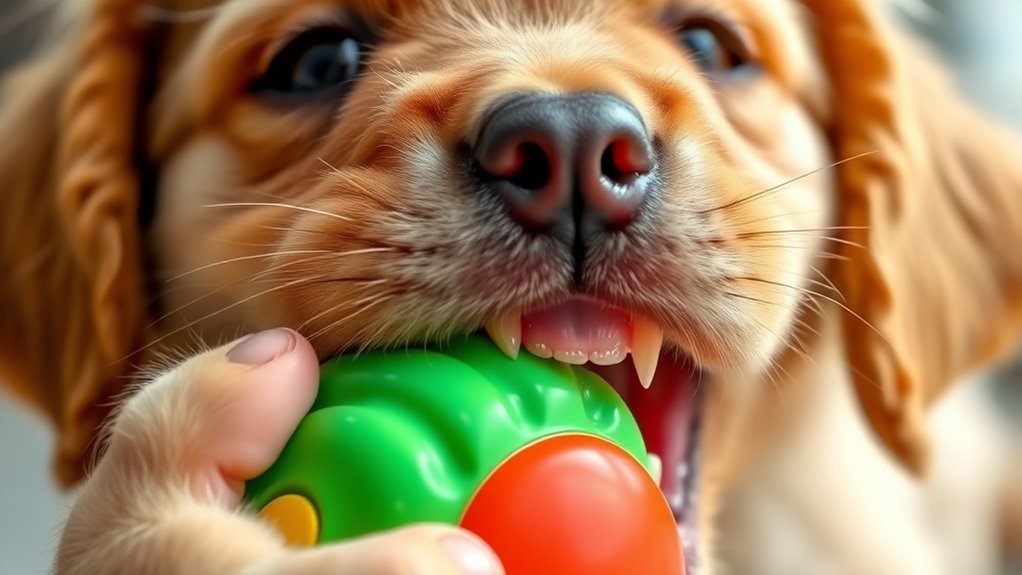
Although losing their baby teeth might seem like a small step, your puppy is actually shedding 28 tiny teeth—including incisors, canines, and premolars—to make room for 42 permanent adult teeth.
During the teething phase, which usually occurs between 3½ to 5 months, puppies lose their baby teeth in a specific order: incisor baby teeth first, then canines, followed by premolars.
These baby teeth play a crucial role in your puppy’s chewing ability and jaw development, helping them shift smoothly to solid food.
If retained baby teeth don’t fall out properly, they can cause overcrowding and misalignment, leading to dental issues later. That’s why the importance of baby teeth goes beyond just falling out—they guarantee proper dental alignment and healthy adult teeth growth.
How Losing Puppy Baby Teeth Leads to Healthy Adult Teeth
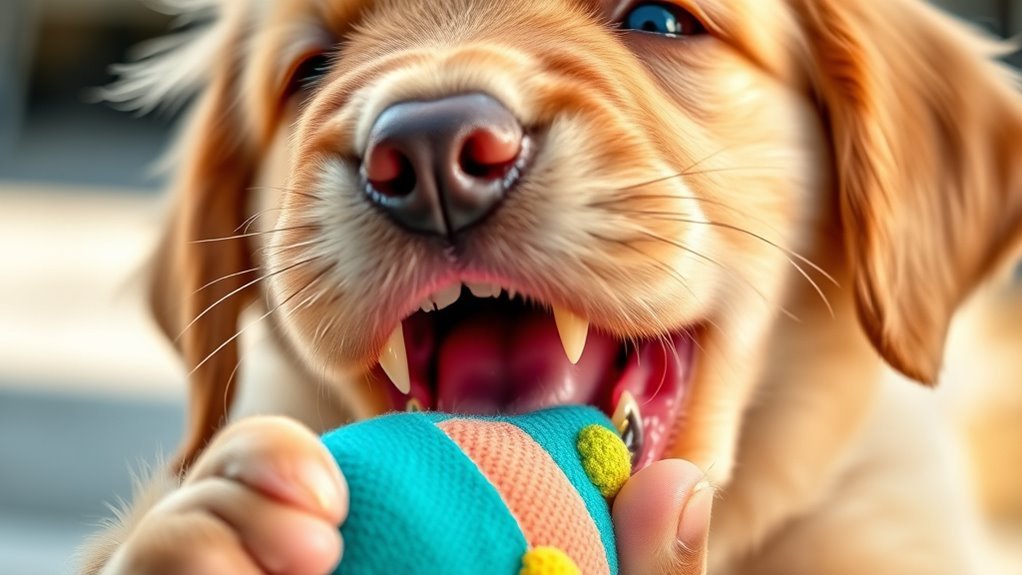
When your puppy sheds their baby teeth, they’re making room for a full set of strong adult teeth that will support healthy chewing and overall dental health. Puppies lose their baby teeth during the teething process, typically between 3 to 7 months, allowing incisors and canines to emerge properly.
Puppies shed baby teeth between 3 to 7 months to make way for strong, healthy adult teeth.
This change is essential for your puppy’s development and proper nutrient absorption.
To guarantee healthy adult teeth and gums, focus on:
- Providing chew toys to soothe teething puppies and promote healthy gums.
- Monitoring the loss of baby teeth to prevent retention, which can cause overcrowding.
- Practicing regular dental care to support the eruption of adult teeth and maintain dental health.
Frequently Asked Questions
Does It Hurt Puppies When They Lose Their Baby’s Teeth?
Yes, it can hurt puppies when they lose their baby teeth. You’ll notice they might chew more and seem uncomfortable.
But don’t worry! Providing chew toys and cold treats helps soothe their sore gums during this teething phase.
Do Puppies Cry When They Lose Their Teeth?
You might hear a puppy’s whimper as if their gums are singing a sad song during teething. They sometimes cry from soreness, but you can help soothe them with soft toys and cold treats to ease pain.
It’s totally normal for puppies to feel a bit uncomfortable when losing their teeth. Just remember, a little extra love and care goes a long way in helping them through it!
What Age Is Teething Worst for Puppies?
Teething is worst for puppies between 4 to 6 months old. You’ll notice they chew more, drool excessively, and get irritable as their baby teeth fall out and adult teeth come in, causing discomfort.
It’s a tough time for them, but it’s totally normal. Just be patient and provide plenty of chew toys to help ease the pain.
Will My Puppy Stop Biting When He Loses His Baby’s Teeth?
You might hope biting stops once your puppy loses baby teeth, but it usually doesn’t.
They’ll keep chewing and mouthing as they explore. Keep redirecting to toys, and patience will pay off over time.
Conclusion
When your puppy loses their baby teeth, they lose tiny treasures that once helped them nibble and explore. They lose the fragile anchors of their early bites, making way for stronger, adult teeth to grow in.
You watch as those small, sharp points fall away, clearing space for a confident, healthy smile. Losing baby teeth means losing the past and gaining the future—teeth built for chewing, playing, and growing alongside your furry friend.
In short, when puppies lose their baby teeth, they’re not just shedding little teeth; they’re making room for adult teeth that will last a lifetime. This natural process is essential for your puppy’s dental health and overall growth. So, cherish these moments—they mark the exciting transition from puppyhood to a lively, healthy dog!
One Comment