5 Tips on How to Baby Proof a Fireplace Effectively
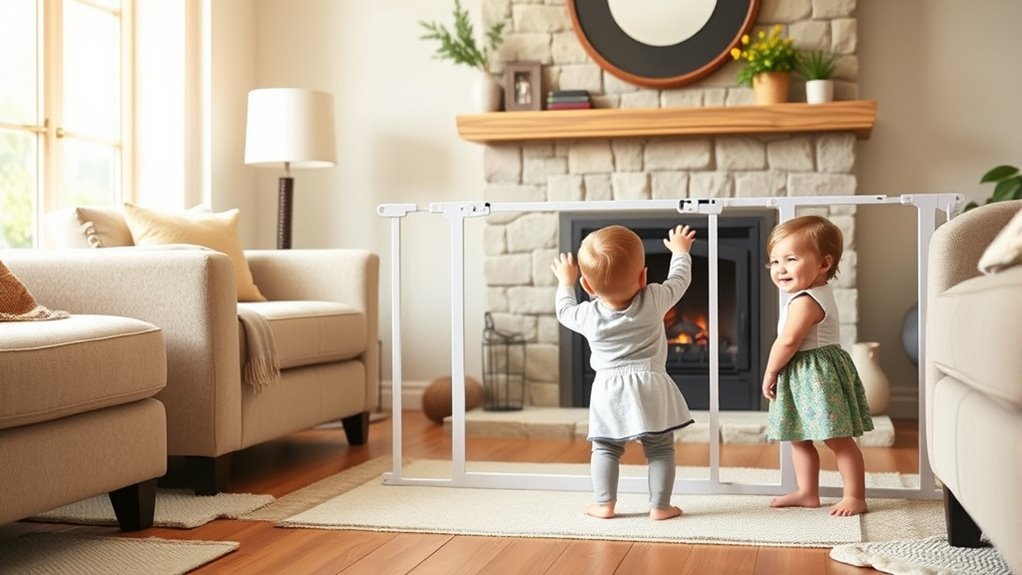
To baby proof your fireplace effectively, start by installing a sturdy, wall-mounted safety gate with childproof locks to keep little ones away. This simple step creates a strong barrier that prevents curious toddlers from getting too close to the fireplace.
Next, soften sharp hearth edges using foam guards or custom padding to prevent injuries. These cushions can make a big difference in keeping your baby safe if they stumble or fall near the fireplace.
Don’t forget to secure fireplace tools and firewood out of reach in locked storage. It’s easy for kids to get hurt by pokers, tongs, or logs, so keeping these items locked away is a smart move.
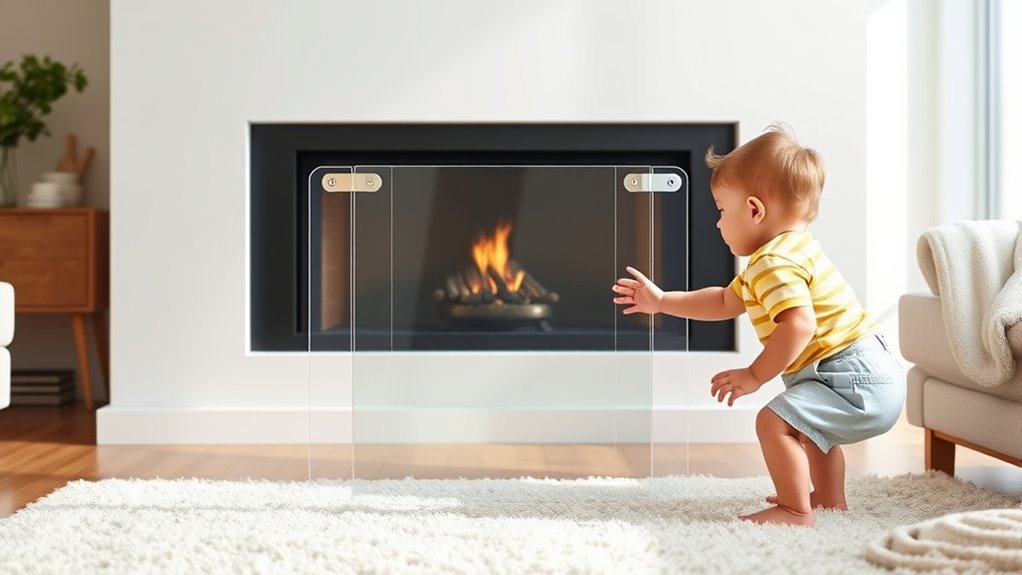
Adding metal screens or glass doors is another great way to stop burns and contain heat safely. This extra layer protects your child from sparks and hot surfaces.
Finally, teach your child about fireplace dangers and always supervise them near it. No matter how many safety measures you take, keeping an eye on your little one is key.
Keep going to discover more ways to enhance safety.
Key Takeaways
- Install sturdy, wall-mounted safety gates with childproof locks to block access to the fireplace area. This really helps keep curious little ones away from the danger zone.
- Use hearth padding or foam edge guards to soften sharp edges and prevent injuries. It’s a simple way to make the space much safer for your baby.
- Store fireplace tools and firewood securely out of children’s reach in locked or high storage. You don’t want them grabbing anything that could hurt them.
- Install metal screens or glass doors to contain heat and prevent burns, ensuring they are securely anchored. This adds an extra layer of protection that’s really important.
- Teach children about fireplace dangers, set clear boundaries, and supervise them closely near the fireplace. Kids learn best when you talk to them and keep an eye out.
Babyproof Your Fireplace With the Right Safety Gate
When babyproofing your fireplace, choosing the right safety gate is essential to keep your little one safe. You should install a wall-mounted safety gate instead of a free-standing one to prevent tipping and provide a secure barrier around the fireplace.
For wood-burning fireplaces, position the gate farther back to block flying embers, while gas fireplaces allow for closer placement to avoid burns. Look for gates with childproof locks to make it tough for young children to access the area.
Customizable sizes help you fit the gate perfectly to your fireplace setup. Finally, pick materials and designs that blend with your home decor but don’t compromise on durability or safety.
This way, you protect young children effectively without sacrificing style. It’s all about keeping things safe and looking good at the same time!
Softening Sharp Hearth Edges to Protect Kids
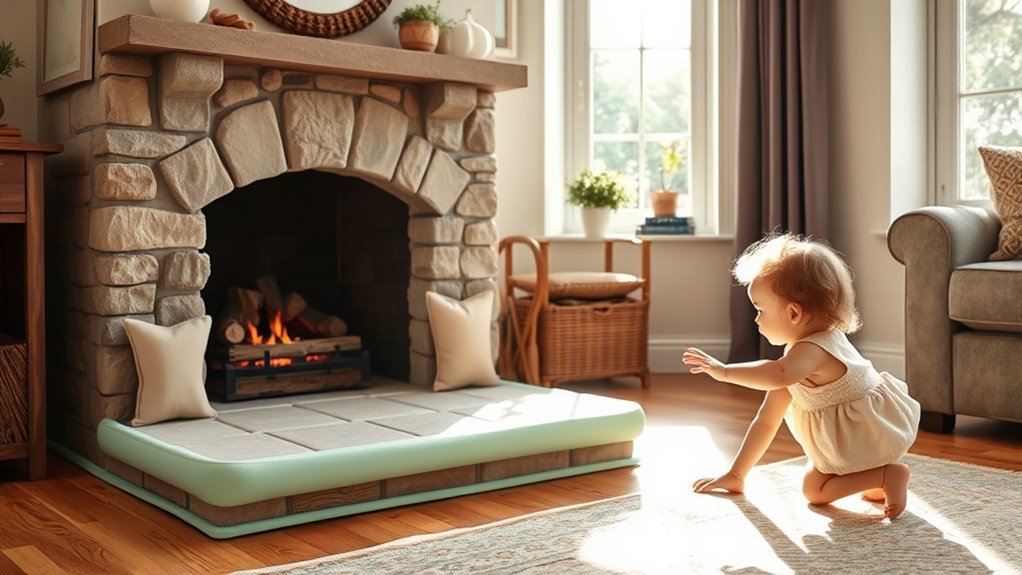
Protecting your child from sharp hearth edges is an essential step in babyproofing your fireplace. Softening those edges and corners helps prevent injuries from trips and falls.
You can use specialized hearth padding kits that blend with your décor, foam edge guards for a budget-friendly option, or custom covers for a perfect fit.
| Option | Purpose | Benefit |
|---|---|---|
| Hearth Padding Kits | Soften sharp edges and corners | Matches home décor |
| Foam Edge Guards | Cushion edges and corners | Affordable, neutral colors |
| Custom Covers | Securely fit edges | Seamless design, enhanced safety |
Regularly check padding for wear. Also, teach kids about the dangers of sharp hearth edges to keep them safe.
Secure Fireplace Tools and Firewood Out of Reach
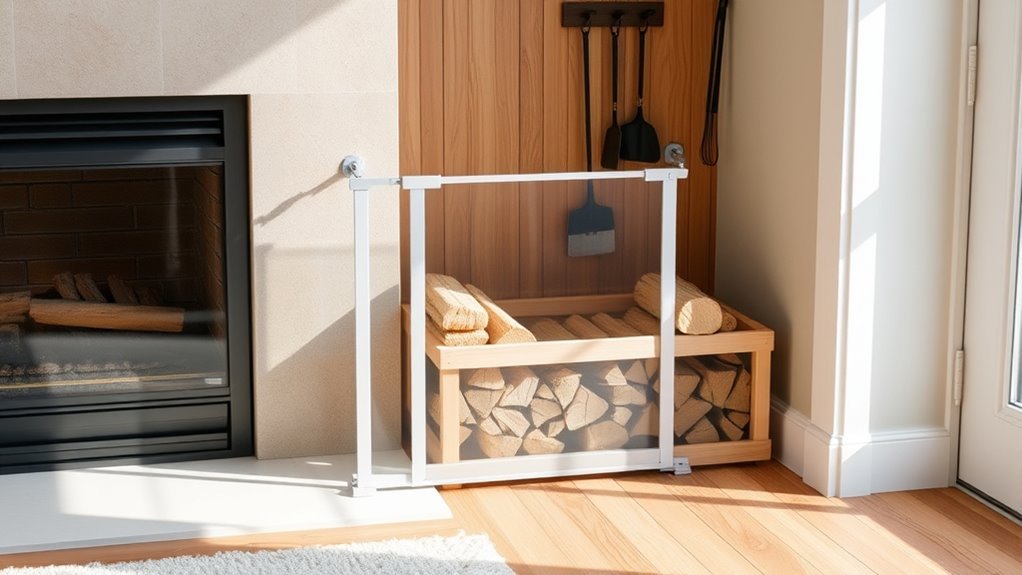
Although fireplaces create a cozy atmosphere, you’ll need to keep fireplace tools and firewood well out of your child’s reach to prevent accidents. Store fireplace tools like pokers and tongs in a locked cabinet or on high shelves, since they can cause serious injuries.
Use a closed storage bin for firewood to keep logs and kindling away from curious hands, reducing tripping and choking hazards. Position sturdy firewood racks far from play areas to stop kids from climbing or pulling down heavy logs.
Avoid placing decorative items on the hearth that toddlers might grab. And be sure to regularly check the placement and security of all fireplace tools and firewood to maintain a safe environment.
Taking these precautions really helps protect your child around the fireplace. It’s all about keeping things safe and sound while enjoying that warm, cozy vibe.
Install Fireplace Screens or Glass Doors to Prevent Burns
Keeping fireplace tools and firewood out of reach is a great start, but you’ll also want to create a barrier that stops your child from touching hot flames or surfaces. Installing sturdy fireplace screens or glass doors provides that vital protection.
Metal fireplace screens are ideal for wood-burning fireplaces because they withstand high heat, while glass doors contain heat and prevent accidental burns. Glass doors also let you enjoy the fire’s glow safely and help minimize heat loss when closed.
Make sure to securely anchor these screens or doors to the wall to prevent tipping, which is essential for safety. Regularly check for damage or wear to keep them effective.
Teach and Supervise Children Near the Fireplace
Since children are naturally curious, it’s crucial to teach them about the dangers of the fireplace early on. Always supervise them closely when they’re nearby.
Children’s curiosity means early fireplace safety lessons and close supervision are essential.
To effectively teach and supervise children near the fireplace, you need to manage their access carefully and set clear boundaries.
Here’s how to do it:
- Regularly explain the dangers and stress staying at least 30 inches away from hot surfaces.
- Use rugs or tape lines to create a visible no-go zone.
- Give consistent verbal reminders about fireplace safety.
- Encourage your children to ask questions and discuss fire safety openly.
Frequently Asked Questions
How Can I Protect My Baby From a Fireplace?
You can protect your baby by installing a secure fireplace gate. Using hearth padding on sharp edges also helps keep them safe.
Make sure to keep all fireplace tools out of your child’s reach. It’s a good idea to limit fireplace use when your baby is around.
Also, teaching your little one about fire safety as they grow is really important. It helps them understand the dangers and stay safe.
What Is the Best Baby Gate for a Fireplace?
Think of a gentle guardian around your hearth—the KidCo Auto Close Hearth Gate suits you best with its adjustable width and extra-wide door.
It keeps your little one safe while letting you move freely nearby. You’ll appreciate how easy it is to use, too.
Where Can I Find a Baby-Proof Cushion for My Fireplace?
You can find baby-proof cushions for your fireplace at retailers like Cardinal Gates, specialty babyproofing stores, or online on Amazon.
Also, check out stores like Winners and Homesense for faux fur rugs that double as soft barriers. They’re a great way to add some extra padding and style to your space.
What Is the Best Childproof Fireplace Screen?
You want the “best” childproof fireplace screen? Obviously, a metal one with childproof locks, anchored securely to the wall.
It keeps sparks and tiny explorers at bay while looking stylish enough not to scream, “Danger zone!”
Conclusion
Babyproofing your fireplace is essential because each year, thousands of children suffer burns from unsafe hearths. By using the right safety gate, softening sharp edges, and securing tools, you can create a much safer environment.
Installing screens and supervising your little ones are also key steps to reduce risks. These simple actions go a long way in preventing accidents around the fireplace.
Taking these steps not only protects your child but also gives you peace of mind. Don’t wait—make your fireplace a safe space today.
Keeping your family cozy without worry means babyproofing your fireplace effectively. With the right safety measures in place, you can enjoy warm moments together, knowing your child is protected from potential hazards.