What Is a Bush Baby?
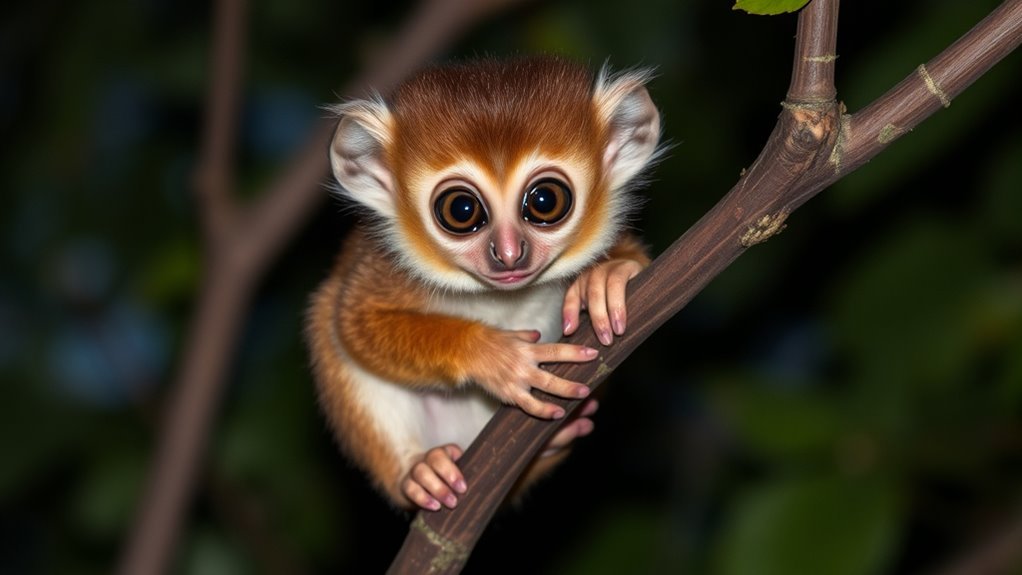
A bush baby is a small, nocturnal primate you’ll find across sub-Saharan Africa. These adorable creatures are known for their huge eyes that help you spot them at night. Their big eyes aren’t just cute—they’re perfect for seeing in the dark.
They use their powerful hind legs and long tails to leap impressively between trees. Watching a bush baby jump is like seeing a tiny acrobat in action!
Living in social groups, they communicate with cries resembling a baby’s wail. It’s almost like they have their own secret language.
They mainly feast on insects, fruits, and tree gum while staying safe in daytime nests.
If you keep exploring, you’ll uncover more about their unique habits and habitats. Trust me, there’s plenty more to discover about these fascinating little animals!
Key Takeaways
- A bush baby is a small, nocturnal primate native to sub-Saharan Africa. It has large eyes for excellent night vision and strong hind limbs for powerful jumps.
- These little guys communicate using vocalizations that mimic a crying infant. This helps them keep in touch with their group members.
- Their diet mainly consists of insects, fruits, and tree gum. They usually forage for food at night.
- Bush babies live in social groups and use nests for shelter during the day. They’re pretty adaptable and can thrive in various habitats.
What Is a Bush Baby? Key Features and Facts
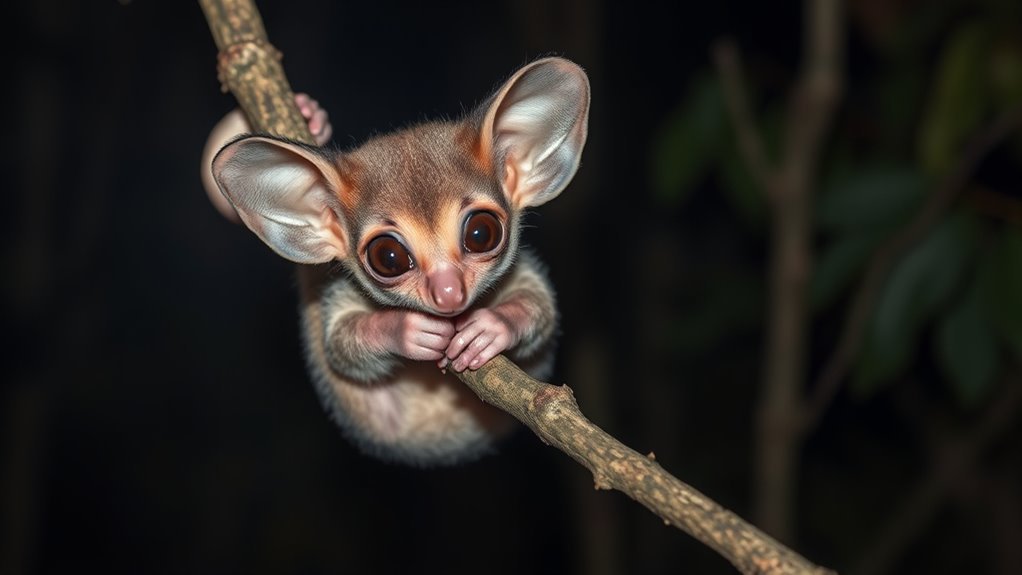
Bush babies, also known as galagos, are small nocturnal primates that you’ll recognize by their large eyes, which give them excellent night vision. These agile creatures have strong hind limbs that let them leap impressively, often up to 2.25 meters, using their long tails for balance.
Found across sub-Saharan Africa, galagos live in social groups ranging from two to seven members. Their diet is quite varied, including insects, fruits, and tree gum, with insects playing a key role in their nutrition.
Communication among bush babies is distinct; their vocalizations mimic a crying infant, helping them stay connected and identify each other in the dark. When you spot a bush baby, remember these features highlight their unique adaptations to a nocturnal lifestyle.
Bush Baby Behavior, Diet, and Habitat Explained
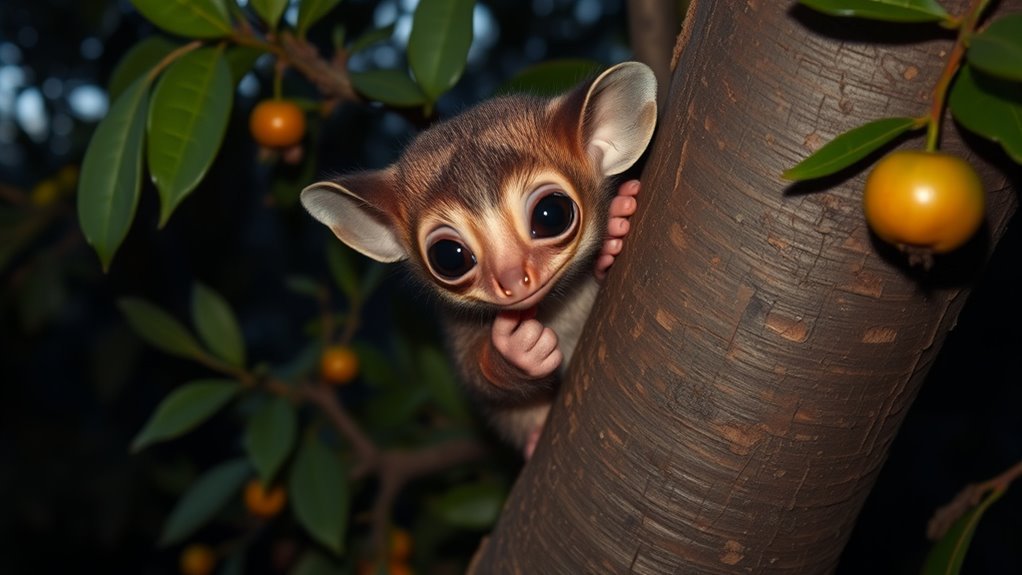
Although these nocturnal primates are best known for their large eyes and impressive leaps, their behavior, diet, and habitat reveal a complex adaptation to life after dark. Bush babies, or galagos, navigate their territory using keen hearing and agility, jumping up to 9 meters between trees.
Their diet mainly includes insects, fruits, small animals, and tree gums. You’ll find them in diverse habitats across sub-Saharan Africa, from forests to savannas. Their communication involves loud, shrill cries to keep family groups connected during nightly foraging.
- Agile jumpers with long tails for balance
- Nocturnal feeders on insects and fruits
- Live in nests during the day for safety
- Use vocalizations to communicate and mark territory
Frequently Asked Questions
Is a Bush Baby a Good Pet?
A bush baby isn’t a good pet for most people. You’ll struggle with their nocturnal habits, specialized diet, and social needs.
Unless you’re fully prepared and committed, they can be challenging to care for responsibly. It’s definitely not something to jump into lightly.
Is a Bushbaby a Monkey?
You might be surprised to learn bush babies aren’t monkeys—they belong to a different family called Galagidae. They share more traits with lemurs, boasting unique features like huge eyes and incredible jumping skills.
These are traits you won’t find in monkeys. So, even though they might look similar at first, bush babies are quite different from your typical monkeys.
Is a Bush Baby Venomous?
No, bush babies aren’t venomous; they don’t have venom or glands for it.
Instead, you’ll notice they rely on agility, sharp senses, and loud calls to stay safe from predators rather than venomous defense.
They’ve got other ways to keep out of trouble, you know?
Can You Own a Bushbaby as a Pet?
You can own a bush baby, but be ready for a demanding, nocturnal pet requiring specialized care, diet, and veterinary attention.
They’re not your typical pet, so it takes patience and commitment before bringing one home. Their rarity means you might have to do some serious searching to find one.
Conclusion
Now that you know a bit about bush babies, you might be surprised to learn they can leap up to 10 feet in a single bound! These tiny, nocturnal primates are incredible jumpers, using their strong legs to navigate treetops with ease.
Understanding their unique behavior and habitat helps you appreciate how special these creatures truly are. Next time you think about wildlife, remember the amazing agility of the bush baby!
Bush babies are fascinating animals known for their remarkable jumping abilities and nocturnal lifestyle. Their ability to leap great distances highlights their adaptation to life in the trees. Appreciating their behavior and environment gives us a deeper connection to wildlife. So, whenever you hear about bush babies, think of their incredible agility and the important role they play in their natural habitat.