Why Do You Never See Baby Hummingbirds?
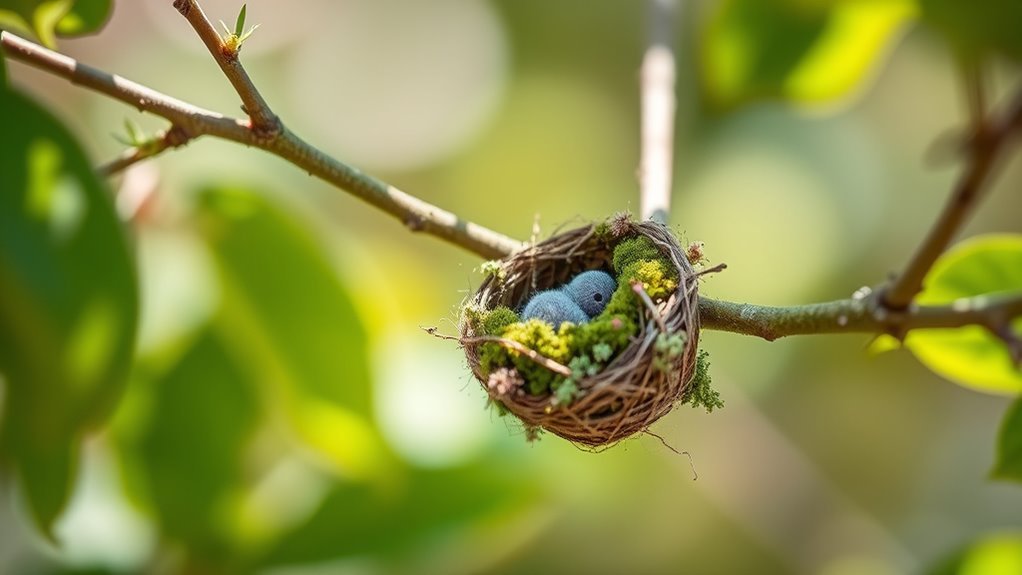
You rarely spot baby hummingbirds because their nests are tiny and expertly camouflaged with plant fibers, moss, and spider silk.
These thimble-sized homes blend so well into their surroundings that they’re nearly invisible. Plus, adult hummingbirds fiercely protect their vulnerable, naked chicks, keeping them hidden in safe, sheltered spots.
The constant care guarantees the babies stay out of sight until they’re ready to fly.
It’s like they have their own secret hideout! Discover how their secretive world keeps them safe and thriving.
Key Takeaways
- Baby hummingbirds are born naked and helpless, so they need constant shelter in tiny, well-camouflaged nests.
- These nests are about the size of a thimble and blend right into their surroundings, making them super hard to spot.
- The parents are really protective and keep the chicks hidden in safe, sheltered spots to keep predators away.
- The nesting period lasts about 18–22 days, and during that time, the chicks stay in the nest and out of sight.
- Even when young hummingbirds start practicing flying, they do it on sheltered branches, staying hidden until they’re ready to be independent.
Why Baby Hummingbirds Stay Hidden in Tiny, Camouflaged Nests
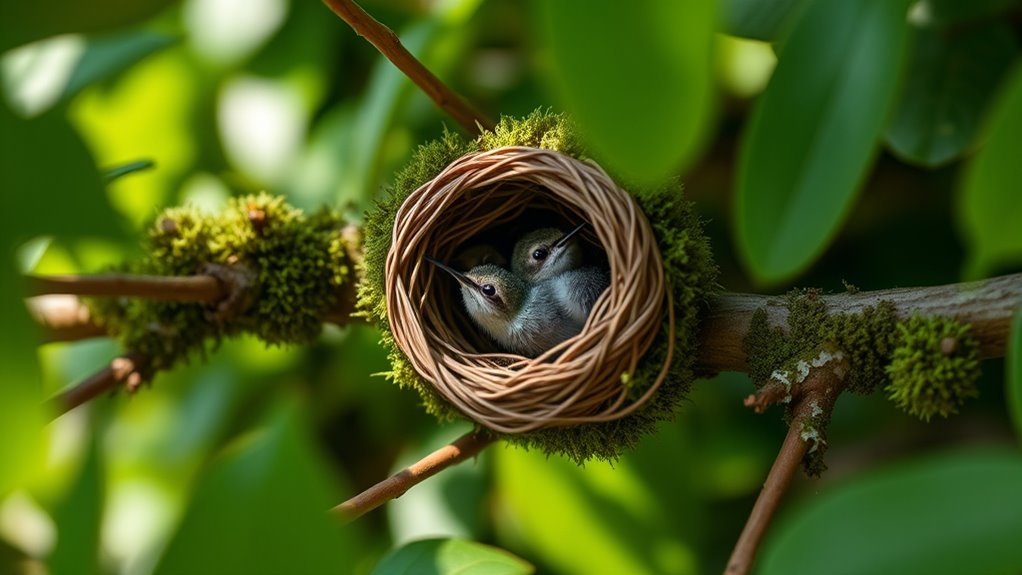
Because baby hummingbirds are born naked and helpless, they stay hidden in tiny, expertly camouflaged nests about the size of a thimble. These altricial little birds need the perfect hummingbird nest for concealment.
Adult hummingbirds build these nests using plant fibers, moss, and spider silk to blend seamlessly into their surroundings. During breeding season, the nests expand as the chicks grow, but their small size and camouflage keep predators at bay.
You rarely spot baby hummingbirds because their protective parents choose sheltered spots, ensuring the young stay safe and out of sight. This careful nest placement and concealment are essential since the chicks can’t defend themselves.
How Protective Parenting Keeps Baby Hummingbirds Safe and Out of Sight
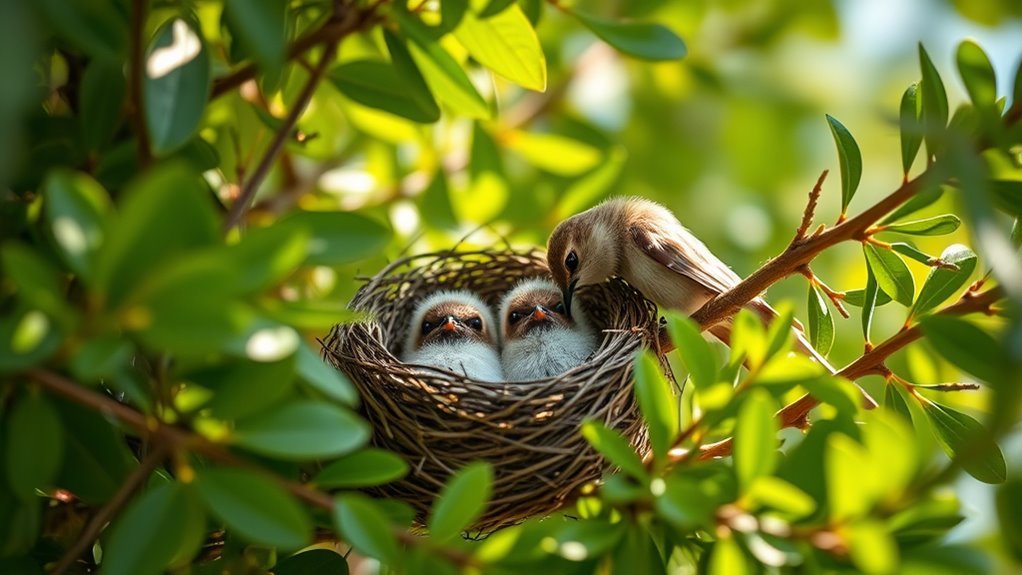
Although baby hummingbirds stay hidden by design, their safety also depends on the fierce protection their parents provide. Adult hummingbirds guard their camouflaged hummingbird nests aggressively, guaranteeing baby hummingbirds remain safe throughout the nesting period.
Baby hummingbirds rely on fierce parental protection and camouflaged nests to stay safe during the nesting period.
You’ll rarely see chicks before they leave the nest because of this protective parenting. Here’s how it works:
- Nests blend seamlessly into surroundings, making detection tough.
- Mothers feed chicks a nutrient-rich regurgitated nectar slurry and insects.
- The nesting period lasts 18–22 days, with chicks sheltered constantly.
- After fledging, parents continue care for young during their first flights.
- Young hummingbirds practice flying among sheltered branches to avoid predators.
This careful care guarantees baby hummingbirds survive to leave the nest safely and thrive as they grow.
Frequently Asked Questions
What Month Do Hummingbirds Have Their Babies?
You’ll find hummingbirds having their babies mainly between March and July. During this time, females lay eggs and incubate them for about two weeks.
Then, they care for the hatchlings until they’re ready to leave the nest. It’s pretty amazing how dedicated they are!
Do Hummingbirds Recognize the People Who Feed Them?
When you refill a feeder, hummingbirds don’t just see a stranger—they paint your presence into their memory like a bookmark.
They recognize you as a reliable food source, returning like clockwork to your colorful oasis.
Why Can’t You Touch a Hummingbird?
You can’t touch a hummingbird because it stresses them out, which can lead to injury or shock. Their bodies are super fragile, and their natural instincts make handling them really harmful.
Plus, if you touch a baby hummingbird, your scent might make the parents reject it. So, it’s best to just watch these little guys from a distance.
What Is the Number One Predator for Hummingbirds?
The praying mantis is the number one predator for hummingbirds, sneaking in like a shadow in the night.
You’ll see it patiently waiting to snatch these tiny birds right at feeders or garden blooms.
It’s pretty sneaky, and those little birds don’t always see it coming!
Conclusion
Now you know why baby hummingbirds stay so stealthy and secluded. Their tiny, twiggy nests tuck them tightly, while their caring caretakers constantly cover and conceal.
This careful camouflage combined with cautious care keeps these charming chicks cleverly cloaked from curious eyes. So next time you’re searching, remember: their secretive survival strategy is a stunning story of silent strength and steadfast shelter.
It’s all about nature’s nurturing knack—each nest is a perfect blend of protection and patience. That’s why you rarely see baby hummingbirds; they’re hidden away, thriving quietly under the watchful eyes of their devoted parents. This secretive behavior is what helps these tiny birds survive and grow, making their story one of silent resilience and gentle care.





3 Comments