
How Long Can a Baby Sleep Safely in a Bassinet?
You can safely have your baby sleep in a bassinet until about 4 to 6 months old. This is usually the case until they start rolling over, pulling up, or exceed the bassinet’s weight limit, which is typically 15 to 20 pounds.
Make sure to monitor their growth and developmental milestones closely.
Keep a firm mattress in the bassinet, and avoid soft bedding to ensure your baby’s sleep stays safe.
If you’re wondering when and how to smoothly shift your baby from the bassinet to a crib, keep exploring the next steps.
Transitioning at the right time can help your little one stay comfortable and secure during sleep.
Key Takeaways
- Babies can safely sleep in a bassinet until they are 4 to 6 months old.
- When to make the switch depends on your baby’s weight and developmental milestones, like rolling over.
- Most bassinets have a weight limit, usually between 15 and 20 pounds, and it’s important not to go over that.
- If your little one starts rolling over or pulling up, that’s a clear sign it’s time to move to a crib.
- Also, it’s recommended to keep your baby in the bassinet in your room for the first six months. This helps with monitoring and bonding.
How Long Can a Baby Safely Sleep in a Bassinet?
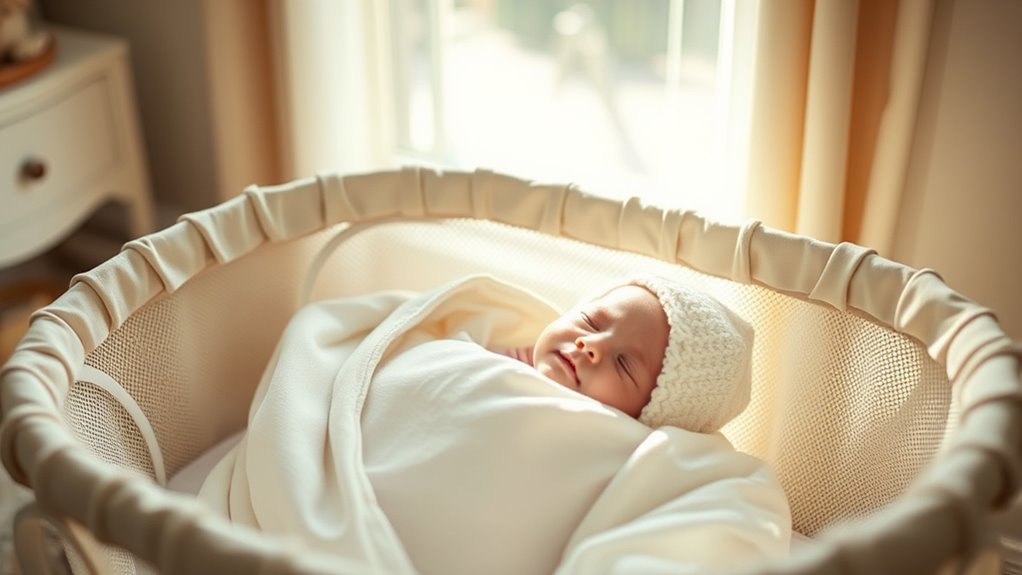
How long can your baby safely sleep in a bassinet? According to the American Academy of Pediatrics, your baby can safely sleep in a bassinet until about 4 to 6 months old. This depends on the baby’s weight and developmental milestones.
Most bassinets have a weight limit between 15 to 20 pounds, so once your baby reaches that, it’s time for a change. Watch for signs it’s time, like rolling over, pushing up, or pulling up on the bassinet’s sides.
Room sharing in the bassinet during the first six months is recommended to reduce the risk of Sudden Infant Death Syndrome. Always follow safe sleeping practices: use a firm mattress with no soft bedding to keep your baby’s sleep environment safe.
When and How to Transition Your Baby From Bassinet to Crib
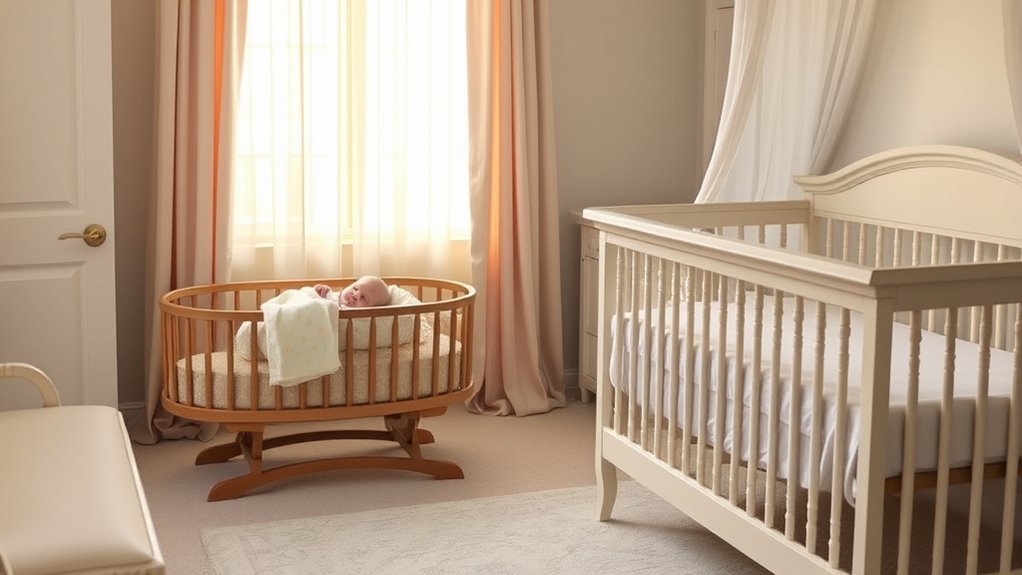
Once your baby approaches 4 to 6 months or starts showing signs like rolling over or pulling up, it’s time to change from the bassinet to a crib. These signs that indicate your baby is ready help reduce the risk of falls.
Also, keep an eye on your baby’s growth. If they go beyond the weight limits set by the bassinet manufacturer, it’s no longer safe to use it.
Monitor your baby’s growth and stop using the bassinet once they exceed the weight limit for safety.
When you switch your baby from the bassinet to a crib, make sure the sleep environment is safe. Use a firm mattress and avoid soft bedding to lower the risk of SIDS.
Try introducing naps in the crib gradually. And keep a consistent bedtime routine to make the transition smoother.
This careful approach helps your baby sleep safely and comfortably during this important change.
Frequently Asked Questions
At What Age Is SIDS No Longer a Risk?
SIDS risk considerably drops after your baby turns one year old. Until then, you should follow safe sleep guidelines, keep your baby in a safe environment, and maintain practices like room-sharing to reduce the risk.
It’s really important to stick to these precautions during that first year. Once your baby hits that milestone, the chances of SIDS go way down. But until then, staying careful is key!
What Is the 5-3-3 Rule for Babies?
Think of the 5-3-3 rule as your baby’s daily rhythm: 5 hours max sleep stretches, 3 hours awake for play and feeding, and 3 naps.
It keeps your little one balanced, healthy, and thriving every day.
Can a Baby Be Too Long for a Bassinet?
Yes, your baby can be too long for a bassinet. When they start rolling, pushing up, or pulling on the sides, it’s time to switch to a crib.
This helps keep them safe and comfortable during sleep. It’s all about making sure they have enough space to move around freely.
Can My 7 Month Old Sleep in a Next to Me Crib?
A 7-month-old typically shouldn’t sleep in a next to me crib if they can push up or weigh over 20-30 pounds.
You should move them to a full-size crib for safer, more comfortable sleep as they grow.
It’s all about making sure they have enough space and support.
Plus, a bigger crib helps them sleep better and stay safe through the night.
Conclusion
You can let your baby sleep safely in a bassinet for about the first 3 to 4 months, or until they start rolling over or pushing up—like a tiny explorer ready for a bigger adventure.
When you notice these signs, it’s time to shift to a crib to keep them safe. Trust your instincts and keep your baby’s comfort and safety as your top priority during this important change.
Remember, the bassinet is perfect for those early months, providing a cozy and secure space for your little one. But once your baby begins to roll or push up, transitioning to a crib ensures they have ample room to move safely. Always monitor your baby’s development closely and make the switch when needed to maintain safe sleep practices. Prioritizing safety and comfort will help your baby rest peacefully and grow strong during these crucial first months.






5 Comments