How to Fold Baby Clothes in 7 Simple Steps
To fold baby clothes in 7 simple steps, start by clearing a tidy workspace and sorting clothes by category. This helps you stay organized from the get-go and makes the whole process smoother.
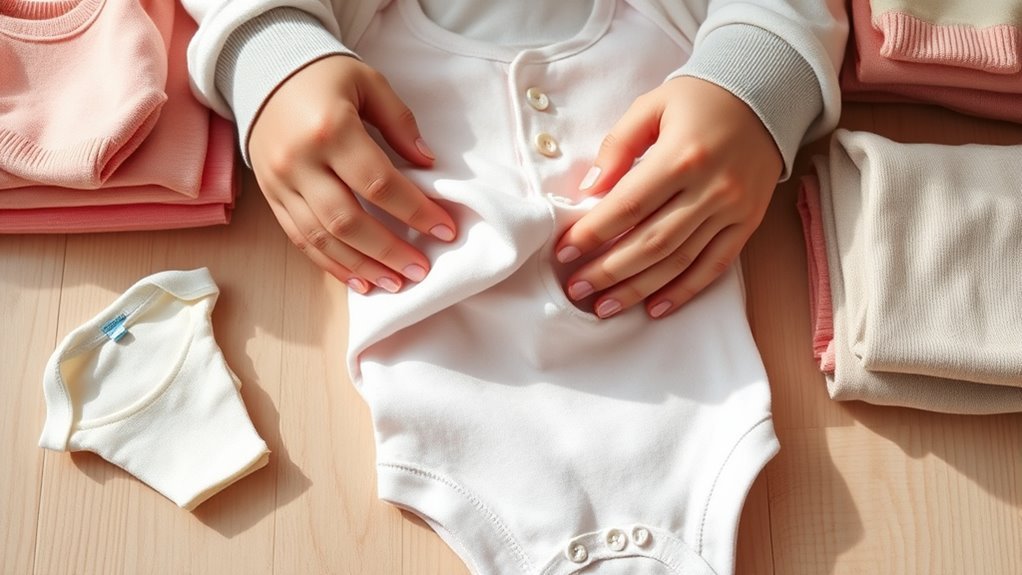
Lay onesies flat, fold the sleeves inward, then fold them into neat rectangles.
When it comes to pants, smooth out any wrinkles and fold them into thirds for a compact shape. Sleepers and pajamas should be folded neatly too, so they stack easily in your drawers.
Rolling socks and accessories tightly is a great trick to save space and keep things tidy.
Finally, store all the clothes vertically in drawers using bins and dividers to keep everything in order.
Stick with these easy steps, and you’ll have a perfectly organized baby wardrobe in no time! Keep going to discover more helpful tips.
Key Takeaways
- Lay baby clothes flat and smooth out wrinkles before folding to ensure neatness. It really helps to keep everything looking tidy.
- Fold sleeves inward and bring sides together to form a compact rectangle for onesies and shirts. This way, they take up less space in the drawer.
- Fold pants and shorts into thirds or halves, overlapping legs for a tidy shape. It’s simple but makes a big difference.
- Use the KonMari method by folding clothes into small rectangles that stand upright for space-saving. This trick lets you see everything at a glance.
- Roll baby socks tightly and store them upright in bins or dividers for easy access and organization. It keeps pairs together and makes finding them a breeze.
Get Your Space Ready and Sort Baby Clothes
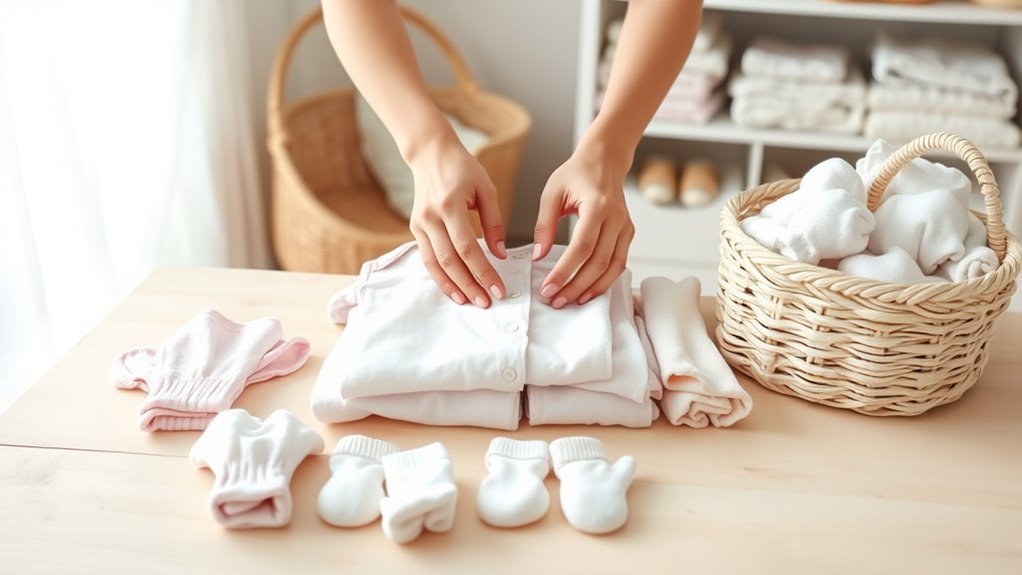
Start by clearing one flat surface, like a changing table or a large rug, to create a clean workspace for folding baby clothes. Make sure this area is free of clutter so you have an organized space that makes folding easier.
Next, sort baby clothes into categories such as onesies, socks, pants, and pajamas. Keeping similar items together really helps speed up daily routines and makes finding outfits a breeze.
Sorting baby clothes by type streamlines daily dressing and makes outfit selection quick and easy.
Use drawer dividers or bins to keep these categories separated and tidy inside your baby’s dresser. This way, everything has its place and stays neat.
Finally, regularly declutter the sorted piles by removing outgrown or unused items. This keeps your storage manageable and ensures you only keep essentials that fit your baby’s current needs.
Fold Baby Onesies Into Simple Rectangles
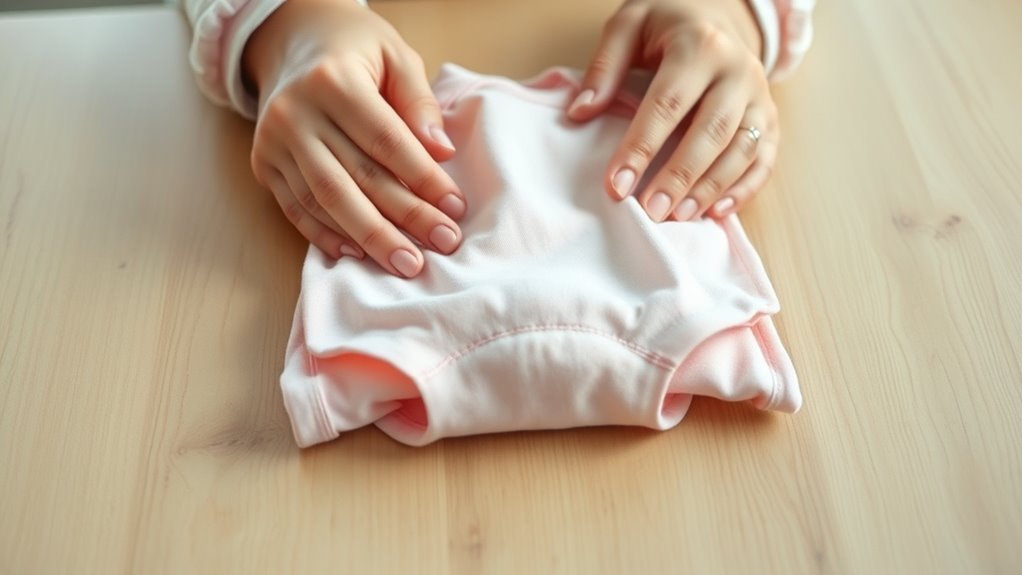
To fold baby onesies into simple rectangles, lay each piece flat with the front side down and sleeves spread wide. Fold each sleeve inward toward the center back, creating a neat, streamlined shape.
Then, bring both sides of the body together, aligning edges carefully to form a long rectangle. Next, fold the bottom of the onesie upward in thirds, reaching toward the neckline.
This method follows the KonMari technique, helping you keep baby clothes tidy and easy to access. The final fold creates a compact, neat rectangle that stands upright, saving space in your drawers.
Fold Baby Pants and Shorts to Save Space
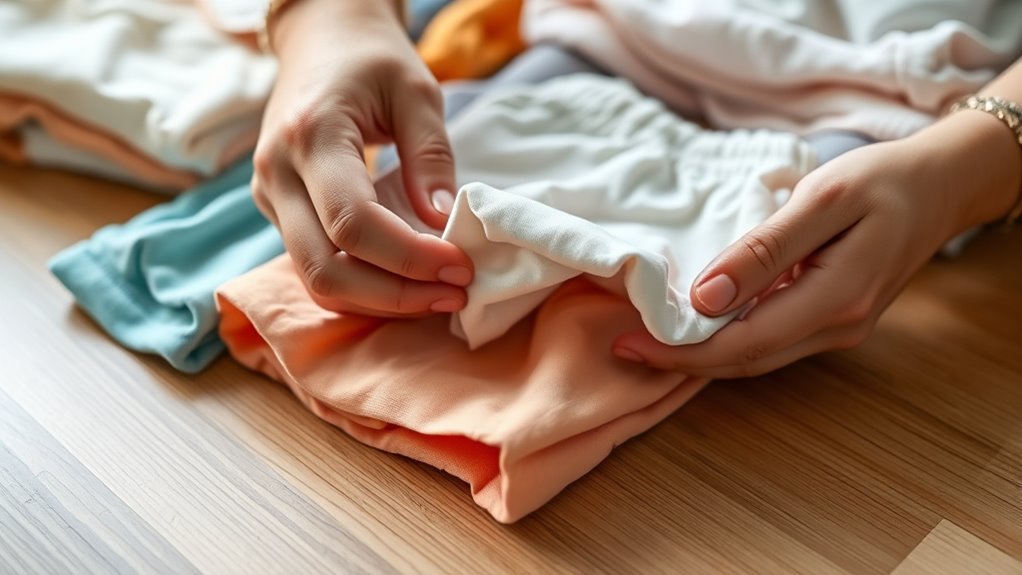
Start by laying the baby pants flat and smoothing out any wrinkles. Fold one leg over the other, then fold the pants into thirds from the cuffs to the waistband to keep things compact.
This method not only saves drawer space but also makes it easier to find and grab what you need quickly. Pretty handy, right?
Folding Techniques Overview
Lay baby pants flat with the front facing up and overlap one leg over the other to align them perfectly. To fold baby clothes using the KonMari folding method, fold baby pants upward into thirds, starting from the cuffs to the waistband.
This creates a compact, neatly folded shape that saves space and keeps your drawer organized. For shorts, fold them in half or quarters depending on your drawer space, ensuring they stay accessible and tidy.
Smooth each fold carefully to avoid wrinkles and maintain a crisp appearance. Store pants and shorts with the folded edge facing out so you can easily see and grab what you need.
Mastering these folding techniques saves you space and time, making your baby’s wardrobe effortlessly organized. It really makes a difference when you’re trying to keep things neat and easy to find!
Maximizing Drawer Space
Maximizing drawer space means folding baby pants and shorts into compact shapes that fit neatly side by side. To maximize drawer space, start by laying baby pants flat, overlapping the legs, then fold from the cuffs to the waistband to create a tight rectangle.
For shorts, fold them in halves or quarters to reduce bulk. Keep the folded edge facing outward for better visibility and accessibility. Use drawer dividers to separate different bottoms, maintaining order and preventing clutter.
Here’s a quick guide to optimize your folding technique:
- Fold baby pants into compact rectangles.
- Fold shorts in halves or quarters.
- Use drawer dividers to organize and maximize small spaces.
This method guarantees your folded baby clothes fit perfectly and stay easy to find. Easy, right? Give it a try and see how much more room you get!
Storage Tips and Tricks
When you fold baby pants and shorts neatly, you save valuable space and keep your storage areas tidy. Start by laying pants flat, fold one leg over the other, then fold upward into thirds for smooth, wrinkle-free folded clothes.
For shorts, fold in half or quarters to fit your space. Store them with the folded edge facing outwards in drawers or bins, making it easy to see and grab what you need.
Using drawer dividers is a smart storage tip to keep everything neat and organized, preventing clothes from toppling over. This method mirrors the KonMari method, helping you organize baby clothes efficiently while maximizing your storage space.
Proper folding clothes techniques truly help you save space and maintain order. Give it a try and see how much easier it is to find what you need!
Fold Sleepers and Pajamas for Easy Stacking
Start by laying the sleepers and pajamas flat, then fold the sleeves inward to keep everything neat.
Next, fold the garments into uniform rectangles that stand up easily.
This simple method helps you stack them neatly and find what you need quickly. Easy, right?
Prepare Sleepwear Flat
To prepare sleepwear for easy stacking, lay each piece flat with the front facing up, smoothing all seams to prevent wrinkles. This simple step sets the foundation for tidy storage and keeps garments looking fresh.
When you prepare sleepwear flat, you make folding and organizing much easier. Follow these steps to get started:
- Arrange the sleeper or pajamas flat on a clean surface, ensuring the fabric is stretched evenly without creases.
- Keep the sleeves extended outward but relaxed to avoid bulkiness before folding them inward later.
- Align the garment edges neatly, so when you fold it, the shape remains compact and uniform.
Fold Sleeves Inward
Two simple folds can transform your baby sleepers and pajamas into neat, space-saving rectangles. Start by laying the garment flat with the front facing down and sleeves extended.
Then, fold sleeves inward toward the center of the back. This step is key in creating a streamlined, folded piece that reduces bulkiness.
By folding sleeves inward, you shape the garment into a rectangle shape that’s easier to handle. This method for baby clothes not only saves space but also improves drawer organization.
When the sleepers are folded this way, you gain better visibility and quick access, especially if you store them upright. This simple fold helps keep your baby’s clothes tidy and makes stacking efficient in any drawer.
Create Uniform Rectangles
Folding baby sleepers and pajamas into uniform rectangles makes stacking them a breeze. After you fold the onesie sleeves inward, focus on creating a neat rectangular shape that saves space and fits snugly in a small space.
Here’s how to do it efficiently:
- Lay the sleeper flat with the front down, sleeves extended.
- Fold each sleeve inward toward the center, aligning edges to form a rectangle.
- Fold the bottom upward in thirds, creating compact, uniform rectangles.
This method not only helps you save space but also keeps your baby clothing easy to find and grab.
Roll Baby Socks and Accessories for Easy Storage
When you roll baby socks tightly like sushi, you save space and keep them from unrolling. Roll baby socks snugly, then store them with the rolled side up in a divider or small bin.
This method helps you organize socks by size or color, making outfit coordination a breeze. You can use the same rolling technique for accessories like headbands or small hats to keep them tangle-free and easy to find.
Small labeled bins make it simple to separate different accessories. This way, storage is easy and you can grab what you need quickly.
| Item | Storage Tip | Benefit |
|---|---|---|
| Baby Socks | Roll tightly, rolled side up | Saves space, easy visibility |
| Headbands | Roll and place in bins | Keeps tangle-free |
| Small Hats | Roll and label bins | Quick outfit coordination |
| Accessories | Group by type and size | Streamlines organization |
Store Folded Baby Clothes Vertically in Drawers
Rolling baby socks and accessories saves space, but folded clothes need a different approach to stay organized. To keep your dresser drawer neat, try vertical storage for folded baby clothes.
When you fold onesies using the KonMari method, they stand upright, making it easier to see everything at a glance. This method helps you maximize space and organize baby clothes efficiently.
Here’s how to do it:
- Fold each item into a compact, upright shape.
- Place clothes vertically in the drawer, like books on a shelf.
- Group similar items together for quick access.
Vertical storage prevents crushing delicate fabrics and keeps your baby’s wardrobe visible and tidy. You’ll save time and keep things neat with this smart drawer organization.
Use Bins and Dividers for Baby Clothes Storage
Three simple storage tools can transform how you organize baby clothes: bins, dividers, and labels. Using bins helps you categorize items like onesies, socks, and pajamas, so you can find what you need quickly without digging through clutter.
Drawer dividers create neat sections inside drawers, keeping each category separate and easy to access. This prevents clutter and enhances visibility, especially when you stack clothes vertically. It also protects delicate fabrics from getting crushed.
Soft, labeled bins are perfect for storing seasonal or outgrown clothes. They make it simple to identify items for donation or future use.
Plus, involving older siblings with bins and dividers can turn organizing into a fun, responsible activity. These storage solutions keep your nursery tidy and your baby clothes effortlessly organized.
Frequently Asked Questions
How to Fold Baby Clothes Easily?
You can easily fold baby clothes by laying them flat, folding sleeves inward, and folding the garment into neat rectangles or thirds.
It’s a simple trick that keeps everything tidy. Use drawer dividers to keep things organized and find what you need quickly without any hassle.
What Is the Best Way to Fold Baby Clothes to Save Space in Drawers?
The best way to save space is folding baby clothes into small rectangles so they stand upright.
You’ll see everything clearly, fit more in drawers, and keep things neat by grouping similar items together with dividers.
How to Fold Clothes in the Smallest Way Possible?
You’ll want to lay clothes flat, fold sleeves and sides tightly, then roll items like pants and pajamas. Rolling saves more space than folding.
Use drawer dividers to keep everything compact and easy to access. It makes finding what you need super simple!
How to Fold a Baby in Clothes?
Think of folding baby clothes like tucking a tiny treasure into a cozy box. You’ll smooth the fabric first, then fold the sleeves inward.
Next, fold the sides and bottom to form a neat little square. It keeps clothes organized and makes them super easy to find.
Conclusion
You might think folding baby clothes is just another chore, but when you see your drawers neat and easy to navigate, it feels like a small victory. Instead of chaos, you get calm; instead of searching, you find instantly.
By folding and storing smartly, you’re not just saving space—you’re saving time and stress. So, take these simple steps and turn baby clothes clutter into organized bliss.
Folding baby clothes properly is a tiny change with a big payoff. It helps keep everything tidy, makes it easier to find what you need, and maximizes your storage space. Plus, having an organized drawer means less time hunting for outfits and more time enjoying those precious moments with your little one. Give these folding tips a try and watch how quickly your baby clothes drawer transforms into a neat, stress-free zone.