
5 Tips to Encourage Baby to Roll From Belly to Back
Create a safe, open space free of hazards for your baby to move around. This safe zone helps your little one explore freely without any worries.
Use tummy time regularly to build their core and neck strength, which is key for rolling.
Gently guide their legs across their body and encourage kicking to develop coordination. This helps your baby get the hang of the movements needed to roll from belly to back.
Introduce colorful toys and sounds just out of reach to motivate natural weight shifting.
Celebrate every small rolling attempt with praise to keep them motivated. Positive reinforcement makes a big difference in encouraging your baby’s progress.
Keep exploring these tips to support your baby’s development and watch those rolls happen!
Key Takeaways
– Create a safe, open space with a soft surface and clear hazards for supervised rolling practice.
This way, your baby can explore freely without any risks.
– Use tummy time regularly to strengthen core, neck, and back muscles essential for rolling.
It really helps build the muscles they need.
– Gently guide baby’s legs across the body to develop hip muscles and coordination.
Try to do it slowly and gently so they get used to the movement.
– Place colorful, noisy toys just out of reach to motivate reaching and natural weight shifting.
Babies love to reach for fun things, and this encourages them to roll.
– Celebrate every rolling attempt with praise and encouragement to build confidence and persistence.
A little cheer goes a long way in keeping them motivated!
Set Up a Safe, Open Space for Rolling Practice
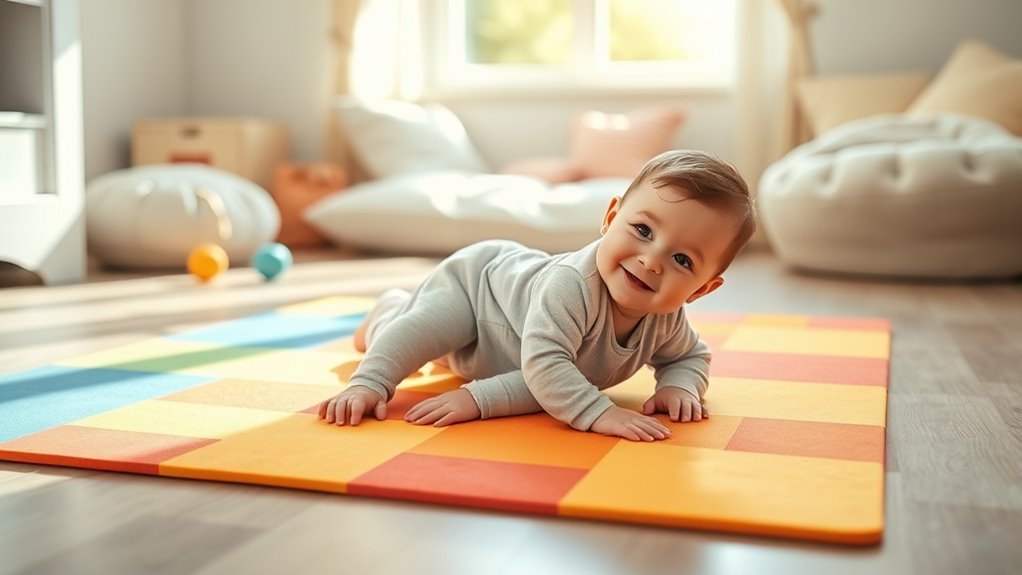
To encourage your baby to roll, start by setting up one safe, open space on a flat, soft surface like a play mat or carpet. This safe space lets your baby explore rolling practice without risk of injury.
Clear the area of sharp objects and hazards, creating ample room for movement. During Tummy Time, place colorful toys just out of reach to motivate your baby to roll toward them, supporting their motor skills development.
You’ll want to supervise closely to guarantee your baby’s safety and offer gentle encouragement. This focused environment helps your baby gain confidence while reaching key physical milestones.
Use Tummy Time to Build Your Baby’s Core Strength

Once you’ve created a safe space for your baby to practice rolling, focus on tummy time to strengthen the muscles needed for this milestone. Tummy time is key for building core strength and upper body strength, helping your baby develop the neck and back muscle control required to roll from belly.
Through consistent practice during supervised sessions on a firm, flat surface, your baby can explore movement safely and improve this important motor skill. Although your baby might resist at first, regular tummy time supports essential developmental milestones by encouraging lifting of the head and shoulders.
Help Your Baby Move Their Legs Across Their Body

Although rolling can seem tricky at first, you can encourage your baby to move their legs across their body by gently guiding one leg while they’re lying on their tummy. This movement helps babies start the rotation needed to roll from tummy to back.
To help your baby roll and develop gross motor skills, focus on muscle development through consistent tummy time and simple physical therapy techniques. Here’s how you can encourage baby to learn to roll effectively:
- Guide one leg across their body during tummy time to build coordination.
- Practice bicycling their legs to strengthen hip muscles.
- Place toys near their outstretched arm to motivate leg kicks across the body.
These steps make it easier for your baby to roll and support their overall gross motor development. Keep practicing, and you’ll see progress before you know it!
Use Toys and Sounds to Motivate Rolling
After helping your baby develop the muscle coordination needed for rolling, you can boost their motivation by introducing toys and sounds. Brightly colored toys placed just out of reach encourage babies to roll, reach, and improve arm mobility.
Use soft, textured toys that are easy to grasp. This helps your baby push up and pivot during play activities.
Incorporate sounds like rattles or musical toys to capture attention and encourage your baby to turn toward the noise. It makes learning to roll more engaging.
Position toys at different angles to motivate your baby to explore and shift their weight naturally. These strategies align with what a physical therapist would recommend to meet your baby’s needs while fostering confidence and enjoyment as babies roll from belly to back.
Celebrate Your Baby’s Rolling Attempts
Celebrating your baby’s rolling attempts encourages them to keep trying and builds their confidence. When you praise their efforts enthusiastically, you motivate them to practice more and reach new milestones.
Create a supportive environment with soft surfaces for safe rolling practice, which helps reduce hesitation. Engage your baby by positioning toys just out of reach to encourage rolling attempts.
Remember, recognizing small achievements like rocking side to side or pushing up on their hands is just as important as celebrating full rolls.
To celebrate and support your baby’s rolling journey:
- Clap and offer enthusiastic praise to reinforce their efforts.
- Capture videos or photos to motivate both you and your baby.
- Provide soft surfaces and engaging toys to create a safe, fun practice space.
Frequently Asked Questions
Why Can’t My Baby Roll From Tummy to Back?
Your baby can’t roll from tummy to back yet because they might lack the necessary strength or coordination. Keep practicing tummy time to build muscles, and watch for signs of readiness.
It’s totally normal for some babies to take a little longer to get this skill down. If you’re worried, don’t hesitate to chat with your pediatrician. They can give you peace of mind or extra tips!
What Is the 5-3-3 Rule for Babies?
The 5-3-3 rule means you give your baby 5 minutes of tummy time, 3 times a day, to build strength and coordination needed for rolling.
It helps develop muscles and encourages mobility consistently.
Doing this regularly is a great way to support your baby’s growth and movement skills.
Why Is My Baby Rolling Onto His Stomach but Not Rolling Back?
Your baby’s rolling onto his stomach first because it’s easier and needs less strength. Rolling back requires more coordination and muscle control, which he’s still developing.
Keep encouraging tummy time to build those skills. It really helps him get stronger and more confident with his movements.
What Age Should a Baby Roll From Belly to Back?
You’d think babies would roll from belly to back on day one, but they usually start between 3 to 5 months.
Don’t worry if yours takes a little longer—it’s all part of their unique timeline.
Conclusion
So, if you’re ready to turn your baby into a tiny acrobat (or at least prevent a surprise belly flop), start with a safe space and tummy time. Don’t forget to sneakily bribe them with toys and sounds—they’re surprisingly persuasive.
And when your little champ finally rolls over, throw a mini party! After all, nothing says “parenting win” like cheering over a wobbly baby victory.
Keep at it—you’ve got this circus act under control! Encouraging your baby to roll from belly to back takes patience and fun. With consistent tummy time, a safe environment, and engaging toys, your baby will build the strength and confidence needed to roll over. Celebrate each small milestone, because these early achievements are the building blocks for your baby’s motor skills. Remember, every roll is a step toward bigger adventures, so keep practicing those 5 tips to encourage your baby to roll from belly to back. You’re doing an amazing job helping your little one grow and explore!






3 Comments