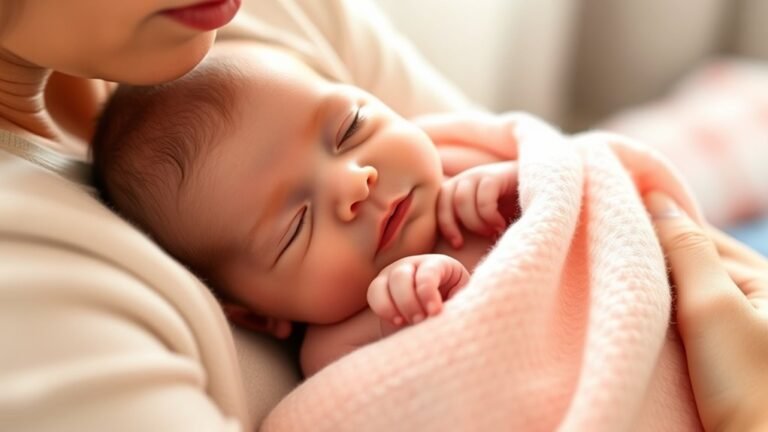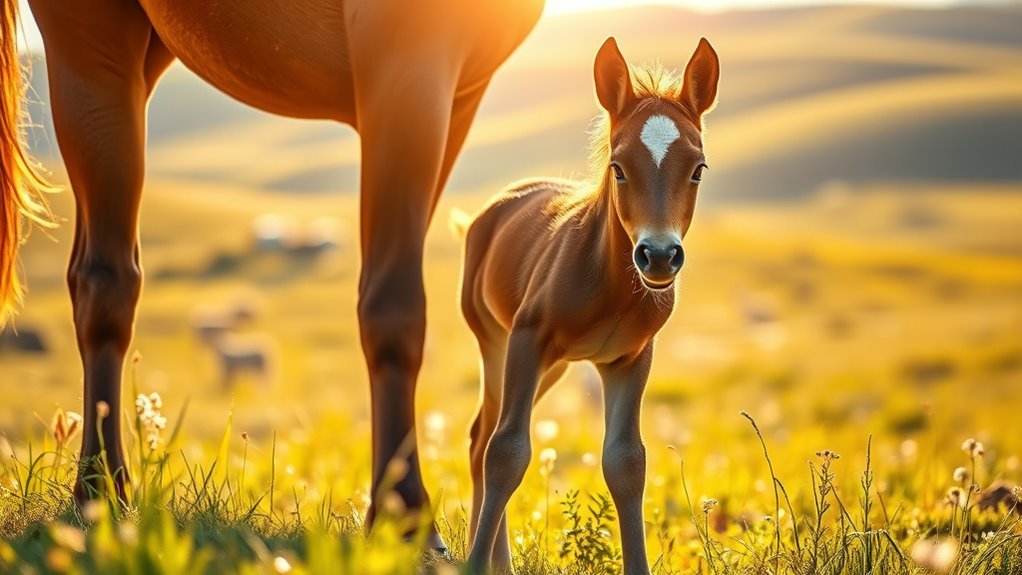
What Is a Baby Horse Called?
You’ll call a baby horse a foal, with males known as colts and females called fillies. Foals are born after about eleven months of gestation, usually in spring or early summer.
These little ones come into the world ready to move, with long legs that help them stand or run within hours. This quick ability is super important for their survival.
At first, foals depend entirely on their mother’s milk for nutrition. Around four to six months, they begin to eat solid food, starting their journey toward independence.
If you’re curious to learn more about how foals grow and what kind of care they need, keep exploring! There’s a lot to discover about raising these amazing baby horses.
Key Takeaways
- A baby horse is called a foal from birth until one year old.
- Male baby horses are called colts, while females are called fillies.
- Foals are usually born after about 11 months of gestation. Most foals are born in spring or early summer.
- Ranchers sometimes refer to all young horses as colts regardless of sex. It’s kind of a general term for them.
What Is a Baby Horse Called and How Are Foals Classified?
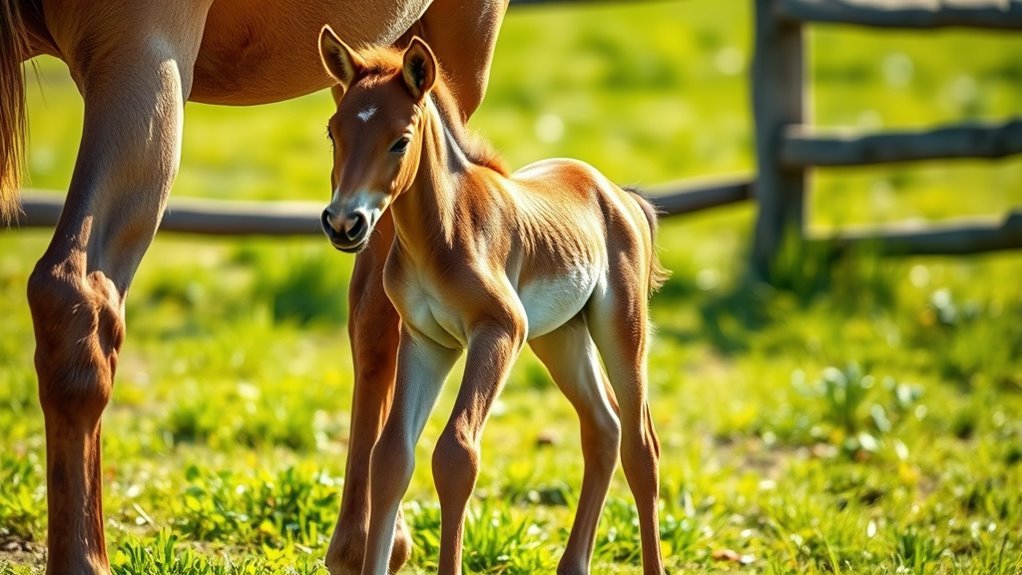
Although you might hear different terms, a baby horse is called a foal, with males known as colts and females as fillies. Foals are young horses born after a gestation period of about 11 months, usually arriving in spring or early summer.
You’ll find foals classified by age: sucklings are nursing foals still dependent on their mothers, while weanlings have been separated and start eating solid food. Once a foal reaches one year, it’s called a yearling, regardless of gender.
Ranchers sometimes refer to all foals as colts, even the fillies. Besides gender and age, foals display various coat colors that can hint at their future looks.
Understanding these classifications helps you recognize the stages of a baby horse’s early life.
How Foals Grow and Develop During Their First Year
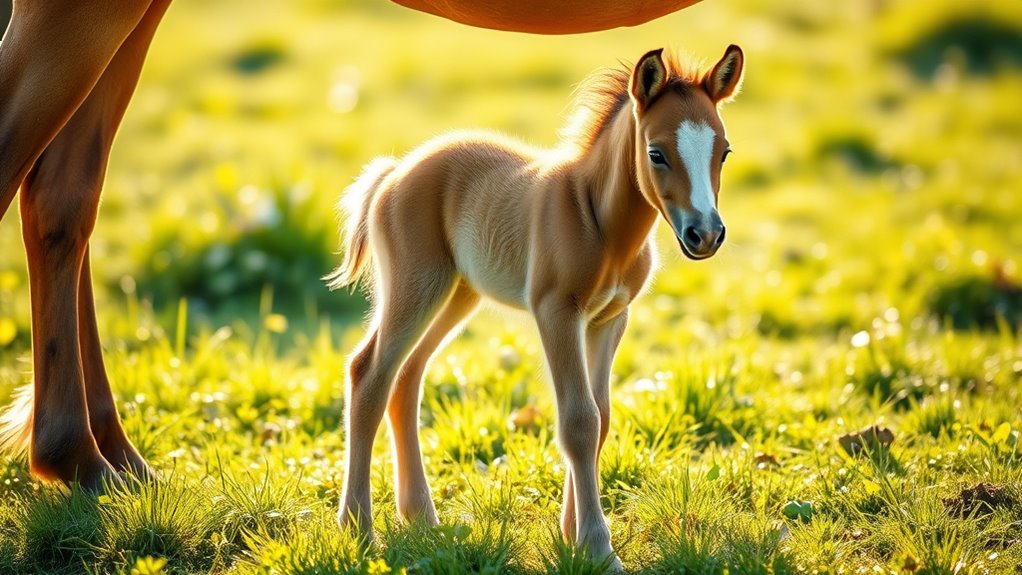
Because foals are born with most of their adult leg length, they can stand and run within hours of birth. This ability is essential for their survival.
Foals are born ready to stand and run quickly, a vital skill for survival.
As a young baby horse, a foal relies heavily on the mare’s milk, especially colostrum, for significant nutrition and antibodies in the first hours. Their long legs support quick movement, which helps their development.
During the first months, foals grow rapidly, gaining over three pounds daily. You’ll notice they sleep much more than adult horses, around 12 hours a day, supporting healthy growth.
Around four to six months, you’ll begin the weaning process, gradually shifting the foal from milk to solid food. This change is crucial for continued growth and development throughout their first year.
Frequently Asked Questions
What Is the Difference Between a Foal and a Pony?
A foal is a baby horse under one year old, while a pony is a fully grown horse under 14.2 hands tall.
You’ll notice foals grow fast and depend on their moms, unlike independent ponies.
What Is a 2 Year Old Horse Called?
You call a two-year-old horse a “two-year-old” or a “yearling” until it turns three.
At this stage, you’ll often start training and focus on proper nutrition to support its ongoing growth and development.
What Is the Difference Between a Colt and a Pony?
You might think colts and ponies are the same, but they aren’t. A colt’s a young male horse under four, while a pony’s a small breed, any age or gender.
Keep that clear when caring for them! It makes a big difference, trust me.
What Is a Small Horse Called?
A small horse is called a pony if it stands 14.2 hands or shorter. You’ll notice ponies have sturdy builds and gentle temperaments, making them great for beginners and kids.
But here’s the thing—not all small horses are ponies. There’s a bit more to it than just size!
Conclusion
So, now you know a baby horse is called a foal—simple, right? But don’t get too comfy; foals quickly grow and change. They show you just how fast time flies when you’re watching a tiny horse turn into a majestic adult.
You might think it’s just a cute little name, but it’s really the start of a whole journey you didn’t even realize you signed up for. Who knew baby horses were such fast learners?
Understanding what a baby horse is called is just the beginning. Watching a foal develop into a strong, graceful horse is truly amazing. From those early wobbly steps to confident gallops, each stage tells a story about growth and learning. So, next time you see a foal, remember—it’s not just a baby horse; it’s the start of an incredible journey into adulthood.