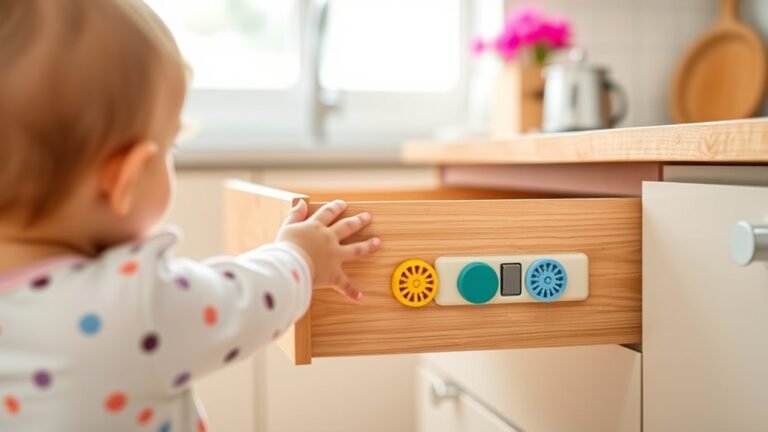
10 Steps to Teach Baby to Roll Over
To teach your baby to roll over, start with daily tummy time to build strength and body awareness. This helps them develop the muscles they need for rolling.
Creating a safe, engaging play area with colorful toys just out of reach encourages your little one to move and reach out.
Gently guide their legs and shoulders while motivating them to reach and roll. Using side-lying play can also give them practice in different positions.
Celebrate small successes to boost their confidence—every little roll counts!
Keep the sessions short and positive to avoid frustration for both of you.
Remember, patience and consistency are key. Ready to explore more ways to support this exciting milestone?
Key Takeaways
– Begin tummy time early to strengthen neck, shoulder, and arm muscles vital for rolling.
It really helps build the strength they need.
– Place colorful toys just out of reach to encourage reaching and weight shifting.
This little challenge motivates them to move and try rolling.
– Use gentle guided movements, like crossing the baby’s leg over the body, to promote rolling.
It’s a nice way to show them how it’s done without forcing anything.
– Practice short, frequent sessions with positive encouragement and celebrate small attempts.
Keep it fun and low pressure, and cheer on every little success!
– Create a safe, supervised play area free of hazards to build confidence and prevent injury.
That way, they can explore and practice rolling without you worrying.
When Do Babies Typically Start Rolling Over?
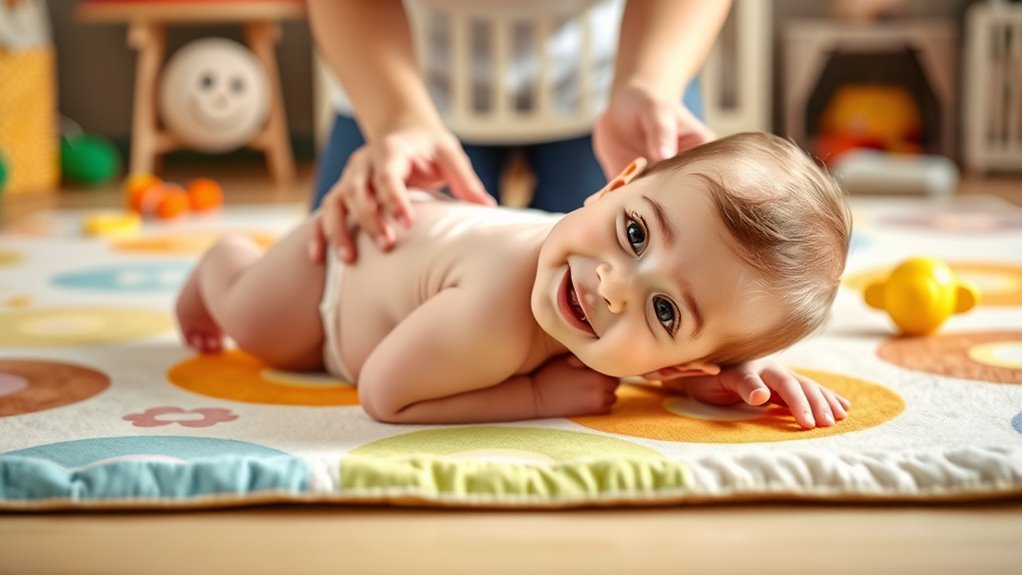
Although every baby develops at their own pace, you can generally expect them to start rolling from belly to back between 3 to 5.5 months. Most babies master this skill around 4 to 5 months.
Rolling from back to belly usually happens a bit later, between 5 to 7 months. By 7 months, most babies achieve rolling in both directions, which is an important developmental milestone.
Rolling from back to belly typically develops between 5 to 7 months, marking a key milestone by 7 months.
This progress shows growing muscle development that’s essential for mobility. Remember, individual rolling milestones vary widely, so don’t worry if your baby takes a bit longer.
However, if your baby hasn’t started rolling by 7 months, it’s a good idea to check in with your pediatrician. This helps rule out any developmental concerns.
Tracking these milestones helps you support your baby’s growth confidently. So keep an eye out, and enjoy watching your little one grow!
How to Recognize Signs Your Baby Is Ready to Roll

If your baby starts lifting and turning their head to follow objects, they’re showing early signs of readiness to roll over. You can watch for these clear signs that your baby is ready to roll, reflecting growing muscle strength and coordination.
For example, they might reach forward for toys during play activities, showing improved control. Or you might notice them keeping their arms tucked while pushing up on their forearms, which helps with rolling movements.
They may also shift their weight from tummy to side, which is a sign they’re preparing to roll. Another fun sign is when they grasp their feet—it’s their way of engaging their body and practicing coordination.
Why Tummy Time Is Essential for Helping Babies Roll

Because tummy time strengthens the neck, shoulder, and arm muscles, it plays an essential role in helping your baby learn to roll over. This developmental activity encourages muscle strength and coordination, both vital for hitting early milestones like rolling.
During supervised play, tummy time lets your baby practice lifting their chest and pushing up on their arms, building the muscle power needed to shift weight and initiate rolling movements. It also promotes body awareness, helping your baby understand how their body moves in space.
Starting tummy time from the newborn stage, in short, frequent sessions, supports learning and keeps your baby motivated. Establishing a consistent tummy routine not only aids rolling but also fosters overall motor skill development, setting the foundation for sitting, crawling, and walking.
Setting Up a Safe, Engaging Play Space for Rolling Practice
When you set up a safe, engaging play space, your baby will feel encouraged to practice rolling more often. Choose a firm, flat surface free from hazards to guarantee safe play.
Create a stimulating environment with colorful mats or blankets that invite movement and exploration. Use engaging toys within reach to motivate your baby to roll and reach out.
Don’t forget to supervise closely. Provide encouragement and celebrate small victories to build confidence and muscle strength.
To set up the ideal space:
- Designate a spacious, hazard-free area
- Add colorful, textured play mats or blankets
- Place toys that stimulate senses and encourage movement
- Schedule tummy time regularly to boost muscle strength and coordination
This setup supports safe, fun rolling practice every day. It’s all about making it a joyful part of your baby’s day!
Exercises to Encourage Rolling From Back to Side
Encourage your baby to roll from back to side by gently guiding their leg across their body while supporting their shoulder to initiate the movement. Place your baby on a firm surface in a safe, supervised area to promote comfortable, confident rolling.
Use colorful toys just out of reach to motivate your baby to shift their weight and roll toward the side. It’s a fun way to get them moving!
Incorporate side-lying play to build muscle strength and help your baby get used to that position. Practice these exercises for 2 to 5 minutes each session, giving your baby plenty of breaks.
Always support their efforts with gentle encouragement and celebrate any attempts at rolling. With regular practice, your baby will develop the muscle strength and coordination needed to roll from back to side more easily.
How to Help Your Baby Roll From Belly to Back
To help your baby roll from belly to back, start by positioning them on a firm, flat surface during tummy time. Encourage them to lift their head and reach for toys placed just out of reach to motivate movement.
These simple steps build the muscle strength and coordination needed for rolling over. It might take some patience, but with regular practice, your little one will get there!
Positioning For Belly Time
Starting tummy time early, ideally from the newborn stage, sets a strong foundation for your baby’s rolling skills. Tummy time builds the muscle strength and coordination needed for rolling from tummy to back.
To position your baby effectively, follow these tips:
- Place your baby on a firm, flat surface and guarantee they’re supervised closely for safety.
- Encourage reaching by placing toys just within their sight to motivate movement and strengthen neck and arm muscles.
- Provide gentle support by slowly rolling your baby side to side, helping them grasp the motion of rolling.
- Celebrate milestones with positive reinforcement to inspire continued efforts and confidence.
Encouraging Head And Arm Movement
Building on tummy time and side-to-side rolling, focus on helping your baby develop the head and arm movements needed to roll from belly to back. To encourage rolling, place toys just out of reach so your baby lifts and turns their head, strengthening head movement.
During tummy time, guide your baby’s arms into a “swimming” position to build arm movement and coordination. Gently roll your baby onto their side to engage core muscles and improve weight shifting.
Incorporate playful activities like reaching for the toy while on their belly to boost arm strength and coordination important for rolling. Celebrate each small milestone with positive reinforcement—it motivates your baby to keep trying and builds their confidence in mastering these vital movements.
Using Toys To Motivate
Bright, colorful toys can capture your baby’s attention and motivate them to reach and roll during tummy time. When your baby learns to roll, these toys create an engaging environment that encourages movement and builds muscle strength and coordination.
To help your baby roll from belly to back, try these tips:
- Place brightly colored toys just out of reach to prompt your baby to shift weight and roll.
- Use rattling or sound-making toys to stimulate curiosity and encourage movement.
- Apply the reach-and-roll technique by gently guiding your baby’s arm across their body as they reach.
- Celebrate small achievements with praise, reinforcing effort and encouraging continued attempts.
Physical therapists often recommend this approach to engage your baby and promote rolling skills effectively. It really helps keep your little one motivated and moving!
How to Guide Your Baby to Roll From Back to Belly
Encourage your baby to roll from back to belly by placing them on a flat surface and tempting them with toys just out of reach to spark movement. Use a play mat during tummy time to help your baby build muscle coordination vital for this significant developmental milestone.
Guide one leg gently across their body while encouraging them to reach with the opposite arm—this “reach-and-roll” technique teaches them how to learn to roll smoothly. Incorporate side-lying positions during play to familiarize your baby with rolling motions and strengthen muscles.
Consistent practice is essential, so engage in these activities regularly during supervised playtime. Celebrate every small success to encourage them to roll more confidently, helping them gain the skills and confidence needed for this important next step.
Using Toys and Play to Encourage Rolling Movements
You can encourage your baby to roll by placing colorful toys just out of reach during tummy time to spark their curiosity. Using playful games like peekaboo or rattling toys on their feet helps motivate movement and weight shifting.
Toy Placement Strategies
Three key toy placement strategies can help motivate your baby to practice rolling. During tummy time, place colorful, lightweight toys just out of reach to encourage their first attempts at rolling from back to side.
Position toys at varying angles to help your baby practice various movements and build strength. You can also engage in play by rolling a ball or moving a toy side to side, demonstrating the rolling motion.
Incorporate interactive games like peekaboo using toys or objects to make practice fun and motivate the baby.
- Use colorful, sound-making toys to capture attention
- Place toys slightly out of reach during tummy time
- Position toys to encourage rolling from back to tummy
- Move toys side to side to engage in play and imitation
Engaging Play Techniques
Spark your baby’s curiosity by using engaging toys and playful interactions that inspire movement. Brightly colored rattles or plush animals placed just out of reach during tummy time can help your baby roll toward them.
Try the reach-and-roll technique by gently guiding their arms and legs as they reach. This helps reinforce muscle memory and makes learning feel like a game.
You can also encourage your baby with fun games like peekaboo, which creates excitement around changing positions. Incorporate side-lying play with toys to practice shifts between back and side.
Don’t forget to demonstrate rolling motions yourself—babies often imitate actions, so this can really motivate their attempts to roll. Make sure to provide plenty of opportunities for these engaging play techniques daily to build strength and confidence in your baby’s rolling skills.
Motivating Movement Encouragement
Building on playful interactions, incorporating motivating toys and activities can further encourage your baby to initiate rolling movements. These strategies help your baby feel excited about tummy time and stimulate rolling, supporting physical development.
To motivate your baby effectively, try to place colorful toys just out of reach during tummy time to inspire reaching and rolling. You can also use gentle side-lying positions and demonstrate rolling to encourage imitation.
Engage in play activities like peekaboo or rattling toys on their feet to promote movement. And don’t forget to celebrate small successes with praise and smiles to reinforce efforts and build confidence.
How to Handle It If Your Baby Resists Rolling or Gets Frustrated
If your baby resists rolling or gets frustrated, creating a comfortable and engaging environment can make a big difference. Help your baby feel at ease by ensuring tummy time is enjoyable and not overwhelming.
Encourage your baby with smiles and praise to ease frustration and boost motivation. Keep practice sessions short and frequent to build their muscles gradually without causing stress.
Use gentle, playful movements, like guiding their legs across their body, to make rolling feel like a fun game rather than a challenge. When frustration arises, take breaks and let your baby return to a familiar position, giving them time to relax.
This approach helps your baby associate rolling with positive experiences, making them more willing to try again. Just keep it light and fun, and your little one will get there in their own time!
Safety Tips to Follow Once Your Baby Starts Rolling Over
Once your baby starts rolling over, it’s really important to create a safe sleep environment. That means removing blankets and pillows and shifting out of swaddling.
Always keep an eye on your baby during playtime and diaper changes to prevent any accidents.
Also, baby-proof your home by securing furniture and installing gates. This way, your little one stays safe while exploring all around.
Safe Sleep Environment
A safe sleep environment becomes essential as your baby starts rolling over. To protect your little one and follow the American Academy of Pediatrics guidelines, keep these tips in mind:
Always place your baby on their back to sleep, even if they start rolling over on their own. It might seem tricky, but this helps keep them safe.
Use a sleep sack instead of swaddling. This way, your baby can move safely without any loose blankets getting in the way.
Make certain the crib is free of blankets, pillows, and stuffed animals. Removing these things reduces the risk of suffocation.
Also, supervise your baby closely on elevated surfaces. Baby-proof your home too, so you can prevent falls and create a safe space for your little one.
Supervised Playtime Practices
Supervising your baby during playtime becomes essential as they start rolling over and exploring their surroundings. You need to create a safe environment through baby-proofing and remove small objects that could cause choking.
Use firm, flat surfaces for supervised tummy time to help your baby engage and develop rolling skills. Regularly check in to encourage their development and guarantee safety.
| Practice | Tip |
|---|---|
| Supervised Playtime | Always watch your baby closely |
| Safe Environment | Remove hazards and secure furniture |
| Tummy Time | Use flat surfaces to build rolling skills |
| Engagement | Interact to support development |
Following these supervised playtime practices helps your baby explore safely and confidently. It’s all about keeping an eye on them while making sure their space is safe and fun!
Home Babyproofing Essentials
As your baby starts rolling over and moving more, you’ll want to make certain your home is ready to keep them safe. Babyproofing becomes essential as mobility increases to prevent injuries and create a secure space for exploration.
Focus on these key steps: remove or secure sharp edges and heavy furniture to prevent injuries. Also, install baby gates at stairs and hazardous areas to avoid falls.
Use non-slip rugs and clear small objects to reduce choking hazards and provide a safe surface. Don’t forget to regularly secure cords from blinds and appliances to prevent entanglement.
Also, make sure your baby’s crib maintains a safe sleep environment by keeping it free of blankets, pillows, and stuffed animals. These precautions help you keep your curious little one safe as they learn to roll over.
Frequently Asked Questions
At What Age Should My Baby Learn to Roll Over?
Your baby should start rolling over between 4 to 6 months. Most roll tummy to back around 3 to 5 months, and back to belly by 5 to 7 months.
If your baby isn’t rolling over by 7 months, it’s a good idea to check with a pediatrician. They can make sure everything is on track and offer guidance if needed.
What Is the 5-3-3 Rule for Babies?
The 5-3-3 rule means giving your baby 5 minutes of tummy time every 3 hours they’re awake.
You’re aiming for about 1 hour daily by the time they’re 3 months old.
It helps build strength and prevents flat head syndrome effectively.
How Do I Encourage My Baby to Roll Over?
Think of tummy time like a mini workout for your baby’s muscles. You can encourage rolling by using toys during tummy time.
Try gently guiding their movements, and don’t forget to praise every little effort. This helps build their confidence and strength.
Is It Normal for a 4-Month-Old Baby to Roll Over?
Yes, it’s normal for a 4-month-old to start rolling over, especially from tummy to back.
Every baby develops at their own pace, so don’t worry if it takes a little longer for yours to master it. Just keep giving them plenty of tummy time and encouragement. They’ll get there when they’re ready!
Conclusion
Teaching your baby to roll over is like planting a tiny seed that will soon blossom into confident movement. With patience and gentle guidance, you’re lighting the spark that fuels their growing independence.
Remember, every small roll is a step in their dance of discovery. Embrace the journey, keep the space safe and fun, and watch your little one unfold their world, one roll at a time.
You’re nurturing more than motion—you’re nurturing wonder. Teaching your baby to roll over helps build their strength, coordination, and confidence. It’s a wonderful milestone that opens up new opportunities for exploration and play.
So take it slow, celebrate each small success, and enjoy these special moments. With each roll, your baby is learning and growing, stepping toward greater mobility and independence.