What Happens If a Baby Doesn’t Cry After Birth?
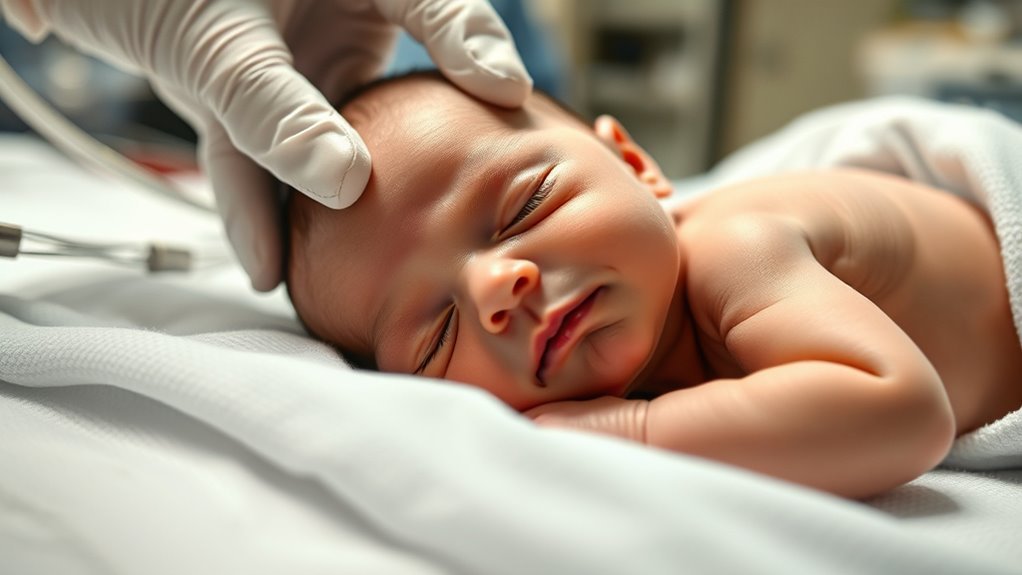
If your baby doesn’t cry right after birth, it usually means the medical team needs to act fast to clear their airway and support breathing. This is a common reason why newborns might not cry immediately.
Sometimes, a nuchal cord—that’s when the umbilical cord is wrapped around the baby’s neck—or fluid from a C-section can delay their first cry.
Medical staff will gently stimulate your baby and may provide ventilation if needed to help them breathe properly. They’re trained to handle these situations quickly and carefully.
Understanding why this happens and how they’re cared for can give you peace of mind. It also helps you prepare for what comes next in your baby’s first moments of life.
Key Takeaways
- Delayed crying may indicate breathing difficulties or oxygen deprivation requiring immediate assessment. Medical staff clear the baby’s airway and provide gentle stimulation to encourage the first cry.
- If needed, they use positive pressure ventilation and keep a close watch to make sure the baby starts breathing well. Prompt intervention helps lower risks and supports the baby’s smooth transition to breathing outside the womb.
- Knowing what causes delayed crying and how medical teams respond can help parents feel more informed and reassured during delivery. It’s all about making sure the baby gets the best possible start.
Common Reasons Babies Don’t Cry Right After Birth
Although most babies cry immediately after birth, some don’t. Understanding why can help ease your concerns.
Most babies cry right after birth, but some don’t—and knowing why can ease your worries.
A baby’s delayed crying can result from several birth complications. For instance, oxygen deprivation caused by a nuchal cord—when the umbilical cord wraps around the neck—can restrict breathing and delay the cry.
Airway obstruction, like meconium blocking the airways, also prevents immediate breathing and crying. If your baby is born via cesarean section, fluid may remain in the lungs. This can further delay crying since vaginal delivery naturally helps clear this fluid.
Also, maternal medication, such as pain relief or anesthesia during labor, can make your baby drowsy and slow to respond. That might cause delayed crying as well.
Knowing these factors helps you understand why your baby might not cry right away.
Medical Actions to Support Babies Who Don’t Cry at Birth
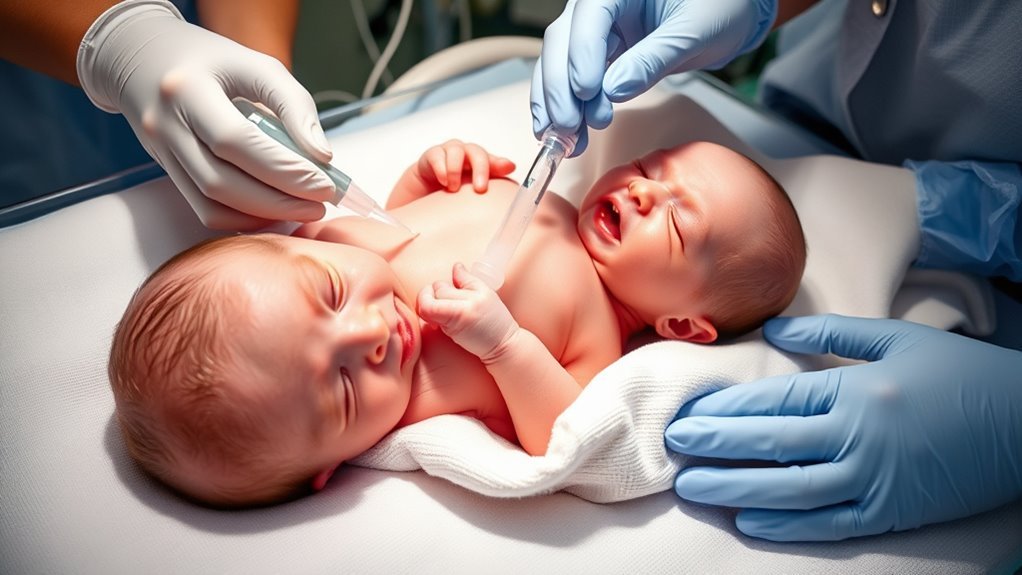
When a baby doesn’t cry right after birth, medical professionals act quickly to clear the airway by suctioning mucus from the mouth and nose, helping the baby start breathing. They use gentle stimulation techniques like back rubbing or foot tapping to encourage the baby’s first cry.
Positioning the baby with their head slightly elevated supports breathing effectively by enhancing airflow. If the baby still struggles, medical professionals provide positive pressure ventilation to assist breathing and improve oxygen levels.
Throughout this process, continuous monitoring of essential signs, including heart rate and oxygen saturation, guarantees the baby’s well-being. Prompt medical intervention is critical to support babies who don’t cry at birth, helping them shift smoothly and breathe effectively from their first moments outside the womb.
Frequently Asked Questions
How Long Can a Baby Go Without Crying After Birth?
A baby can go up to about a minute without crying after birth as they adjust.
If they don’t cry or breathe by then, medical staff will step in to help immediately.
What Happens if a Baby Is Born and They Don’t Cry?
If your newborn’s silence feels like a paused symphony, medical staff will quickly check their essential signs and use gentle stimulation to prompt crying and breathing.
They do this to make sure the baby is stable and ready to start life’s first song. It’s all about helping them get off to a good start.
My Baby Won’t Let Me Put Him Down. What Should I Do?
If your baby won’t let you put him down, try skin-to-skin contact and gentle rocking. It can really help your little one feel calm and connected.
Create consistent soothing routines. This way, your baby knows what to expect and feels more secure.
Also, gradually introduce safe, independent playtime. This helps him get used to being put down while still feeling safe and cared for.
Why Does My Newborn Cry When I Lay Him on His Back?
Your newborn cries when you lay him on his back because the position feels unfamiliar and uncomfortable. He might startle from the sudden change or feel exposed.
Babies seek comfort and security, so crying is their way to get your attention. It’s totally normal and just his way of telling you he needs a little reassurance.
Conclusion
If your baby doesn’t cry right after birth, don’t panic—you’re not alone. Just like the calm before a storm, this moment signals the need for quick care and support.
Medical teams step in to help your little one breathe and adjust, guiding them gently into the world. They’re trained to respond fast, making sure your baby gets the right help right away.
Trust that with the right care, your baby will soon join life’s chorus, filling your heart with the sound you’ve been waiting for. Remember, when a baby doesn’t cry after birth, it’s often just a sign that medical assistance is needed to help them start breathing properly. With timely support, most babies begin to cry and breathe normally, bringing relief and joy to everyone around.




One Comment