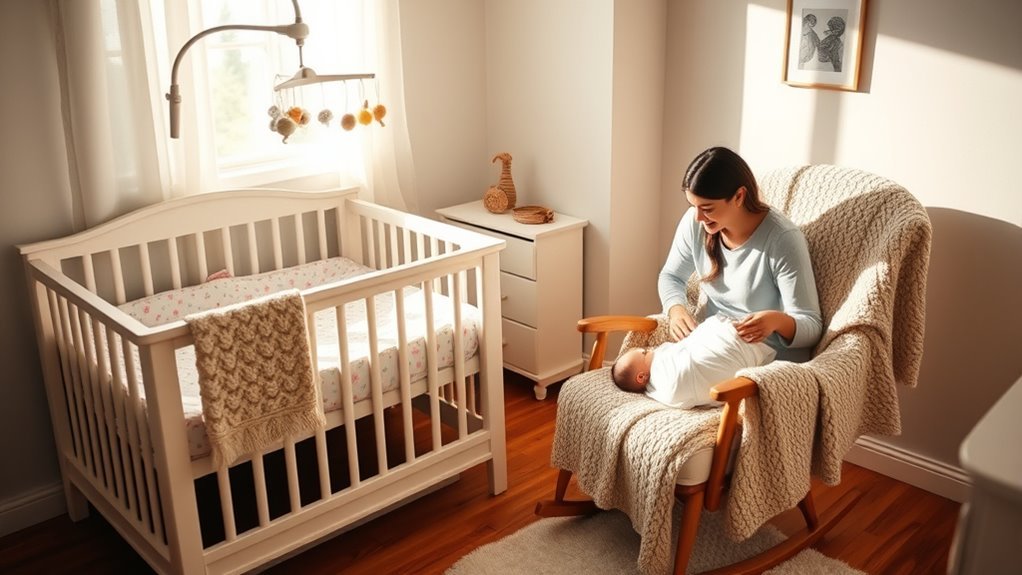
When to Move Baby to Own Room: Step-by-Step Guide
You should move your baby to their own room between 6 to 9 months, once they’re showing readiness like rolling over and sleeping more independently.
This timing helps ensure your little one is developmentally ready for the change. It’s a big step, so starting with naps in the new space can make the transition smoother.
Keep a consistent, calming bedtime routine to help them adjust.
Make the nursery cozy and safe with familiar comfort items and soothing sounds. These little touches can make a big difference.
Stay patient and watch for your baby’s reactions to ease the shift smoothly.
Every baby is different, so go at their pace.
Keep going to find helpful tips for making this change easier.
Key Takeaways
- Transition baby to their own room between 6 to 9 months. Make sure they show signs of readiness, like hitting developmental milestones and feeling comfortable in new environments.
- Start by having the baby take naps in the nursery. This helps them slowly get used to the new space.
- Establish and keep a consistent bedtime routine. Include calming activities like reading or singing to make bedtime smooth.
- Create a safe and cozy nursery. Use familiar comfort items, dim lighting, and keep the room temperature just right.
- Be patient during the move. Watch how your baby reacts, and offer lots of reassurance if they wake up at night.
When Should You Move Your Baby to Their Own Room?
When should you move your baby to their own room? The American Academy of Pediatrics recommends room sharing for at least the first 6 months to cut the risk of SIDS by up to 50%.
The American Academy of Pediatrics advises room sharing for at least 6 months to reduce SIDS risk by 50%.
Around 6 to 9 months is a common time to evaluate the shift, but it really depends on your baby’s readiness and your family’s dynamics.
Signs your baby might be ready include being over 6 months old, frequent night wakings, and hitting developmental milestones like rolling over.
To make the move smoother, start with naps in the nursery and keep a consistent bedtime routine. This helps your baby adjust and supports sleep training, making the shift to their own room less stressful for both of you.
Tips to Make Moving Your Baby to Their Own Room Easier
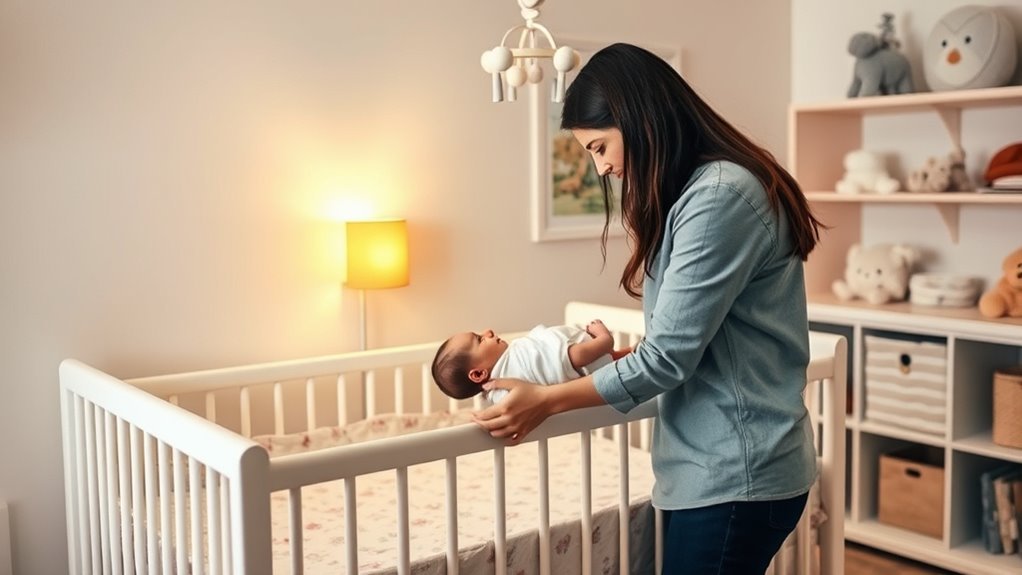
Although moving your baby to their own room can feel challenging, you can ease the change by introducing naps in the nursery first. This helps your baby acclimate gradually to the new space and builds familiarity.
Try to establish a consistent bedtime routine that includes calming activities like reading or singing. This provides security during sleep and makes the transition feel more natural.
Gradually increase the time your baby spends in their room during the day to reinforce comfort with the environment. Using white noise machines can also help mask disruptive sounds, making adapting smoother for both of you.
Don’t forget to keep comfort items, like a favorite blanket or stuffed animal, in the crib. These little things soothe your baby and support a positive association with their new room.
Frequently Asked Questions
What Is the 5-3-3 Rule for Babies?
The 5-3-3 rule means your baby should get five hours of daytime sleep, three hours of naps, and three hours of nighttime sleep.
It helps you create a balanced, consistent sleep schedule for your infant’s healthy rest.
This way, your little one gets enough rest throughout the day and night.
It’s a simple guideline to keep their sleep routine on track.
Can I Put My 4 Month Old in His Own Room?
If your 4-month-old, like Emma’s baby, wakes too often, you can try moving him to his own room gradually. Start with naps there, keep safe sleep practices, and watch how both of you adjust overnight.
It might take a little time for everyone to get used to the new setup. Just be patient and see how it goes!
Is It Safe to Move My 3-Month-Old Baby to Their Own Room?
It’s generally safer to keep your 3-month-old in your room, as room sharing reduces SIDS risk.
If you move them, guarantee a safe sleep environment and consult your pediatrician to confirm they’re ready for the shift.
Is It Safe to Move My 5-Month-Old Baby to Their Own Room?
If your 5-month-old wakes you constantly, moving them to their own room can be safe with firm sleep surfaces and no soft bedding.
Just consult your pediatrician first to guarantee you’re doing it safely.
Conclusion
Moving your baby to their own room is like planting a tiny seed—nurturing independence while still providing warmth and care. Trust your instincts and take it step by step, knowing that each night apart helps your little one grow stronger.
With patience and gentle routines, you’ll create a safe space where both of you can rest peacefully. Watching as your baby blossoms into their own unique light is truly special. This shift marks a beautiful new chapter for your family.
Remember, moving your baby to their own room is a big milestone. It’s all about creating a comfortable environment that promotes healthy sleep habits and helps your baby feel secure. By following a gradual process and maintaining consistent bedtime routines, you make the transition smoother for both you and your baby. This thoughtful approach ensures your little one thrives while fostering independence and peaceful nights for the whole family.






One Comment