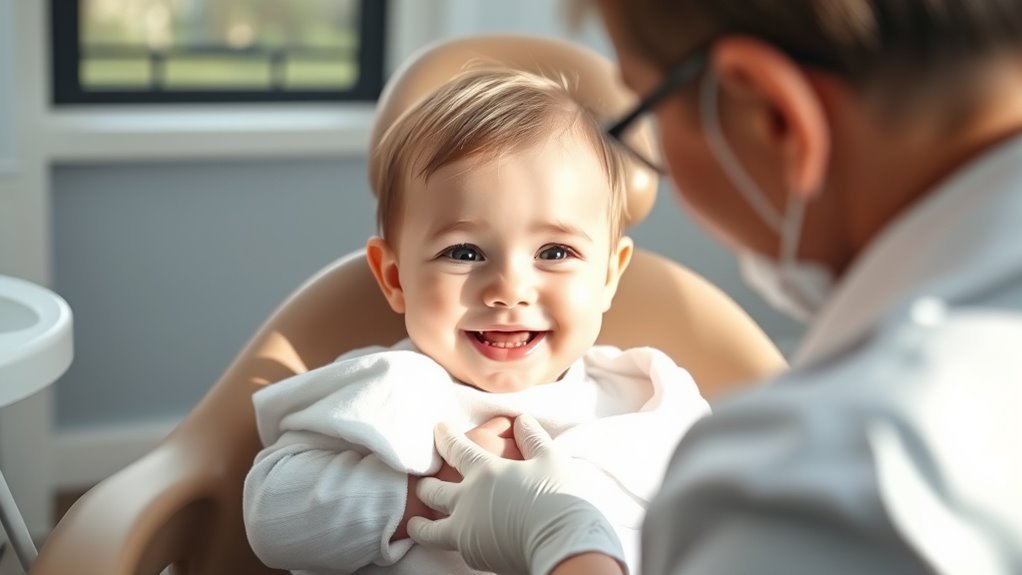
When to Take Baby to the Dentist: A Step-by-Step Guide
You should take your baby to the dentist by their first birthday or within six months after the first tooth appears. This early dental visit is super important because it helps spot issues like cavities before they become a problem.
It also sets the stage for a healthy dental routine that your little one can carry for life.
Before the appointment, gather your baby’s medical history, list of medications, and any questions you might have. This helps the dentist give the best care possible.
Expect a gentle, 30- to 45-minute exam where the dentist will offer advice on nutrition and oral care.
Keeping up with these early visits builds strong, lifelong habits. Plus, there’s a lot more to learn about making these trips smooth and effective for both you and your baby.
Key Takeaways
- Schedule your baby’s first dental visit by their first birthday or within six months after the first tooth appears. It’s best to get this done early to stay ahead of any issues.
- Prepare for the visit by gathering medical history, medications, and any nutrition or dental care concerns. Having everything ready makes the appointment smoother.
- Expect a gentle, 30 to 45-minute exam where the dentist checks gums, teeth, and provides oral hygiene guidance. They’ll take their time to make your baby comfortable.
- Early visits help prevent dental anxiety, detect early childhood caries, and establish healthy dental habits. Starting early really sets your little one up for a lifetime of good oral health.
- Bring all relevant documents and questions to ensure personalized advice and effective dental care for your baby. Don’t hesitate to ask anything that’s on your mind!
When to Schedule Your Baby’s First Dental Visit and Why It Matters

Although it might seem early, you should schedule your baby’s first dental visit by their first birthday or within six months after their first tooth appears. This initial appointment helps you establish a dental home, where pediatric dentists provide early dental care tailored to your baby’s needs.
Early visits allow monitoring of gum health and jaw development, and they’re essential for detecting early childhood caries (ECC) before they worsen. Starting regular check-ups early sets the foundation for a healthy dental routine, reducing dental anxiety as your child grows.
Preventive care at this stage is much easier and less costly than reactive treatments later. By prioritizing your baby’s first dental visit, you’re ensuring lifelong oral health and building positive habits that will benefit them for years to come.
How to Prepare and What to Expect at Your Baby’s First Dental Visit

Before your baby’s first dental visit, you’ll want to prepare by gathering their medical history, any medications, and a list of questions for the dentist. Schedule this visit by your baby’s first birthday to establish a dental home and promote good oral health.
Expect a gentle exam lasting 30 to 45 minutes, often done knee-to-knee so your baby feels comforted while the dentist checks their gums and teeth. During the visit, parents receive anticipatory guidance on nutrition, oral hygiene, and dental care tailored to their baby’s needs.
Bring along:
- Baby’s medical history
- List of medications
- Questions about oral hygiene
- Concerns about nutrition
- Anything affecting dental care
This preparation guarantees a smooth, informative first dental visit.
Frequently Asked Questions
When Should a Baby Go to the First Dentist Appt?
You should take your baby to the dentist by their first birthday or within six months after their first tooth appears. Early visits help catch issues, build a dental home, and keep their smile healthy from the start.
It’s a good idea to start dental visits early. This way, you can stay on top of any problems before they become bigger. Plus, your baby gets used to the dentist, making future visits easier.
What Is the 3-3-3 Dental Rule?
The 3-3-3 dental rule means you should take your child to the dentist by age 3, after they have three primary teeth, and within six months of their first tooth erupting.
It helps catch problems early.
When Should You First Take Your Baby to a Dentist?
You should take your baby to the dentist by their first birthday or within six months after their first tooth appears. This early visit helps catch issues early and sets the stage for healthy dental habits.
It might seem soon, but starting dental visits early makes a big difference. Plus, it gives you a chance to ask questions and learn how to care for those tiny teeth.
What’s the Earliest a Baby Can See a Dentist?
You can take your baby to the dentist as soon as their first tooth appears. Or even earlier for a gum check.
Early visits help you catch issues sooner. Plus, they get your baby comfortable with dental care.
Conclusion
Taking your baby to the dentist is like planting the first seed in a garden of healthy smiles. By scheduling that first visit early, you’re setting the stage for a lifetime of strong teeth and confident grins.
Don’t wait for trouble to knock—embrace this journey with open arms. With each checkup, you’re nurturing your little one’s bright future, one gentle step at a time.
Your baby’s smile is worth every moment you invest. Early dental visits help prevent cavities and establish good oral hygiene habits from the start. So, when to take your baby to the dentist? Ideally, by their first birthday or within six months after their first tooth appears.
Making that initial appointment sets the tone for a positive dental experience, ensuring your child’s teeth stay healthy and strong. Remember, early dental care is key to a lifetime of healthy teeth and confident smiles.