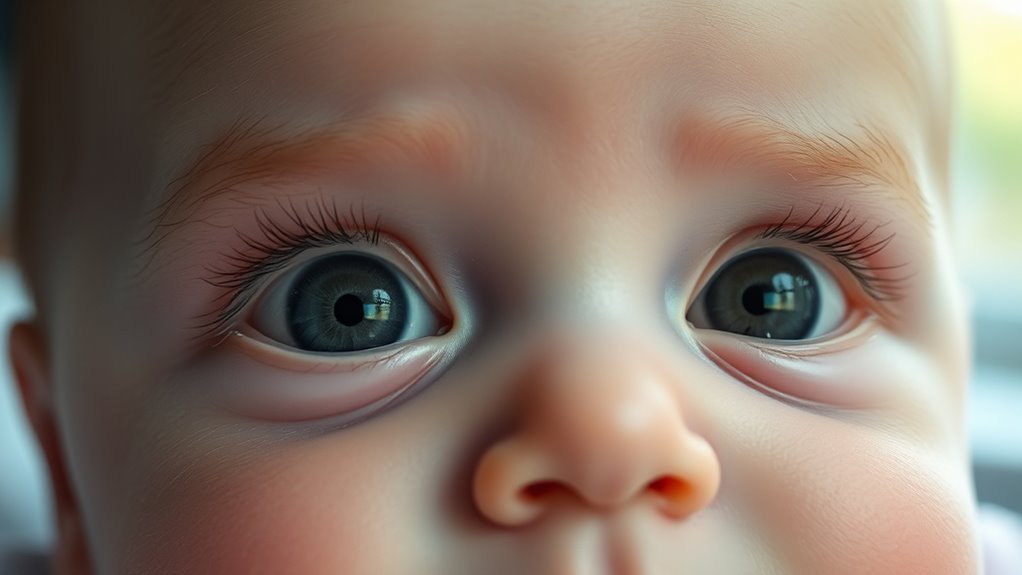
When Does Baby Eye Color Come In?
You’ll usually see your baby’s eye color start to change between 3 to 6 months as melanin production increases with light exposure.
This is when those beautiful baby blue or gray eyes might begin to shift into their more permanent shade. Most noticeable shifts happen around 6 months, although subtle changes can continue for years.
Genetics play a big role too, with different genes influencing how much melanin forms and which color emerges.
So, the eye color your baby ends up with is a unique blend of family traits and biology.
If you want to understand why these changes happen and what influences your baby’s unique eye color, there’s more to explore.
It’s pretty fascinating once you start digging into it!
Key Takeaways
- Babies are often born with blue or gray eyes that can change over time.
- Noticeable eye color changes usually occur between 3 to 6 months of age.
- Significant shifts in eye color are typically seen around 6 months.
- Subtle changes in eye color can continue gradually for several years.
- Melanin production, influenced by light exposure, drives the changes in eye color.
So, it’s pretty normal for your baby’s eye color to evolve as they grow!
When Do Babies’ Eyes Begin to Change: And Why?
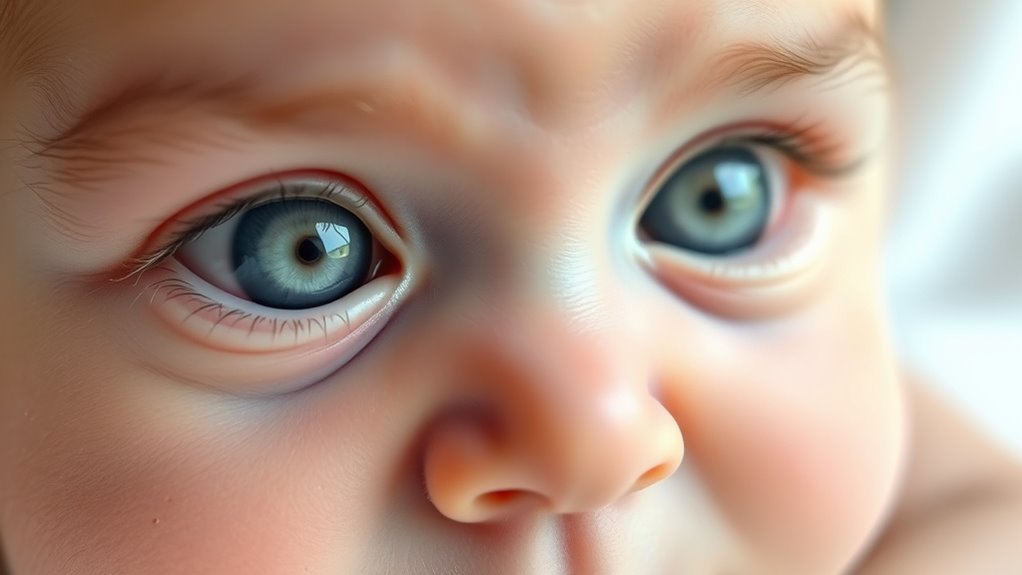
Although babies are often born with blue or gray eyes, you’ll usually start seeing noticeable changes between 3 to 6 months as their melanin production increases in response to light exposure. During this period, babies’ eye color changes become more apparent.
Melanin, the pigment responsible for eye color, rises with light exposure, causing lighter blue eyes to darken into shades like hazel eyes or brown eyes. Newborns with brown eyes typically don’t experience much change since their melanin levels are already higher.
While genetics set the foundation for when and how these changes happen, the environment plays a role too. By around 6 months, the most significant shifts occur, though subtle changes can continue for years.
Understanding this timeline helps you know what to expect as your baby’s eye color develops. It’s pretty fascinating to watch!
How Do Genetics and Melanin Influence Baby Eye Color?
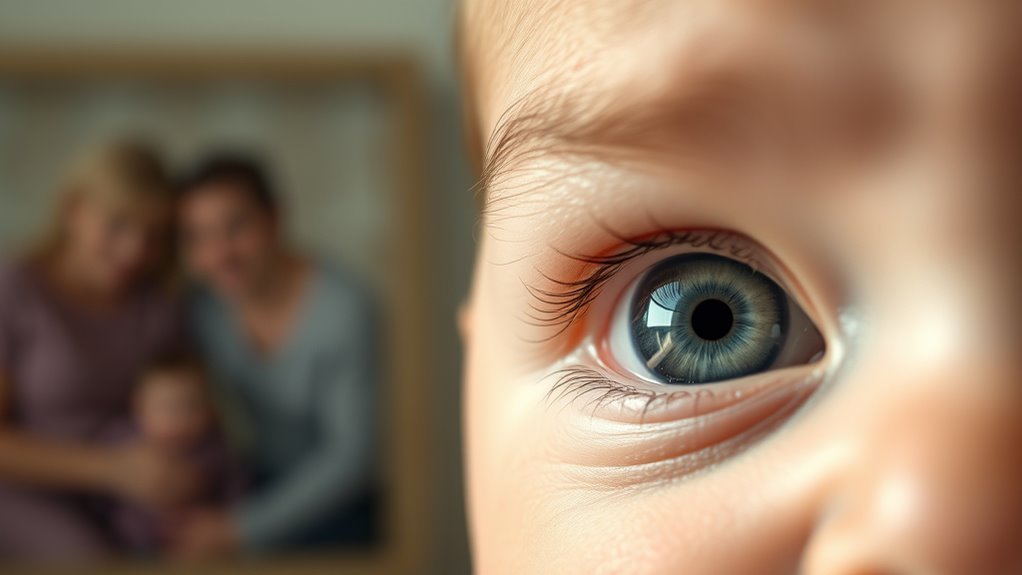
Understanding why your baby’s eye color changes involves looking at both genetics and melanin production. Your newborn inherits multiple genes, including OCA2 and HERC2, that influence pigmentation and eye color.
Melanin, which starts forming around 31 weeks in the womb, plays a key role—higher melanin levels result in brown eyes, while lower levels lead to blue eyes.
Although about 63% of babies are born with brown eyes, blue-eyed newborns may experience eye color changes as melanin production increases after birth.
Genetics can be complex; even two brown-eyed parents can have a blue-eyed child if recessive genes are present.
Frequently Asked Questions
When Can You Tell a Baby’s Real Eye Color?
You can usually tell your baby’s real eye color around 6 months. But don’t worry if it changes a bit more until they’re about 3 years old.
Melanin and genetics keep influencing it over time, so some shifts are totally normal. Just give it some time!
Do All Newborns Have Blue Eyes?
No, not all newborns have blue eyes. You’ll see a variety of colors at birth, like brown or gray, depending on genetics.
Eye color can also change during infancy as melanin develops with light exposure. So, it’s pretty common for babies’ eyes to shift color in their first few months.
How Can I Predict My Baby’s Eye Color?
Imagine your baby’s eyes as a canvas painted by genetics’ swirling brush. You can’t predict exactly, but by tracing family traits and dominant genes, you’ll glimpse the possible shades.
Though surprises often color the final masterpiece. It’s like a little mystery waiting to unfold!
Do Babies’ Eyes Get Lighter or Darker?
Babies’ eyes usually get darker as melanin increases after birth. You might see blue or gray eyes turn brown or hazel over months.
But, some babies with light eyes may experience subtle lightening later on. It’s not super common, but it can happen.
Conclusion
You might be surprised to learn that about 10% of babies experience a noticeable eye color change within their first year. This shows just how dynamic those tiny eyes can be!
As you watch your little one grow, remember that genetics and melanin work together to create their unique shade. So, don’t worry if their eye color isn’t set right away—it’s all part of the fascinating journey you get to witness firsthand.
Baby eye color can change gradually as melanin production increases, usually stabilizing by the time your child is around one year old. This natural process means the eye color you see at birth might not be the final shade.
Understanding when baby eye color comes in helps ease any concerns. It’s perfectly normal for eye color to shift during those early months, making every glance at your baby’s eyes a little more exciting.


3 Comments