10 Traits That Predict What Our Baby Will Look Like
You can predict your baby’s look by understanding how genetics and environment blend. Your baby inherits half their DNA from each parent, with dominant and recessive genes shaping traits like eye and hair color.
These 10 traits that predict what our baby will look like give us clues about the unique mix of features to expect.
Hair texture and skin tone reflect gene interactions and factors like nutrition. Siblings look different due to unique gene mixes and environmental influences.
It’s pretty fascinating how nature and nurture work together to create each little face.
AI tools can even help visualize these traits. Keep exploring to uncover how all these factors come together in your child’s appearance.
It’s a fun way to connect science with the miracle of new life!
Key Takeaways
- Babies inherit a unique combination of genes from both parents, influencing traits like eye color, hair color, and height.
- Dominant genes, such as those for brown eyes, often determine visible traits, while recessive genes require both parents’ contribution.
- Hair color and texture result from multiple gene interactions and can be affected by environmental factors like nutrition and sunlight.
- Siblings may look different due to genetic recombination and varying environmental influences during development.
- AI tools can visualize potential baby appearances by blending parental features, aiding parents in understanding inherited traits.
How Genes From Parents Shape Your Baby’s Traits
Although your baby inherits half of their DNA from each parent, the combination creates a unique mix of traits that can make siblings look surprisingly different. Genes are involved in determining features like eye color, skin tone, and hair color, influenced by dominant and recessive genes inherited from both parents.
For example, eye color depends on genetic interactions between alleles, where dominant brown genes may mask recessive blue ones. Hair color also results from multiple gene pairs working together.
Traits such as height are polygenic, shaped by many genes, and environmental factors like nutrition further affect development. When you compare parent photos, you may notice these complex genetic patterns at work.
It’s pretty amazing how your baby’s appearance reflects a blend of inherited and external influences. Genetics isn’t just about what’s passed down—it’s also how those genes interact with the environment that shapes the final picture.
Dominant vs. Recessive Genes: Which Baby Traits Appear
How do dominant and recessive genes decide which traits your baby will show? Dominant genes tend to take charge, making certain physical traits like brown eye color more likely to appear even if only one parent passes them on.
Recessive genes, on the other hand, need both parents to contribute the same gene for traits like blue eye color to manifest. Hair color and other physical traits involve multiple gene pairs, so dominant genes may overshadow recessive ones, making baby predictions more complex.
Genetic inheritance also affects features like cleft chins or attached earlobes, with higher chances if both parents share dominant traits. Keep in mind, environmental factors and gene interactions can influence how these dominant and recessive genes express, shaping your baby’s unique appearance.
Genetics of Baby Eye Color
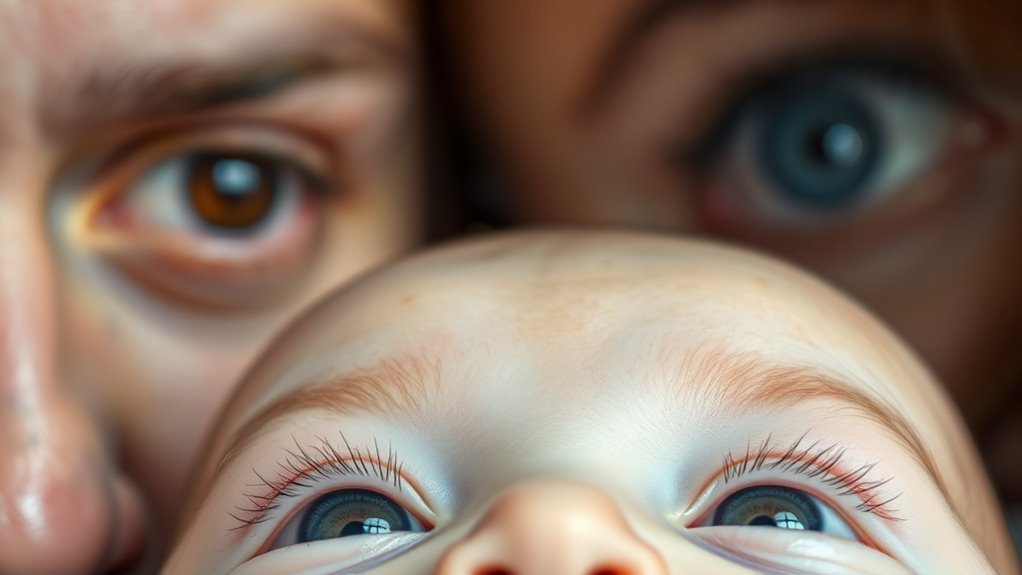
Eye color in babies depends largely on the combination of genes they inherit from their parents, especially the OCA2 and HERC2 genes. Here’s what you should know about baby eye color inheritance:
Most babies are born with blue-eyed or bluish-gray eyes due to low melanin. This can change as they grow.
Brown-eyed genes are dominant, so if one parent has brown eyes, the baby is more likely to have brown eyes. Blue-eyed genes are recessive, meaning both parents need to pass them on for the baby to have blue eyes.
It’s possible, though rare, for two blue-eyed parents to have a brown-eyed baby because of hidden genetic variations.
Understanding these gene interactions helps explain why eye color is so varied and unpredictable.
Predicting Your Baby’s Hair Color and Texture
Wondering what your baby’s hair will look like? Baby hair color depends on genetic inheritance involving multiple gene pairs. Melanocytes produce melanin—eumelanin for brown/black and pheomelanin for red—that influences hair color.
Recessive genes can lead to surprising shades, making accurate predictions tricky. Hair texture, whether straight, wavy, or curly, also comes from gene interactions and can change with puberty’s hormonal effects. While eye color genetics help, hair traits add complexity.
| Hair Color Combination | Likely Baby Hair Color |
|---|---|
| Both parents brown | Brown (99% chance) |
| One parent blonde | Blonde or brown |
| Both parents red | Often red |
These factors together guide your best guess for your baby’s hair color and texture. So, while it’s fun to predict, remember nature might just surprise you!
What Determines Your Baby’s Skin Tone
Because your baby’s skin tone depends largely on melanin levels inherited from both parents, predicting it involves understanding how these genes combine. Here’s what you should know:
Genetic inheritance plays a key role, with about 70% of skin color variation linked to genes like SLC24A5 that influence melanin production. Melanin amount determines whether your baby’s skin will be lighter or darker.
When parents have different skin tones, their baby often inherits intermediate shades, blending their genetic backgrounds. Environmental factors, such as UV exposure, can cause temporary changes but don’t alter the genetic blueprint.
How Genetics Influence Baby’s Facial Features
You inherit a unique mix of genes from both parents that shape your baby’s facial features in surprising ways. Certain traits, like eye color and nose shape, come from complex combinations of multiple genes working together.
Understanding these gene combinations helps you predict which features your little one might share with you or your partner. It’s pretty fascinating how genetics work, isn’t it?
Gene Combinations
Although each baby inherits half of their DNA from each parent, the unique combination of these genes shapes their distinct facial features. Understanding gene combinations helps you grasp why your baby’s traits appear as they do.
Here’s how genetic factors play their part:
- Eye color depends on the heritability of multiple genes, where dominant ones often determine the final shade.
- Hair color is influenced by gene combinations controlling melanin types, like eumelanin for brown or pheomelanin for red.
- Facial structure results from many interacting genes, each contributing subtly to the overall look.
- Even siblings can show different traits due to unique gene combinations, despite sharing the same parents’ DNA.
Feature Inheritance
When parents pass down their genes, they each contribute about half of the DNA that shapes your baby’s facial features. This genetic material influences key inherited traits like eye shape, nose structure, and facial symmetry.
Dominant genes often determine more visible features—for instance, brown eyes usually overpower blue due to dominant gene expression—while recessive genes can quietly influence subtler details. Facial symmetry, a trait linked to attractiveness, also has a genetic basis, reflecting the balanced contribution from both parents.
However, environmental factors during pregnancy, such as nutrition and health, can subtly affect how these genetic traits appear. So, while genetics set the blueprint for your baby’s look, environmental factors and the complex interplay of dominant and recessive genes combine to create a unique face.
How Genes Affect Baby’s Size and Appearance
Because genes combine uniquely from both parents, they shape your baby’s size and appearance in distinct ways. Understanding how genetics influence these traits can help you anticipate your baby’s look.
- Hair Color: Multiple gene pairs affect levels of eumelanin and pheomelanin. This determines whether your baby’s hair is brown, blonde, or red.
- Eye Color: Initially bluish-gray, your baby’s eye color can change within six months. This depends on the inherited alleles.
- Size: Over 12,000 genetic markers influence height and overall size. So, genetics play a big role in your baby’s growth.
- Bone Structure: It’s shaped by genetics and keeps developing into the 20s. This influences your child’s long-term appearance.
Environmental Factors Affecting Your Baby’s Look
What you eat during pregnancy plays a big role in shaping your baby’s skin tone and hair texture. Environmental exposures like sunlight and toxins can also influence how your baby looks at birth.
Let’s explore how these factors impact your little one’s appearance. It’s pretty interesting to see how much the environment can shape these details!
Nutrition’s Impact On Appearance
Although genetics play a major role in determining your baby’s appearance, your nutrition during pregnancy can greatly influence traits like skin tone, hair quality, and overall physical development.
To support a healthy appearance, focus on maintaining a balanced diet rich in antioxidants, omega-3s, and protein. These nutrients really help boost healthy skin and improve hair quality.
Avoiding nutritional deficiencies is key too. It helps prevent developmental issues that could affect your baby’s complexion and growth.
Also, staying well-hydrated is super important. Proper fluid intake promotes skin elasticity and healthy skin in your newborn.
And don’t forget managing your weight. Keeping it in check can reduce risks linked to maternal obesity, which might impact your baby’s facial structure and body composition.
Environmental Exposure Effects
When you consider how your surroundings affect your baby’s development, environmental exposures play a powerful role in shaping physical traits like skin tone, facial symmetry, and height. Environmental factors such as nutrition and vitamin D levels influence your baby’s physical development, impacting bone growth and facial features.
Exposure to pollutants can disrupt fetal growth, altering skin tone and facial symmetry. Maternal stress also affects hormonal balance, which may change your baby’s eye shape and facial structure.
Seasonal and geographical differences affect vitamin D levels, further influencing height and facial traits. Early exposure to UV radiation can affect skin tone and increase the likelihood of freckles or birthmarks.
Using AI Tools to Visualize Your Baby’s Appearance
If you’re curious about how your future child might look, AI baby face generators offer a fascinating glimpse by blending facial features from your photos. These tools provide a realistic preview to help predict what your baby could resemble.
Here’s how you can benefit:
- Upload multiple photos safely; your uploaded photos stay secure with no data storage or sharing.
- Use the AI baby generator to create baby face predictions, factoring in features like eye color—brown-eyed parents, for example, might see typical traits reflected.
- Customize gender and age to visualize how your future baby might look from newborn to toddler.
- Get quick, high-quality results without watermarks, ideal for sharing with friends or family.
Such AI tools help explore the factors that can influence your baby’s appearance with remarkable accuracy. Pretty cool, right?
Reasons Siblings Look Different Despite Same Parents
AI baby face generators give you a fun way to imagine your future child’s look, but they can’t capture the full story behind why siblings from the same parents often look quite different.
Each sibling inherits a unique mix of genes, affecting traits like eye color, hair color, and overall appearance. This variation comes from genetic recombination, which shuffles DNA during egg and sperm formation, creating different gene combinations in each child.
Although siblings get 50% of their DNA from each parent, the specific genes passed on can vary widely, resulting in distinct looks. Plus, environmental factors like nutrition and sunlight influence traits such as height and skin tone.
And as siblings grow, their bone structure and facial features continue developing, further distinguishing their appearance over time. So, even with the same parents, no two kids look exactly alike!
Frequently Asked Questions
Is There Any Way to Predict What Your Baby Will Look Like?
You can’t predict exactly what your baby will look like because genetics are complex. However, you can expect a mix of traits from both parents, with dominant genes often influencing features like eye and hair color.
How Can I See What My Future Baby Will Look Like?
You can use an AI baby face generator by uploading clear photos of you and your partner. It blends your features to create realistic images of your future baby.
You can customize the gender and age stages easily and quickly. It’s a fun way to get a glimpse of what your little one might look like!
Can Chatgpt Predict What Your Child Will Look Like?
No, ChatGPT can’t magically reveal your future baby’s exact looks or create a crystal-clear image.
But it can help you understand genetics and traits while you wait for that adorable surprise in real life!
What Determines Which Parent a Baby Looks Like?
You look like one parent more because dominant genes often overpower recessive ones, and random genetic combinations decide which traits express.
Environmental factors play a minor role, but your DNA mix mainly shapes your appearance. It’s kind of like a genetic lottery that determines which features show up more prominently. So, even siblings can look quite different depending on the mix they inherit.
Conclusion
Imagine your baby’s traits as a unique recipe, blending your genes like ingredients in a family favorite dish. Just like no two cooks add the same twist, your baby’s look combines dominant and recessive genes in surprising ways.
Remember, even siblings can turn out like different flavors of ice cream—distinct yet related. By understanding these 10 traits, you’re better equipped to appreciate the beautiful, unpredictable masterpiece your little one will become.
Knowing what influences your baby’s appearance helps you celebrate the mix of genetics that shapes their unique look. These traits give clues but also keep some surprises in store, making your baby’s look a special blend of family history and genetic chance. Embracing this makes the journey of watching your baby grow even more exciting and meaningful.