What’s a Velcro Baby and How Do You Recognize and Support Them?
A Velcro baby clings tightly to you and often cries when you put them down. They show intense separation and stranger anxiety, especially between 6 to 9 months.
This clinginess means they feel a strong attachment and really need consistent comfort.
Things like babywearing or clear communication about absences can help.
Establishing routines also eases their stress while supporting your daily tasks.
If you want to explore practical ways to nurture your Velcro baby and care for yourself, keep going.
There’s plenty to learn about recognizing their needs and finding balance in your day.
Key Takeaways
- A Velcro baby clings tightly to caregivers, often crying when put down and preferring to nap while being held.
- Clingy behavior signals strong attachment and is not a form of manipulation.
- Consistent daily routines provide security and reduce separation anxiety for Velcro babies.
- Babywearing and clear communication about separations help comfort the baby and build trust.
- Caregivers should seek professional support if feeling overwhelmed to better manage clinginess and anxiety.
Recognizing a Velcro Baby: Key Behaviors and What They Reveal

A Velcro baby clings tightly to their caregiver, often crying when put down and preferring to nap while held. This clingy behavior usually peaks between 6 to 9 months, aligning with key stages in child development like separation anxiety.
It’s important to recognize that this need for connection isn’t manipulation but a sign of a strong, secure attachment. When your child feels safe in your presence, they build trust essential for healthy emotional growth.
You might notice stranger anxiety, showing how deeply your baby bonds with you. Maintaining a predictable routine can help your Velcro baby feel more secure.
If you’re unsure or overwhelmed, don’t hesitate to ask for support from a mental health professional experienced in infant care. They’re there to help you navigate this phase.
Caring for Your Velcro Baby: Practical Tips and Self-Care for Parents
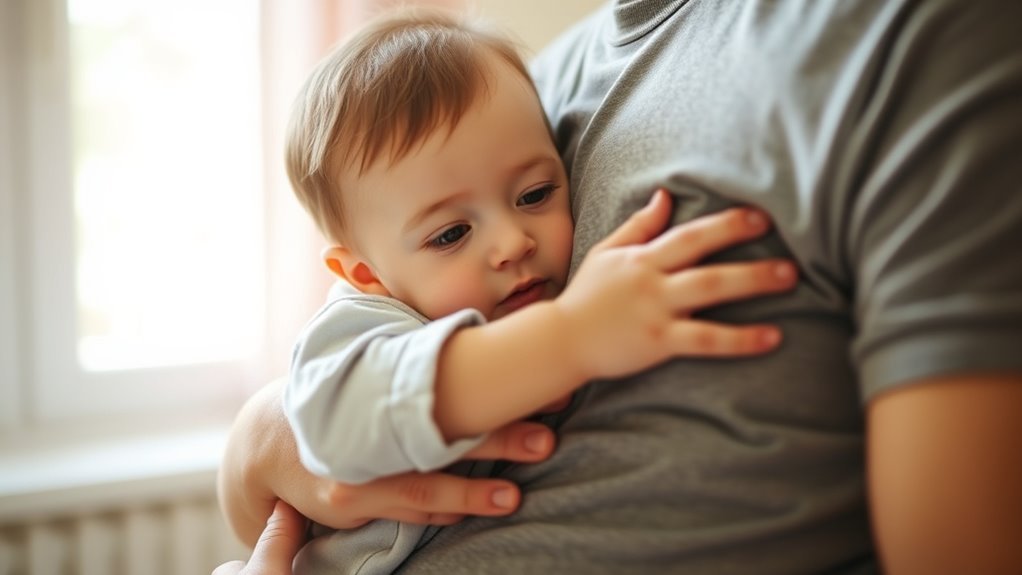
When your Velcro baby clings more than usual, you can ease both their anxiety and your stress by creating consistent routines and using strategies like babywearing. Predictable routines help your baby feel secure, reducing separation anxiety while allowing you to manage daily tasks.
Babywearing keeps your Velcro baby close, comforting their clinginess and supporting your need for hands-free moments. Clear communication about separations builds trust—explain where you’re going and when you’ll return to ease their worries.
Frequently Asked Questions
What Are the Personality Traits of a Velcro Baby?
You’ll notice a Velcro baby is clingy, sensitive, and easily upset by changes. They’re cautious with strangers and deeply attached to you.
They show strong emotional needs and often need constant reassurance and closeness. It’s like they want to stay connected all the time.
How Long Does a Baby Stay a Velcro Baby?
You might think a Velcro baby clings forever, but they usually stay clingy from about 6 to 18 months.
With your patient care, they’ll gradually gain confidence and independence by age two to three.
What Causes a Baby to Become a Velcro Baby?
You’ll see a baby become Velcro due to strong attachment needs, separation anxiety, or changes like new caregivers.
Sensitive temperament, stress, or disruptions in sleep and feeding also make them seek extra comfort and closeness from you.
It’s like they just want to stick close because they need that extra reassurance.
Totally normal, but definitely a lot for parents to handle!
How to Tell if Your Baby Is a Velcro Baby?
You’ll know your baby’s a Velcro baby if they cry when you put them down, want constant contact, and prefer contact naps. They often show stranger anxiety, too.
They really seek closeness for comfort and feel most secure when you’re nearby. It’s like they just want to be glued to you!
Conclusion
Understanding your Velcro baby helps you respond with patience and love. Their clinginess is a natural way to seek comfort and security.
While some say Velcro babies grow out of this phase quickly, research shows their need for closeness often reflects deeper emotional bonds. These bonds can actually strengthen over time.
By supporting your baby’s needs and caring for yourself, you’re building a foundation of trust. This trust benefits both of you long beyond infancy.
Remember, recognizing your Velcro baby’s need for connection is key. With patience and support, you nurture their emotional development and create a secure, loving environment. Taking care of yourself, too, ensures you can meet their needs with calm and confidence. This balanced approach helps your Velcro baby thrive, fostering a strong bond that lasts well into childhood and beyond.