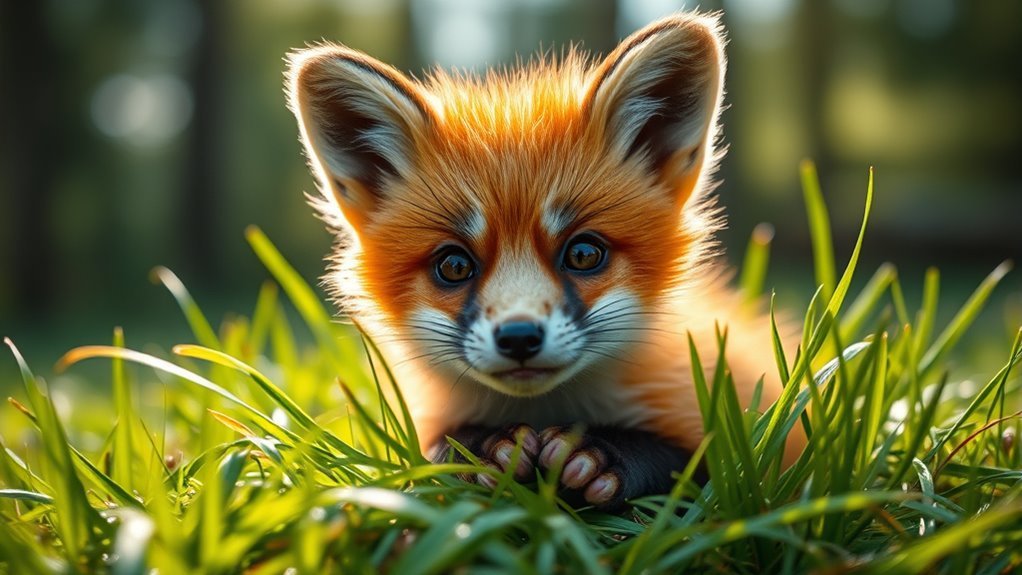
What Do You Call a Baby Fox?
You call a baby fox a kit, though pups and cubs are also common names depending on who you ask. Kits are born in litters of 3 to 6 between March and May.
You can tell a kit apart by its narrower face, smaller ears, and elongated pupils that help with night vision.
These playful young foxes rely on their mother’s milk for the first month.
Keep exploring to discover how they differ from other animals. It’s pretty fascinating to see what makes baby foxes unique compared to other baby animals!
Key Takeaways
- A baby fox is commonly called a kit, but terms like pup and cub are also used.
- The British Mammal Society and BBC prefer calling baby foxes cubs.
- The National Wildlife Federation typically uses the term pups for baby foxes.
- The Humane Society refers to baby foxes as kits.
- All three terms—kits, pups, and cubs—are correct and vary by region or organization.
What Are Baby Foxes Called: And Why?
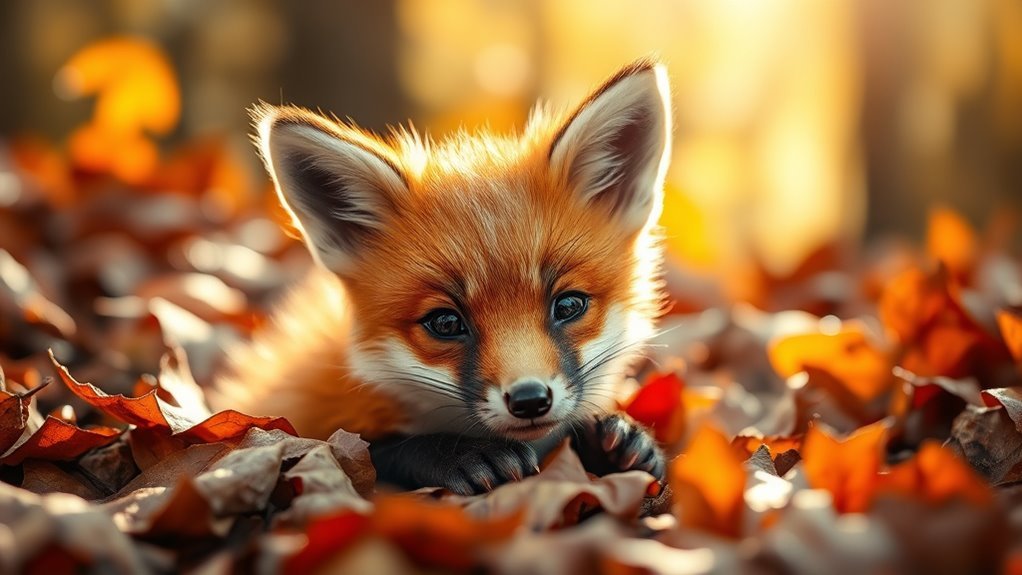
If you’re curious about what to call a baby fox, you’ll find several names in use. Baby foxes are commonly called kits, but you might also hear them called pups or cubs depending on where you are.
For example, the British Mammal Society and BBC often use cubs, while the National Wildlife Federation prefers pups. The Humane Society sticks to kits. Regardless of the name, these terms highlight their young age as part of the Canidae family.
When it comes to litter sizes, fox kits are usually born in groups of 3 to 6, although some litters may have as few as 2 or as many as 7. Fox kits arrive between March and May and rely on their mother’s milk during their first month.
How Can You Tell a Baby Fox From Other Animals?
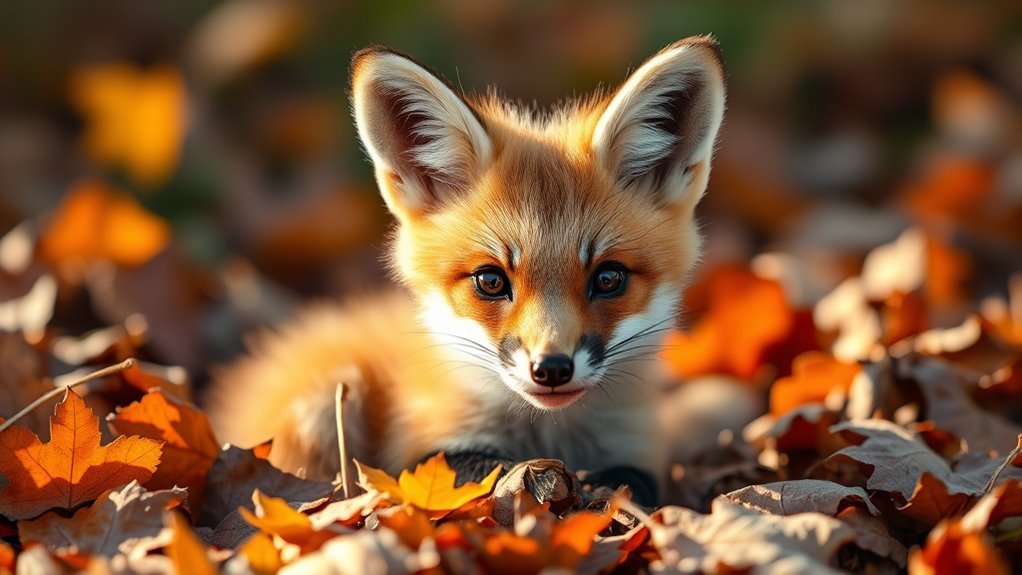
How can you easily spot a baby fox among other young animals? Baby foxes, called kits, have distinct features that set them apart. Unlike puppies, kits have narrower faces, smaller ears, and elongated pupils similar to cats, which help with night vision.
When foxes give birth, they usually have litters of 3 to 6 kits. By around two months of age, these kits begin exploring their surroundings, showing playful behavior unique to foxes.
Another clue is their strong, skunk-like odor, used for communication and territory marking. These traits make it easier to tell fox kits from other canids like coyotes or domestic puppies.
Frequently Asked Questions
Is It a Fox Cub or Pup?
You can call a baby fox either a cub or a pup, depending on where you are or who you ask. Both terms are correct, so feel free to use whichever suits your preference or audience best.
It’s really up to you! Some people might say cub, others prefer pup. Either way, you’re talking about the same adorable little fox.
What Is a Fox’s Biggest Fear?
Wondering what a fox fears the most? You’d say it’s larger predators like coyotes and wolves.
Plus, you’d be wary of humans, dogs, disease, and traffic too—those all threaten a fox’s survival every day.
What Is a Small Fox Called?
A small fox is called a kit, pup, or cub, depending on where you are. You’ll often hear “kit” in the US, “cub” in the UK, and “pup” from some wildlife organizations.
It’s kind of interesting how the name changes just based on location, right? But no matter what you call them, they’re all adorable little foxes!
What Is a Child of a Fox Called?
Imagine a tiny adventurer exploring spring’s new world—that’s a fox’s child, called a kit, pup, or cub.
You’ll notice their playful curiosity, just like a child discovering everything for the first time.
Conclusion
Imagine spotting a tiny fox cub, or “kit,” darting through the grass—just like a spark of curiosity in a vast forest.
You’ll remember that these playful kits are more than just baby foxes; they’re the future of the wild, full of energy and promise.
Knowing their name helps you see them as individuals, not just animals.
So next time you spot one, you’ll know exactly what to call that little bundle of fur and wonder.
Calling a baby fox a “kit” connects you to nature in a special way. It’s not just a cute name—it’s a reminder that these kits grow up to be clever, wild foxes. Recognizing them by their proper name makes watching wildlife even more exciting and meaningful. So, whether you’re hiking or just curious, knowing what to call a baby fox helps you appreciate the magic of the wild a little more.





2 Comments