How Does a Baby Rattlesnake Look Like
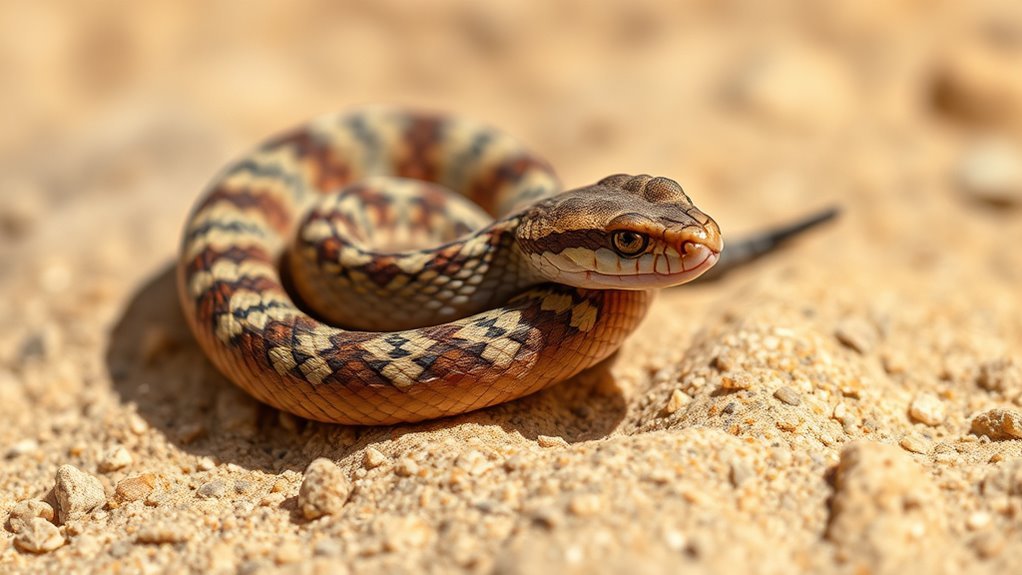
You’ll spot a baby rattlesnake by its small size—about 10 to 14 inches long—and a distinct triangular head.
These little snakes have a body color that’s usually dark brown or gray with lighter bands, which helps them blend right into their surroundings.
One of the coolest things to look for is the tiny rattle at the tip of their tail. It actually forms after their first molt, so don’t expect a big rattle right away.
Also, check out their slit-like pupils, which really set them apart from harmless snakes you might see.
Keep these features in mind, and you’ll understand why recognizing baby rattlesnakes matters—not just for safety, but also for identifying them correctly.
It’s always good to know what to watch for when you’re out and about!
Key Takeaways
- Baby rattlesnakes have a robust body and a distinct triangular head with slit-like pupils. They measure about 10 to 14 inches long and lack a prominent rattle initially.
- Their coloration is dark brown or gray with lighter bands to provide camouflage. A tiny rattle forms after their first molt but is not as noticeable as in adults.
- Even though they’re smaller, their venom is still potent. They use it for defense and hunting, just like the adults do.
How to Differentiate Baby Rattlesnakes From Similar Snakes
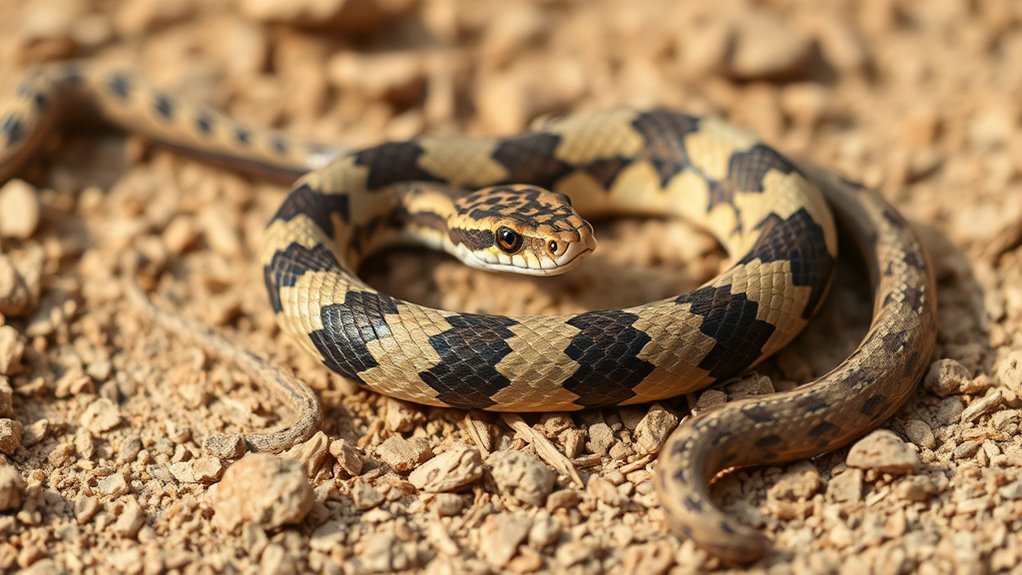
Although baby rattlesnakes can look similar to other snakes, you can tell them apart by a few key features. First, check for the tiny rattle at the end of their tail. It might be hard to spot at first, but it’s a signature trait that grows more noticeable.
Next, focus on their body shape—they’re more robust and less slender than similar non-venomous snakes like the Nightsnake. Look closely at their head; baby rattlesnakes have a distinct triangular shape, unlike the smooth-headed harmless snakes.
Also, their pupils are slit-like, not round. If you’re starting a new account of snake species, these clear markers help you distinguish baby rattlesnakes confidently and avoid confusion with harmless lookalikes.
Unique Features of Baby Rattlesnakes
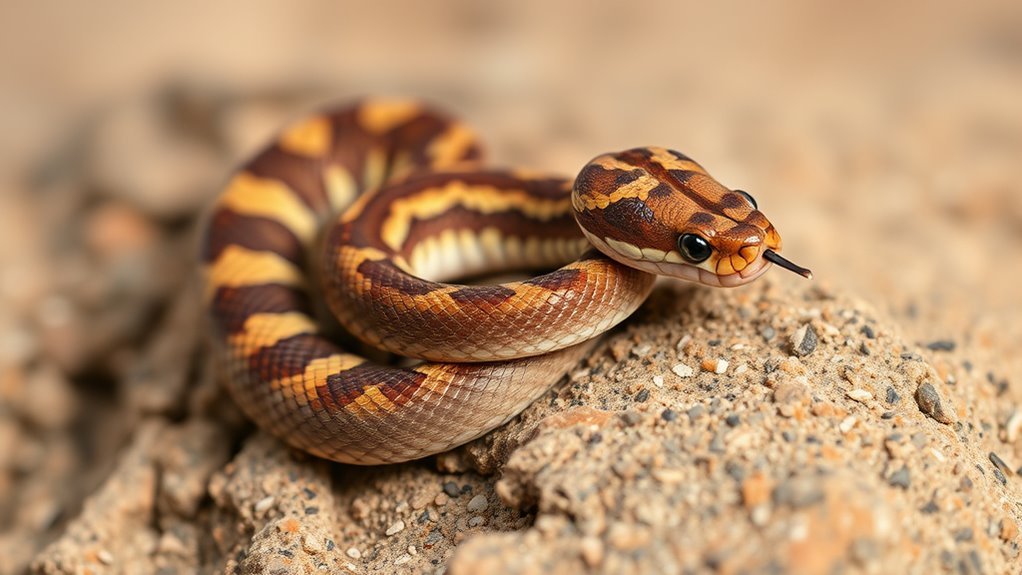
When you encounter a baby rattlesnake, you’ll notice it measures about 10 to 14 inches long. It lacks the prominent rattle adults have since it only forms after their first molt.
You’ll also see a triangular head and vibrant coloration. This can confuse you with non-venomous snakes.
Despite their size, baby rattlesnakes carry venom similar to adults. Though their bite delivers less venom, it’s still something to be cautious about.
Their pattern of dark brown or gray with lighter bands offers excellent camouflage. This helps them blend into their surroundings and avoid predators.
| Feature | Description | Purpose |
|---|---|---|
| Size | 10–14 inches | Mobility, growth |
| Coloration | Dark with lighter bands | Camouflage |
| Venom potency | Same as adults, less volume | Defense, hunting |
AI from the post helps identify these features quickly.
Frequently Asked Questions
How Can You Tell if It’s a Baby Rattlesnake?
You can tell if it’s a baby rattlesnake by its banded pattern, vibrant colors, and triangular head. It won’t have a full rattle, just a small button on its tail, and it usually stays more secretive.
They’re kinda shy, so you might not see them out in the open much. Just keep an eye out for those bright bands and that little button on the tail!
What Time of Year Do Baby Rattlesnakes Come Out?
Baby rattlesnakes come out in late spring to early summer, usually around May to June.
You’ll notice them more as temperatures rise and prey becomes active. But timing can shift depending on where you live.
If You See a Baby Rattlesnake, Are There More Rattlesnakes Around?
Yes, if you see a baby rattlesnake, there are likely more around. Babies are born live near adult rattlesnakes, so spotting one means a breeding population is nearby.
Stay cautious and watchful for safety. It’s always better to be careful than sorry!
What Does a Juvenile Rattlesnake Look Like?
A juvenile rattlesnake looks like a tiny living shadow, with dark bands wrapping its slender body like whispered secrets.
You’ll notice large eyes and a small tail button instead of a rattle, blending perfectly into nature’s camouflage.
It’s almost like nature’s way of keeping them hidden until they’re ready to make some noise.
Conclusion
Now that you know how to spot a baby rattlesnake, you’re not just seeing snakes—you’re spotting nature’s little warning signs. These tiny reptiles might look harmless at first glance, but don’t be fooled.
They carry the same venomous punch as their parents, so it’s important to stay cautious. Keep your eyes peeled when you’re outdoors, especially in areas where rattlesnakes are common.
Remember, never judge a book by its cover. Baby rattlesnakes may be small, but their venom is just as potent. With this knowledge, you’ll be ready to stay safe and appreciate these fascinating creatures from a distance.
Understanding how a baby rattlesnake looks like helps you respect their role in nature while protecting yourself. Stay alert, respect wildlife, and enjoy the beauty of these little warning signs safely!




One Comment