How Do Baby Termites Look Like
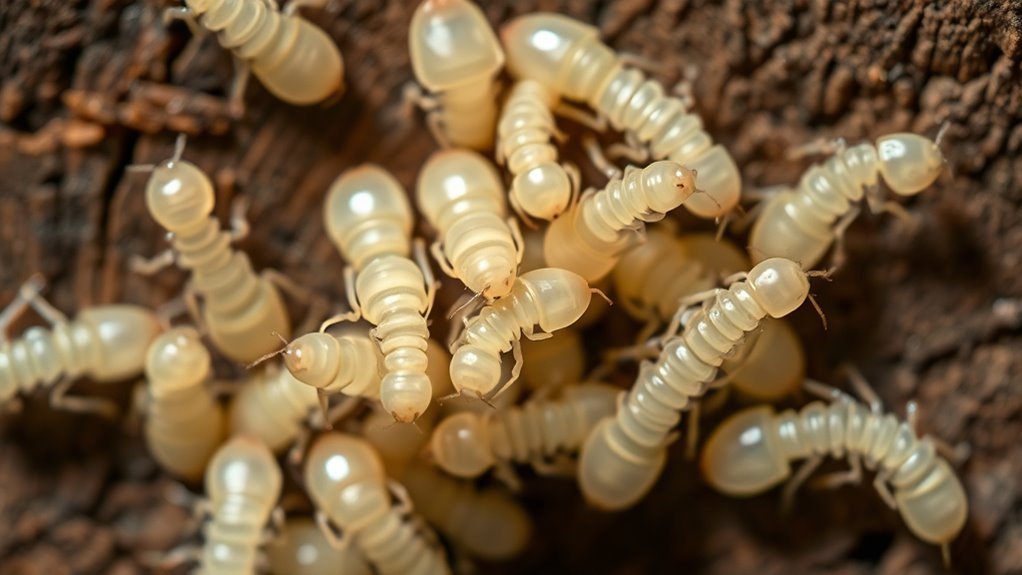
You’ll notice baby termites, called nymphs, by their pale white color and tiny size—about 1/10 of an inch.
These baby termites look like tiny adults but don’t have wings yet. Their straight antennae help you tell them apart from ant larvae or maggots.
These soft-bodied insects move slowly and hide deep within colonies, often in damp, damaged wood.
If you want to recognize why finding them early matters, keep exploring the signs and behavior of these pests.
Understanding how baby termites look and act can save your home from serious damage down the line.
Key Takeaways
- Baby termites, called nymphs, are pale white and about 1/10 of an inch long. They look like tiny adult termites but don’t have wings.
- Their antennae are straight, which helps tell them apart from ant larvae or maggots. Nymphs have soft bodies and move slowly, so they can be pretty hard to spot.
- You’ll usually find them deep inside termite colonies, often hidden in damaged wood or near mud tubes. They like to stay out of sight where it’s safe and cozy.
How to Spot Baby Termites: Key Traits and Size
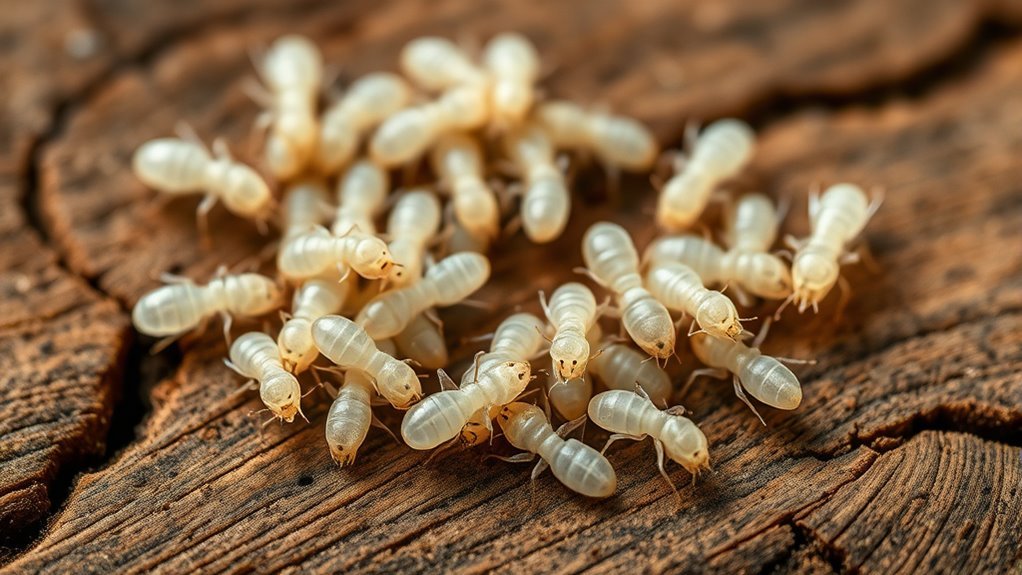
How can you tell if what you’re seeing are baby termites? Baby termites, or nymphs, are pale white and very small—about 1/10 of an inch in size. They look like tiny versions of adult termites but without wings.
One key trait to notice is their straight antennae, which helps you distinguish them from ant larvae or maggots. Because nymphs are soft-bodied and slow-moving, they’re difficult to spot without close inspection.
Look for straight antennae to tell baby termites apart from ant larvae or maggots.
Finding nymphs is a clear sign of an active colony nearby. When you see these signs of termites, it often means the termite colony is thriving and could cause future damage.
Knowing these traits lets you identify baby termites early and assess the risk of infestation. It’s always better to catch them sooner rather than later!
Where Baby Termites Hide and Why Finding Them Matters
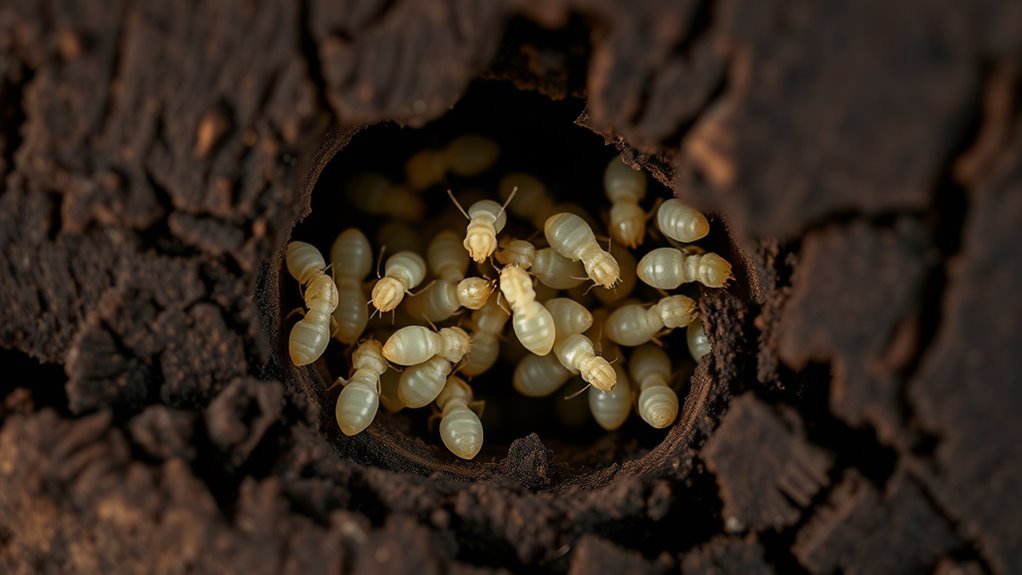
Baby termites, or nymphs, usually stay hidden deep inside their colonies, well protected by worker termites. You’ll often find them in damaged wood, near mud tubes, or damp soil, where moisture supports their growth.
Spotting baby termites signals an active colony nearby, which means structural damage might already be underway. Since nymphs indicate colony expansion, overlooking them can lead to a larger infestation and costly repairs.
That’s why early detection matters—you can act before the damage worsens. If you suspect baby termites, contacting a pest control professional quickly is essential.
They’ll assess the situation and stop the infestation from spreading. By understanding where nymphs hide and why finding them is important, you’ll be better equipped to protect your home.
Frequently Asked Questions
How Can I Identify Baby Termites?
You can identify baby termites by their pale white color, soft bodies, and tiny size—about 1/10 inch long.
Look for straight antennae and thick waists, often hidden deep inside wood or near mud tubes.
They’re pretty small and usually don’t come out in the open much, so you might have to look closely to spot them.
What Bug Can Be Mistaken for Termites?
You can mistake ants and maggots for termites because of their similar size and pale color. But ants have a narrower waist, and maggots are softer and more elongated, so watch closely to tell them apart.
It’s easy to get confused at first glance. Just remember to look for those subtle differences, and you’ll be able to spot which is which in no time.
What Are the First Signs of Termites in a House?
Watch for wood wavering, winged wonders, and wiggling worm-like nymphs. You’ll notice mud-made tunnels and mysterious markings like sawdust droppings.
Also, keep an eye out for subtle signs such as swelling or soundless, hollow-sounding wood. These are clear hints that termite troubles might be ahead.
What Do Termites Look Like When They’re Babies?
You’ll notice baby termites are tiny, pale white, and soft-bodied. They don’t have wings yet and look a bit like maggots.
Their straight antennae and thick waist set them apart from other larvae you might see. It’s pretty interesting once you know what to look for!
Conclusion
Now that you know what baby termites look like, imagine spotting those tiny, pale insects crawling quietly along wood grain or hidden deep in damp corners. Their translucent bodies and slow movements might seem harmless, but catching them early is like finding the first cracks in your home’s armor.
By staying alert and knowing where to look, you can protect your space from these silent invaders before they cause real damage. Keep a keen eye—you’ve got this!
Recognizing baby termites early is key to preventing costly repairs. These little pests thrive in moist, dark places, so check around wood structures and damp areas regularly. Understanding how baby termites appear helps you spot infestations before they grow.
So, keep your home safe by knowing how baby termites look like and where to find them. Early detection is your best defense against termite damage, saving you time, money, and stress. Stay vigilant, and protect your home from these tiny but destructive invaders!