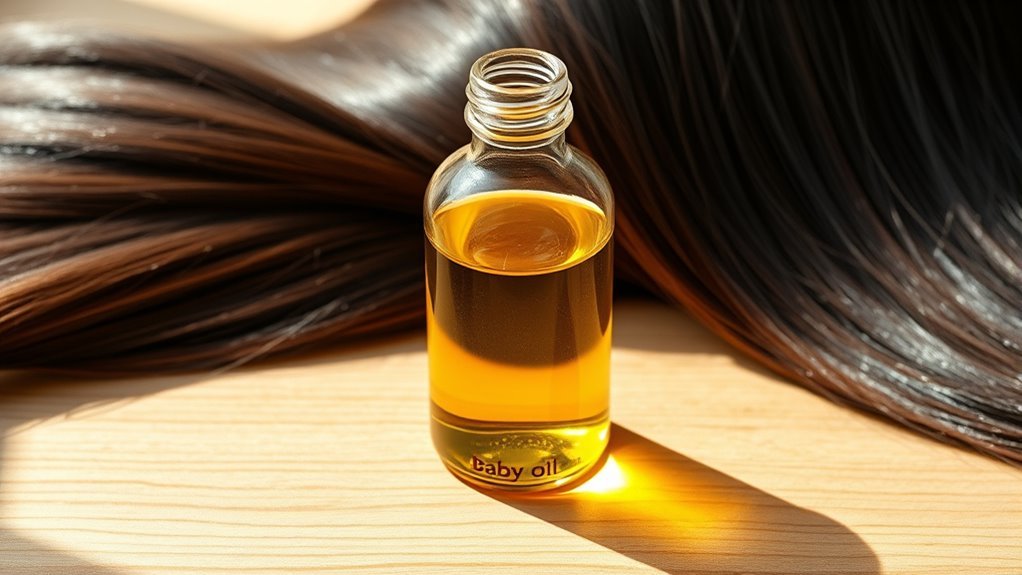
Is Baby Oil Good for Your Hair?
Yes, baby oil can be great for your hair and scalp. It locks in moisture, soothes dryness and dandruff, and creates a healthy environment that supports hair growth.
Using baby oil as a part of your hair care routine can really make a difference if you’re dealing with dry or brittle hair.
Applying it as a pre-shampoo treatment helps protect strands from damage, reduces frizz, and adds shine.
Just make sure to use the right amount for your hair type and focus on the ends to avoid greasiness.
Keep going to discover how to use baby oil safely and get the best results for your hair.
Key Takeaways
- Baby oil locks in moisture, preventing dryness and promoting a healthy scalp environment. It acts as a protective pre-shampoo treatment, reducing breakage and smoothing hair cuticles.
- Regular use supports scalp nourishment by boosting circulation and strengthening hair follicles. It’s pretty great for keeping your scalp happy and your hair strong.
- Suitable for all hair types, but you’ll want to adjust how much you use to avoid greasiness or irritation. Everyone’s hair is different, so a little goes a long way.
- Baby oil can be used as a leave-in treatment or pre-shampoo mask to enhance hair health and shine. It’s an easy way to give your hair a little extra love.
How Baby Oil Benefits Your Hair and Scalp: Moisture, Growth, and Protection
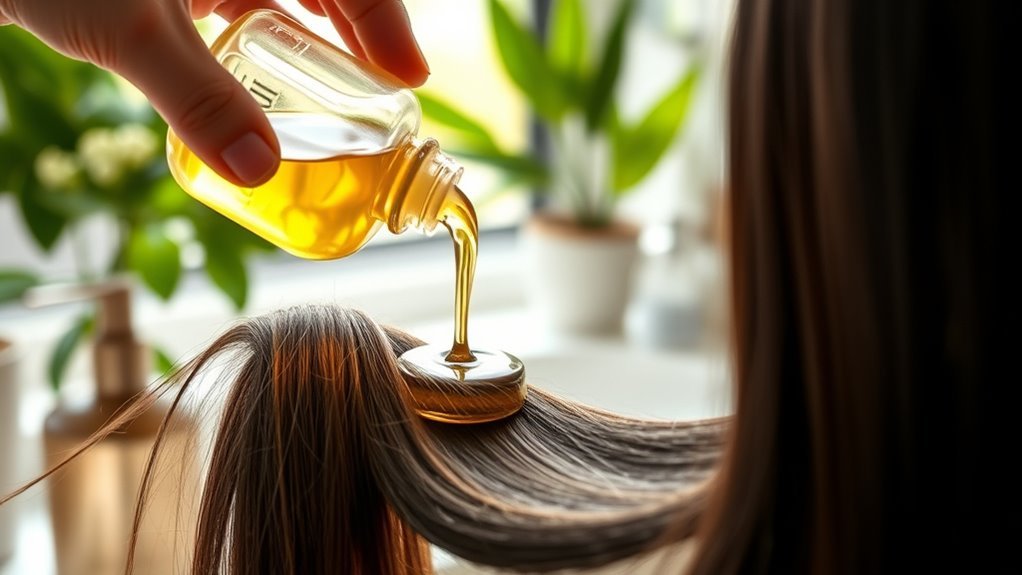
Although baby oil is often associated with skincare, it offers several benefits for your hair and scalp as well. Baby oil, primarily made of mineral oil, acts as an effective occlusive agent that locks in moisture, preventing dryness and promoting a healthy scalp.
Baby oil, rich in mineral oil, locks in moisture to prevent dryness and promote a healthy scalp.
This moisture retention soothes flakiness and dandruff, creating the perfect environment for hair growth. When you use baby oil as a pre-shampoo treatment, it protects your strands from damage, reducing breakage and tangling.
It also smooths hair cuticles, which controls frizz and adds shine to your hair. Nourishing your scalp regularly with baby oil boosts blood circulation, supporting stronger follicles and overall hair health.
No matter your hair type, this simple treatment can enhance scalp health and protect your hair. Give it a try—you might be surprised at how well it works!
Tips for Using Baby Oil Safely and Effectively on Different Hair Types
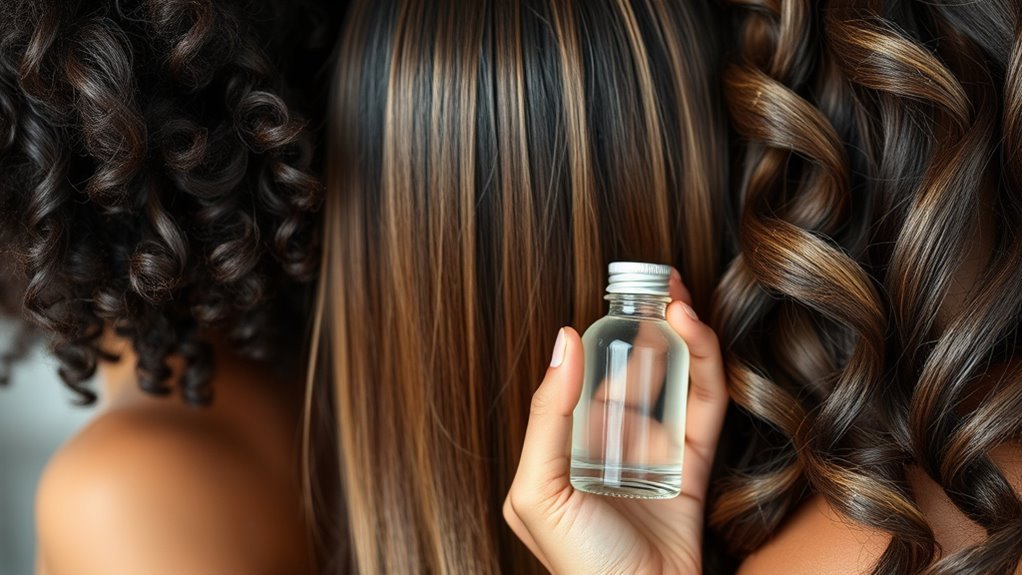
Using baby oil on your hair can offer great benefits, but applying it correctly makes all the difference. For coarse, thick, or curly hair, a small amount of baby oil helps seal moisture, tame frizz and flyaways, and enhance texture.
If you have fine or thin hair, use baby oil sparingly to avoid greasiness and weigh-down. Applying baby oil on freshly washed hair locks in moisture and aids detangling—focus on the ends to prevent scalp irritation.
Using baby oil as a leave-in treatment helps protect against moisture loss, while a pre-shampoo hair mask treatment helps nourish the scalp and hair. Always distribute the oil evenly, and be ready to shampoo thoroughly to remove excess oil and keep your hair fresh.
Frequently Asked Questions
What Is the Best Oil for Your Hair?
The best oil for your hair depends on your needs, but coconut oil deeply nourishes. Jojoba oil balances moisture, and argan oil protects from heat.
Pick one that matches your hair type and styling goals. It’s all about what works best for you!
Can Adults Use Baby Oil for Hair?
Yes, you can use baby oil for your hair. It helps lock in moisture and reduce frizz, especially if you have thick or curly hair.
Just use it sparingly to avoid greasiness and weigh-down. You don’t need a lot for it to work its magic!
How Long Should You Leave Baby Oil in Hair?
Think of your hair as a thirsty garden; you should leave baby oil in for 30 minutes to overnight, depending on your hair type.
Just remember to cover it and shampoo well afterward to avoid residue.
What Are the Disadvantages of Baby Oil?
You’ll find baby oil can make your hair greasy, hard to wash out, and attract dirt. It may weigh down fine hair, cause buildup, and its petroleum base raises concerns about long-term effects and environmental impact.
Honestly, it’s not always the best choice if you’re worried about residue or how it feels on your scalp. Plus, some people prefer to avoid petroleum-based products altogether. So, it’s good to keep these points in mind before using baby oil regularly.
Conclusion
If you want your hair to drink up some extra moisture and shine, baby oil can be a gentle, effective ally. It locks in hydration and soothes your scalp, which feels pretty nice. When used right, it can even support hair growth.
Just remember, a little goes a long way—like a drop of sunshine brightening a cloudy day. Use it wisely and tailored to your hair type. You don’t want to overload your hair with too much oil because that can weigh it down.
In the end, baby oil is a simple, affordable way to boost your hair’s softness and glow. By locking in moisture and calming your scalp, it helps keep your locks healthy and shiny. So if you’re looking for a little extra care, baby oil might just be the secret weapon your hair needs!