What Is a Baby Alligator Called and How to Identify It
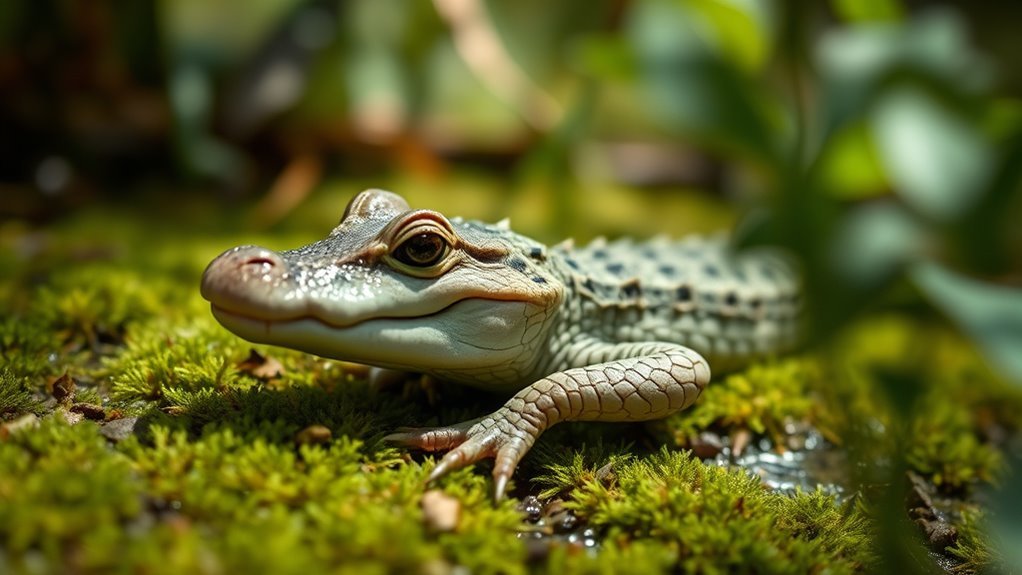
A baby alligator is called a hatchling, and you can spot one by its small size—about 6 to 8 inches long—and its striking yellow and black stripes that help it blend into its environment.
These adorable little creatures are fascinating to observe, especially if you’re curious about baby alligators and how to identify them.
Hatchlings have dozens of sharp teeth and use high-pitched chirps to communicate with their mother.
These features boost their chances of survival right from the start. If you want to understand how these traits help hatchlings thrive, keep exploring this fascinating topic.
Key Takeaways
- A baby alligator is called a hatchling and measures about 6 to 8 inches long at birth. Hatchlings have distinctive yellow and black stripes that provide excellent camouflage.
- They weigh only a few ounces and have 60 to 80 sharp teeth for early feeding. Plus, hatchlings possess a temporary “eye tooth” used to break out of the eggshell.
- Grouping into pods and using vocalizations help hatchlings stay protected and communicate with their mother. It’s pretty amazing how they stick together right from the start!
What Is a Baby Alligator Called?
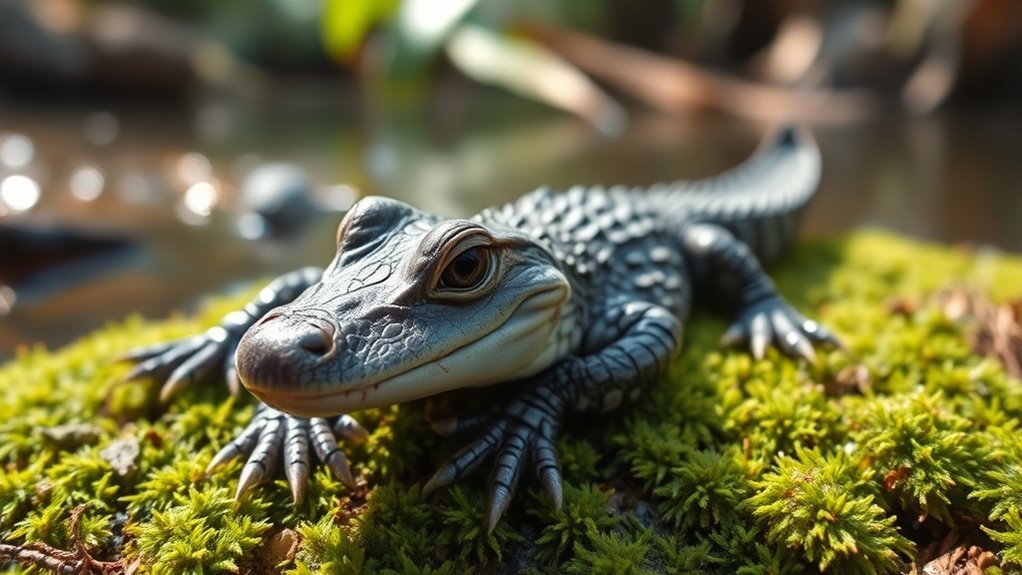
What do you call a baby alligator? You call it a hatchling. These fascinating creatures start life measuring about 6 to 8 inches long and weigh only a few ounces.
As a baby alligator, a hatchling has distinct yellow and black stripes that help it blend into its environment, offering essential camouflage. Even at this tiny size, hatchlings have 60 to 80 sharp teeth to help them eat during their early days.
They’re not entirely silent either; baby alligators communicate with their mother while still in the egg by making high-pitched chirping sounds. When these hatchlings group together, they form a pod, usually made up of siblings from the same nest, improving their chances against predators.
Baby Alligator Traits and Behaviors
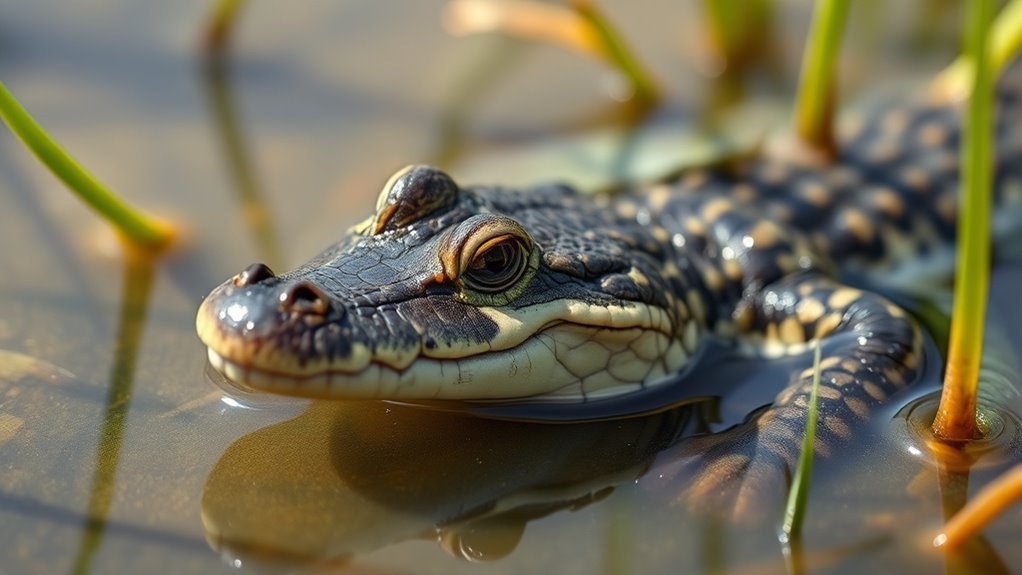
Baby alligators, or hatchlings, come into the world with distinct traits that help them survive from the start. These baby gators, known as hatchlings, measure just 6 to 8 inches long and weigh only a few ounces.
Their yellow and black stripes provide excellent camouflage, keeping them hidden from predators. Even before hatching, they communicate with their mother through high-pitched chirps, signaling their readiness to emerge.
Yellow and black stripes hide hatchlings, while high-pitched chirps signal their readiness to hatch.
Once hatched, they use puppy-like whimpers to call for protection when threatened. Hatchlings have 60 to 80 sharp teeth, including a temporary “eye tooth” that helps break the eggshell but falls out soon after.
You’ll notice their rapid growth as they quickly adapt and thrive in their environment, showing remarkable survival instincts from day one. It’s pretty amazing how nature equips them right from the get-go!
Frequently Asked Questions
How Can You Tell a Baby Alligator From a Crocodile?
You can tell a baby alligator from a crocodile by its rounded snout, shorter length, and yellow-black stripes. Alligator hatchlings are chunkier with thicker limbs, while crocodiles have longer snouts and a more uniform color.
Pretty easy to spot once you know what to look for, right? Those little details really make a difference when you’re trying to tell them apart.
How to Tell How Old a Baby Gator Is?
You can tell a baby gator’s age by its size and diet. Hatchlings are 6–8 inches long, stay near mom, and eat insects.
What Is a Bunch of Baby Alligators Called?
A bunch of baby alligators is called a pod. You’ll find these protective pods packed with playful pups, often accompanied by a caring mother.
They combine camaraderie and care to conquer challenges and predators together. It’s pretty amazing how they stick together like that!
How Big Is a 1 Year Old Gator?
A one-year-old gator is usually 1 to 3 feet long and weighs between 5 to 10 pounds. You’ll notice it’s growing fast and starting to hunt small prey like insects and fish.
They’re getting stronger every day, which is pretty cool. It’s like they’re little hunters in training!
Conclusion
Now that you know a baby alligator is called a hatchling, you can spot one by its small size, distinct stripes, and shy behavior. These tiny reptiles are quite fascinating to observe up close.
Remember, even though they look harmless, they’re still wild creatures. When you see a hatchling, don’t put all your eggs in one basket—stay cautious and respectful of their space.
Understanding these little alligators helps you appreciate nature’s wonders without stepping on any toes. Recognizing a baby alligator by its unique features lets you enjoy wildlife safely. So next time you come across a hatchling, you’ll know exactly what it is and how to respect these incredible creatures in their natural habitat.




One Comment