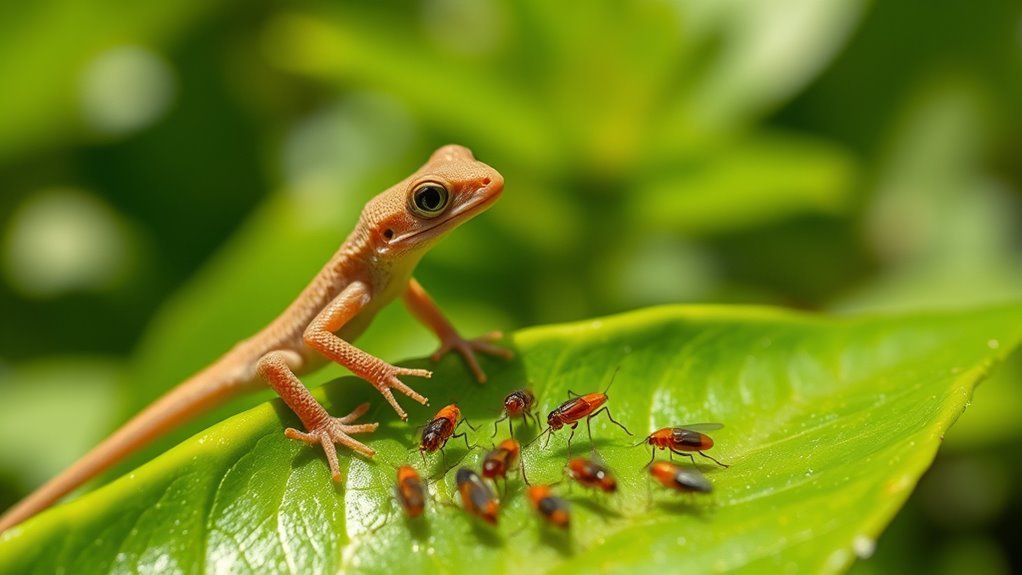
What Do Baby Lizards Eat and How Do You Feed Them?
You feed baby lizards based on their species, offering small live insects like fruit flies for insectivores, gut-loaded bugs plus chopped veggies for omnivores, and dark leafy greens for herbivores.
Always provide fresh water and keep portion sizes roughly the size of their head to prevent choking.
Feed them daily to support healthy growth and hydration. By following these basics, you’ll set a strong foundation for their care and overall well-being.
Taking time to understand what baby lizards eat and how to feed them properly makes a big difference in their health.
It’s all about matching their diet to their natural needs and making feeding safe and easy for them.
Keep things simple, consistent, and watch your little lizard thrive!
Key Takeaways
- Baby lizard diets vary by species: insectivorous, omnivorous, or herbivorous food is essential.
- Feed insects or vegetables sized to the baby lizard’s head to prevent choking.
- Provide fresh water daily, using soaking or misting when necessary for hydration.
- Offer gut-loaded insects for insectivorous and omnivorous species to enhance nutrition.
- Feed baby lizards daily, adjusting diet as they grow to support healthy development.
What Baby Lizards Eat: A Guide to Baby Lizard Food
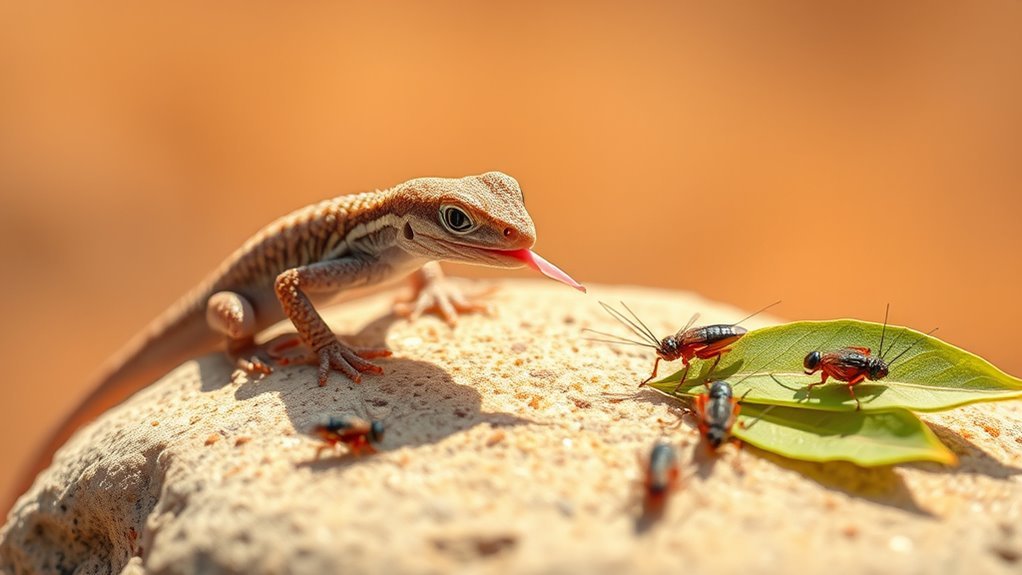
Although baby lizards’ diets vary by species, most require specific food to thrive. If your baby lizard is insectivorous, you’ll need to provide small live insects like fruit flies or pinhead crickets.
Omnivorous baby lizards, such as Bearded Dragons, benefit from a balanced diet of gut-loaded insects and finely chopped vegetables. For herbivorous species like baby Green Iguanas, focus on offering dark leafy greens and vegetables daily, avoiding any animal protein.
Omnivorous lizards thrive on gut-loaded insects and veggies; herbivores need daily leafy greens, no animal protein.
Always remember to provide fresh water, as hydration is crucial. Some baby lizards need soaking or misting to maintain proper moisture levels.
Understanding your baby lizard’s diet guarantees it grows healthy and strong, so tailor their food and water needs carefully based on their species and natural feeding habits.
How to Feed Baby Lizards: Portion Sizes and Daily Care Tips
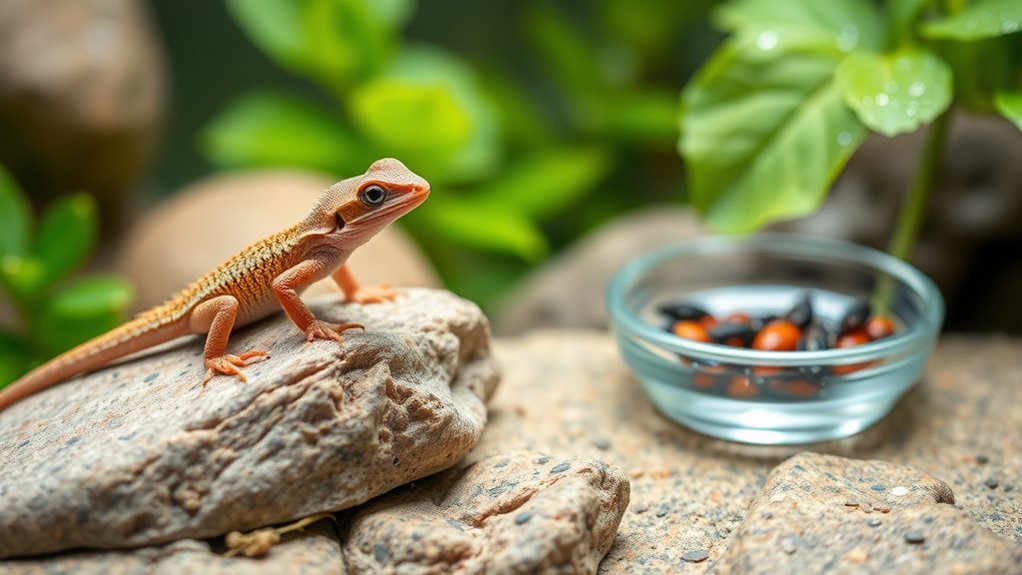
When feeding baby lizards, you need to offer food roughly the size of their head to prevent choking and guarantee they eat safely. Pay close attention to portion sizes by selecting appropriately sized insects like small crickets or fruit flies.
To meet their dietary needs, include gut-loaded insects, which provide enhanced nutrition. Daily feedings are vital for baby lizards since they have higher energy demands compared to adults.
Make sure you feed them consistently every day to support their growth. Alongside feeding, always provide fresh water to keep them hydrated and healthy.
Frequently Asked Questions
What to Feed a Baby Lizard at Home?
Feed your baby lizard small, appropriately sized insects like crickets or mealworms. If your little guy is omnivorous, you can also offer finely chopped veggies.
Make sure to feed them daily and always provide fresh water. Oh, and keep an eye on the size of the food—pieces shouldn’t be bigger than its head for safety.
How Long Can Little Lizards Go Without Food?
Imagine a tiny lizard’s belly rumbling; it can usually go 5 to 10 days without food. But you shouldn’t wait that long—feeding daily keeps its energy up and prevents dangerous weight loss or dehydration.
Feeding your little lizard every day is the best way to keep it happy and healthy. Trust me, it’ll thank you with lots of lively wiggles!
What Is a Lizard’s Favorite Food?
A lizard’s favorite food depends on its species. You’ll find many love insects like crickets or fruit flies, while others prefer leafy greens or chopped veggies.
Always offer food sized just right for your lizard’s mouth. That way, mealtime is easy and safe for your scaly friend!
Where Do Little Lizards Go at Night?
You might think little lizards wander freely at night, but they actually retreat to safe spots like crevices, under rocks, or dense foliage.
They do this to avoid predators and stay moist while they rest or prepare for nighttime hunting.
Conclusion
Feeding baby lizards properly is key to their growth and health. Did you know that some baby lizards can eat up to 30 insects a day? That’s a lot of protein for their tiny bodies!
By offering the right portion sizes and fresh food daily, you’ll help your little reptile thrive. Remember, consistent care and attention make all the difference in raising a happy, healthy baby lizard.
Keep feeding them right, and watch them grow! Proper nutrition is essential for baby lizards to develop strong bones and stay active. So, whether you’re giving them crickets, mealworms, or other insects, make sure it’s fresh and appropriate for their size.
Feeding baby lizards the right diet will ensure they stay healthy and energetic. With daily care and the right food, your baby lizard will thrive and grow into a strong adult.