What Does a Baby Rat Look Like?
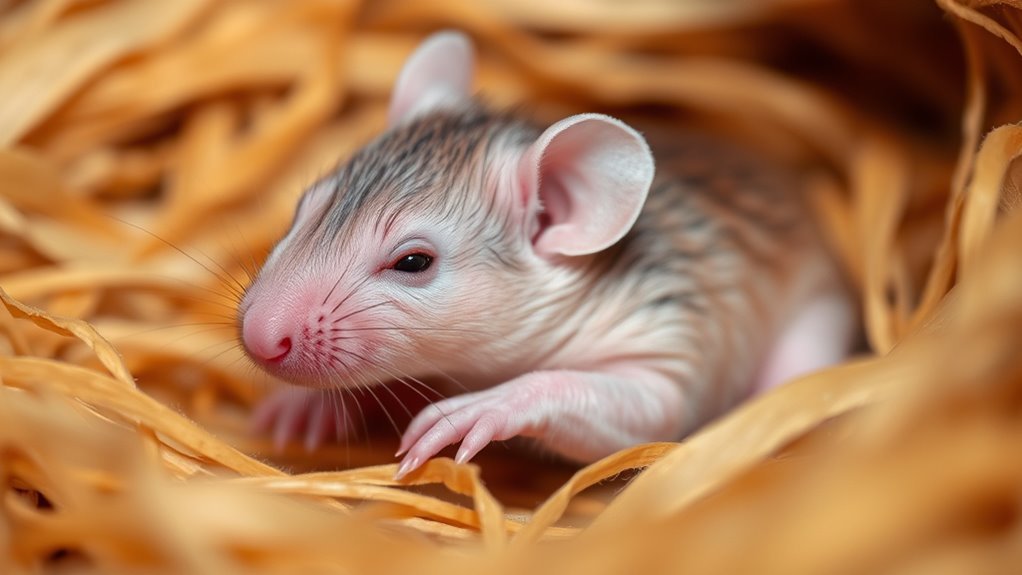
You’ll recognize a baby rat by its bright pink, hairless skin and large head that looks big compared to its body. Its eyes stay closed at birth, and the tail is thick, short, and hairless.
Baby rats are small, usually 1 to 3 inches long, with a body that’s more robust than a mouse’s.
As they grow, they develop soft fur and open their eyes around three weeks old. Their tiny size and distinctive features make them easy to spot if you know what to look for.
Keep looking if you want to learn more about their growth and nesting habits. There’s a lot to discover about how these little creatures develop and thrive!
Key Takeaways
- Baby rats are 1–3 inches long, bright pink, and completely hairless at birth. They have large heads that are disproportionately bigger than their bodies.
- Their eyes are closed when born and typically open around three weeks old. Baby rats have thick, short, and hairless tails compared to other rodents.
- Their bodies are more robust and larger than baby mice, which makes it easier to tell them apart. Pretty neat, right?
How to Recognize Baby Rats by Size and Appearance
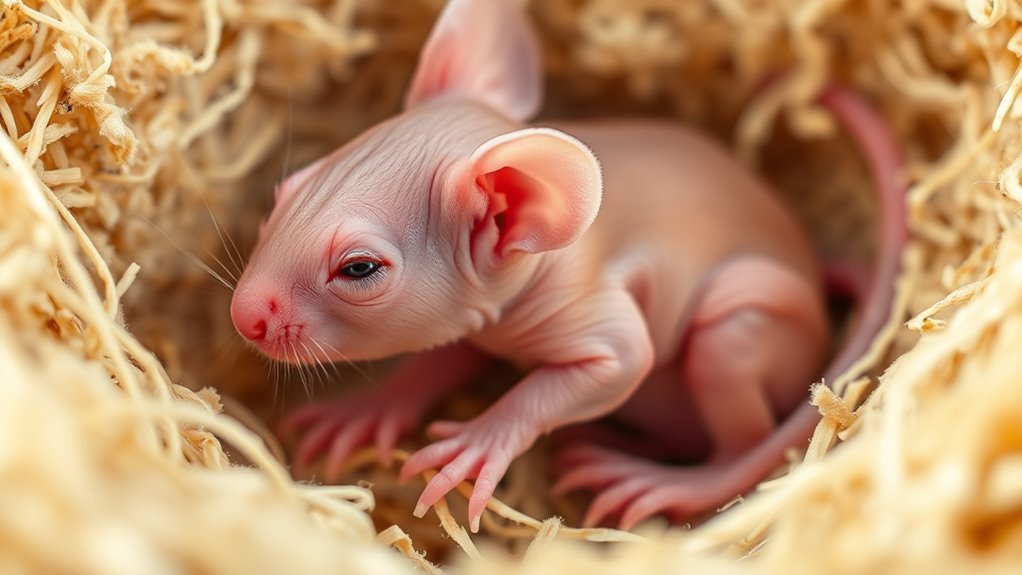
How can you tell a baby rat apart from other small rodents? Baby rats, or pups, are about 1–3 inches long at birth and have a bright pink, hairless appearance with their eyes closed.
Their heads look disproportionately large compared to their bodies, which is a key sign of a rat rather than a mouse. You’ll also notice their thick, hairless tails that are shorter in proportion to their bodies, setting them apart from other tiny rodents.
These size and appearance details help you spot signs of a rat early. Since baby rats indicate a nearby nest, recognizing their unique look is essential for identifying a potential infestation before it grows.
How Baby Rats Grow and Where They Live
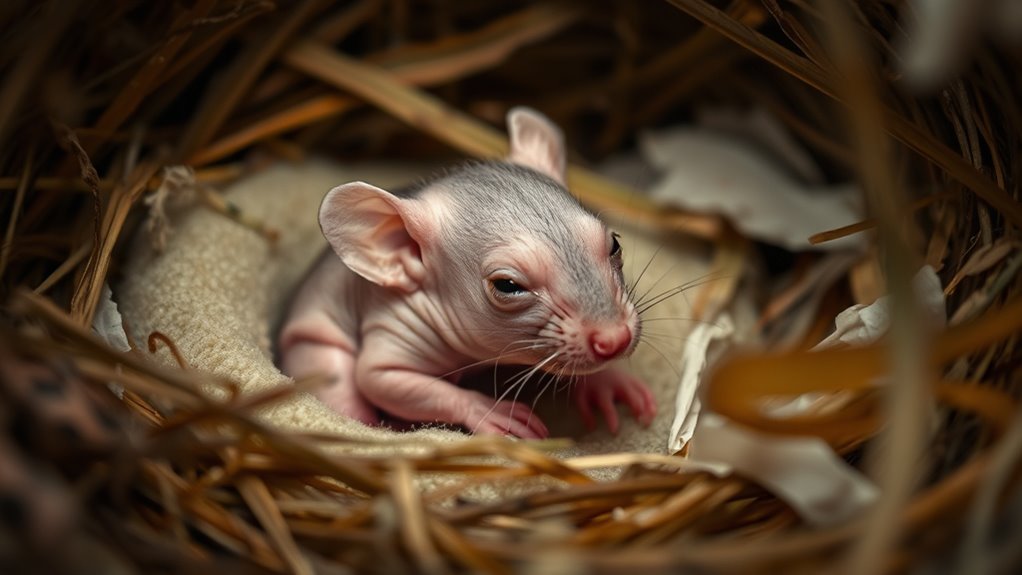
Although baby rats start out hairless and blind, they grow quickly. They develop soft fur and open their eyes by about three weeks old.
During these early stages, pups stay close to their nesting areas. These spots are usually found in dark, secluded places like attics or basements. These safe spots protect them as they gain strength.
Around four weeks, the weaning process begins. Pups slowly shift from their mother’s milk to solid foods, but they still rely on her warmth and care.
Frequently Asked Questions
How to Tell if It’s a Baby Rat?
You can tell it’s a baby rat by its bright pink, hairless skin, closed eyes, large head and feet, small ears, and thick, short, hairless tail.
These features set it apart from baby mice distinctly. Pretty easy to spot once you know what to look for!
What Do Wild Baby Rats Look Like?
You’ll see wild baby rats are tiny, hairless, and pink at birth, with closed eyes. Within a week, they grow soft fuzz.
What Does a Week Old Baby Rat Look Like?
You’ll see a week-old baby rat’s pink, plump, and partially pigmented skin, with peach fuzz peeking through. Its eyes and ears remain closed, so it’s still snug, silent, and dependent on its mother’s care.
At this stage, it’s pretty tiny and fragile. It can’t see or hear yet, which means it just stays cozy and quiet, relying completely on mom.
Can a Baby Rat Be Mistaken for a Mouse?
Yes, you can mistake a baby rat for a mouse because they’re both small and similar in shape.
However, if you look closely, baby rats have thicker tails, bigger heads, and smaller ears than mice.
Conclusion
Think of a baby rat as a tiny seed—small, fragile, and almost hidden at first. Just like a seed grows into a strong tree, these little creatures quickly develop from pink, hairless pups to curious explorers.
By understanding their size and appearance, you’ll spot them easily, much like recognizing the first sprout breaking through the soil. Keep an eye out, and you’ll see how these small beginnings lead to lively, clever adults.
Baby rats start off very delicate, often with closed eyes and no fur. Within days, they grow fur and begin to open their eyes, showing signs of their curious nature. Watching them transform is like witnessing nature’s little miracle.
So, if you’re wondering what a baby rat looks like, remember their journey from tiny, pink, and fragile pups to active little explorers. Knowing their size and appearance helps you spot them quickly and appreciate these fascinating creatures as they grow into smart, lively adults.