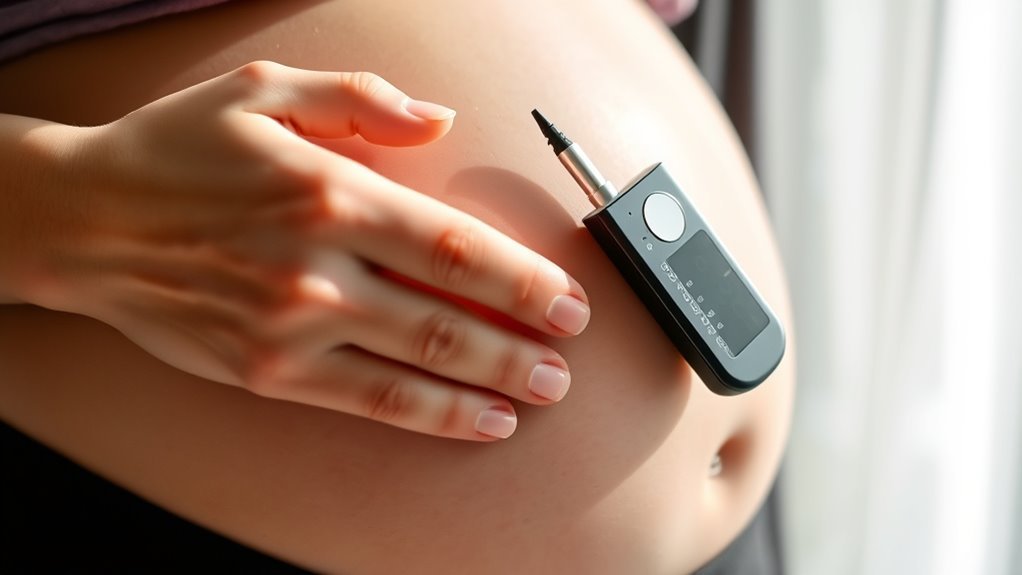
How You Can Hear Your Baby’s Heartbeat on a Doppler and When
You can usually hear your baby’s heartbeat with a fetal Doppler around 12 weeks of pregnancy. A fetal Doppler is a handy device that lets you listen to your baby’s heartbeat right from home, which can be really reassuring.
To use it safely, apply ultrasound gel on your lower belly and gently move the device until you pick up the heartbeat. It might take a little patience at first, so don’t worry if you don’t find it immediately.
Keep in mind early use can cause confusion or worry if you don’t locate it right away.
Make sure to stay in touch with your healthcare provider, and soon you’ll understand how to use the Doppler effectively and confidently.
Key Takeaways
- A home fetal Doppler can typically detect your baby’s heartbeat starting around 12 weeks of pregnancy.
- To use it, apply ultrasound gel on your lower abdomen and gently move the Doppler around until you locate the heartbeat.
- Trying to detect the heartbeat before 12 weeks isn’t very reliable, and it’s not recommended because the readings can be inaccurate.
- It can be tricky to tell your baby’s heartbeat apart from your own, so it’s a good idea to check with your healthcare provider for help.
- Remember, a home Doppler is great as a little extra reassurance between visits, but it shouldn’t replace professional prenatal care.
When Can You Hear Your Baby’s Heartbeat With a Fetal Doppler?
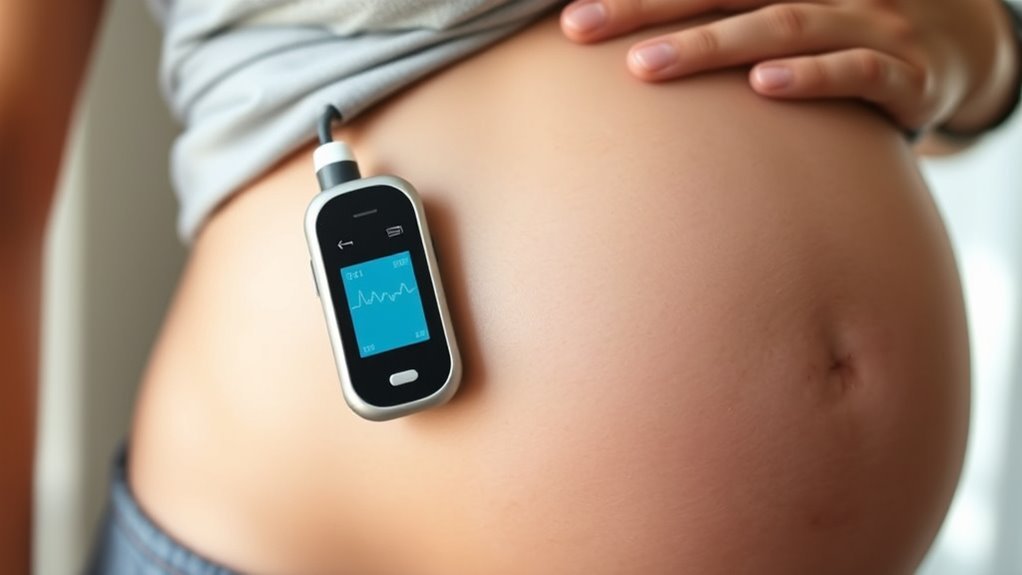
You can usually hear your baby’s heartbeat with a fetal Doppler around 12 weeks of pregnancy. Some devices even claim to detect it as early as 9 weeks.
Typically, a fetal Doppler can detect your baby’s heartbeat by 12 weeks, with some devices claiming as early as 9 weeks.
In the first trimester, transvaginal ultrasound is more reliable for detecting the fetal heartbeat as early as 6 weeks. It offers clearer results than a Doppler.
Factors like your baby’s position, your body type, and how many weeks pregnant you are can affect how well you can hear the heartbeat.
Using a home Doppler before 12 weeks isn’t recommended since it may give inaccurate readings. This can cause unnecessary worry.
Your healthcare provider will monitor your baby’s heart rate during prenatal visits. They make sure to track your baby’s health accurately throughout pregnancy.
How Do You Use a Home Fetal Doppler Safely and Effectively?
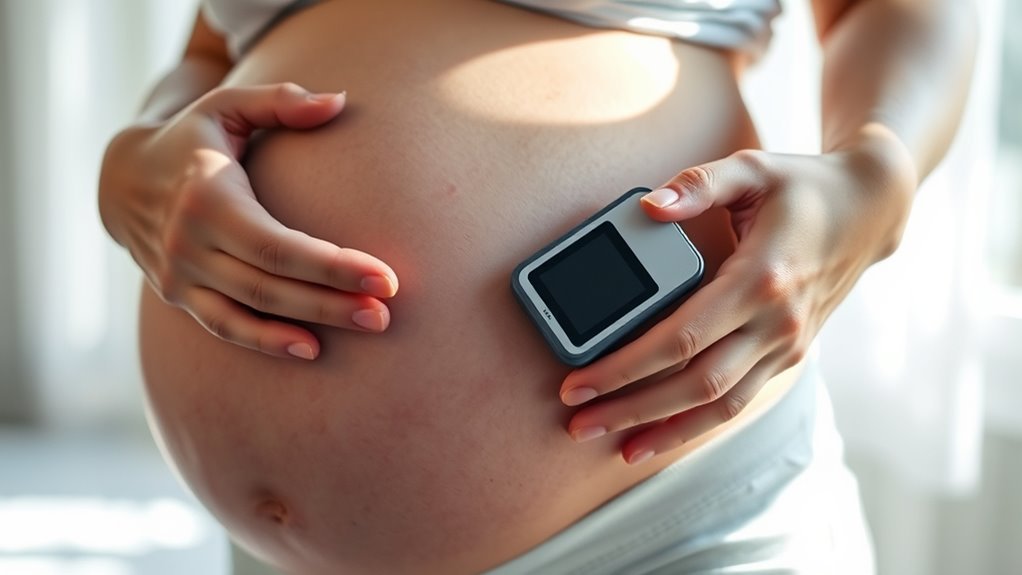
Starting around the 12th week of pregnancy, using a home fetal Doppler can help you listen to your baby’s heartbeat safely and effectively. To use a fetal Doppler, apply a generous amount of ultrasound gel to your lower abdomen and gently move the device to locate the fetal heartbeat.
Be sure to keep an eye on the battery level and use a reliable Doppler to get accurate readings. It’s easy to confuse your own heartbeat with your baby’s, so always check in with a healthcare provider to understand the sounds correctly.
Frequently Asked Questions
How Soon Can I Hear My Baby’s Heartbeat on a Doppler?
You can usually hear your baby’s heartbeat on a Doppler around 12 weeks, but it might be earlier or later depending on factors like your body type and the baby’s position.
Don’t worry if it takes time! Sometimes it just needs a little patience.
How to Check if Baby Is Alive in Womb at Home?
You can check if your baby’s alive by using a fetal Doppler after 12 weeks and tracking movements daily.
If movements decrease or you can’t find the heartbeat, contact your healthcare provider immediately for guidance.
It’s always better to be safe and get professional advice if you’re unsure. Taking care of yourself and your baby is the most important thing!
Should I Pee Before Using a Fetal Doppler?
Why make it harder to find your baby’s heartbeat? Don’t pee before using a fetal Doppler if you can help it.
A full bladder lifts your uterus, making the heartbeat clearer and easier to detect.
Can I Use a Doppler at 7 Weeks?
You can try using a Doppler at 7 weeks, but it’s often too early for reliable results.
You might hear your own heartbeat instead, so it’s best to wait until around 12 weeks for clearer detection.
Conclusion
Hearing your baby’s heartbeat on a Doppler is like catching a secret melody only you can hear—magical and reassuring. By around 10-12 weeks, you can start listening. But remember to use the device gently and follow instructions carefully.
Always keep sessions short and avoid overusing it to stay safe. With patience and care, you’ll enjoy those precious moments. Connecting with your little one’s rhythm from the very start is truly special.
Using a Doppler to hear your baby’s heartbeat is an amazing way to bond early on. Just be sure to handle the device responsibly, keeping safety in mind. When you do, those early heartbeat sounds become a cherished connection, making the journey of pregnancy even more memorable and joyful.






One Comment